 Hoffman Water
Quick Summary: Hoffman Water’s SOLIDified system leads by combining solid chemistry with AP Tech feeders and full-service support, cutting liquid handling risks while covering boilers, cooling towers, and closed loops. The article ranks seven systems by dosing flexibility, storage efficiency, and retrofit ease, noting that proper feeder sizing and monitoring-like conductivity checks or residual testing-are critical to prevent scale, corrosion, or biological growth. EVAPCO’s Smart Shield excels for open cooling towers with pre-piped skids, while AP Tech’s enduroTEQ offers broad format options but requires precise controls. Solid systems replace drums, reducing plastic waste and spill hazards, but success depends on matching chemistry to water data and equipment needs-not just product format.
Solid products can replace heavy liquid drums, but protection depends on the feeder, chemistry, controls, and service matching the system. Boilers, cooling towers, loops, and process water need steady control of scale, corrosion, deposits, and growth. This ranking reviews seven industrial solid treatment systems by dosing, storage, retrofit fit, monitoring, and support. We assessed industrial solid treatment systems using current product details, feeder design, equipment fit, and engineering needs.
Solid Chemistry Systems at a Glance
| System | Best for | Primary applications | Dosing approach | Monitoring and service |
|---|---|---|---|---|
| Hoffman Water SOLIDified | Ohio and surrounding-state industrial facilities needing conversion and service | Boilers, cooling towers, closed loops, wastewater, and process systems | AP Tech solid chemistry feeders and application-specific feed equipment | Engineer-led testing, maintenance, controls, and emergency response |
| AP Tech enduroTEQ Solid Chemistry | Industrial plants needing flexible solid formats and feeder configurations | Cooling towers, boilers, steam generation, and closed loops | On-demand dissolving, gravity feed, metered solution, or direct-use tablets | Compatible with controllers, pumps, timers, and service programs |
| EVAPCO Smart Shield | Open cooling towers, evaporative condensers, and remote sump applications | Open evaporative cooling systems | Polymer-coated inhibitor release with dedicated biocide feeders | Conductivity control, inhibitor probe options, data logging, and authorized service |
| Chem-Aqua HandiChem | Facilities converting from liquid drums to bottle or block concentrates | Cooling towers, closed systems, steam boilers, and process water | On-demand dissolution using HandiFeed feeders | Feeder-based control within a broader Chem-Aqua treatment program |
What to know about industrial solid chemistry water treatment
Solid chemistry water treatment uses concentrated tablets, blocks, discs, bottles, or paste solids instead of liquid drums. In many industrial solid treatment systems, a feeder dissolves the product before it enters the water stream.
This approach can cut storage needs, plastic waste, and drum handling. It also supports cleaner chemical rooms and simpler deliveries.
Strong industrial solid treatment systems need more than the right formula. Correct feeder sizing, residual checks, blowdown control, testing, and field service protect boilers, cooling towers, closed loops, and process equipment.
1. Hoffman Water SOLIDified
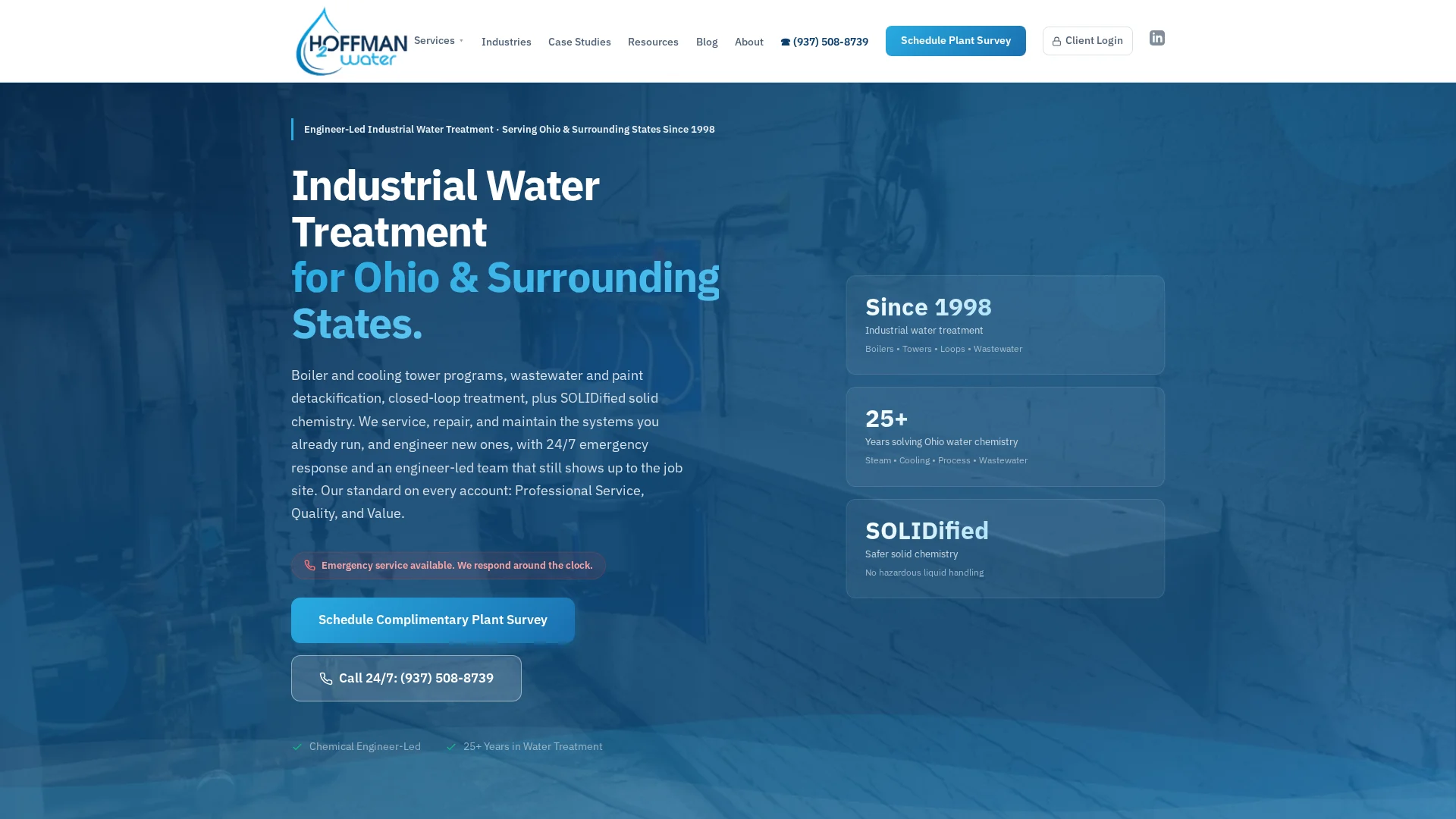
SOLIDified pairs solid chemistry and AP Tech feeders with engineer-led field service. It suits Ohio plants replacing liquid drums across multiple water systems.
 Highlights
- Reduces liquid handling and spill exposure.
- Supports boilers, cooling towers, closed loops, wastewater, and paint detackification.
- EPA expects industrial users to monitor and document compliance activities as required.
Specs
- Best for: Ohio-area retrofits needing field support.
- Service: Testing, maintenance, repairs, and emergency response.
Pros
- Whole-plant view with solid-feeder delivery.
Cons
- Site review decides solid-chemistry fit.
It ranks first for joining conversion, equipment know-how, and local service.
Last updated: August 30, 2026
Also Read: 5 Boiler Treatment Systems for Manufacturing Facilities
2. AP Tech enduroTEQ Solid Chemistry
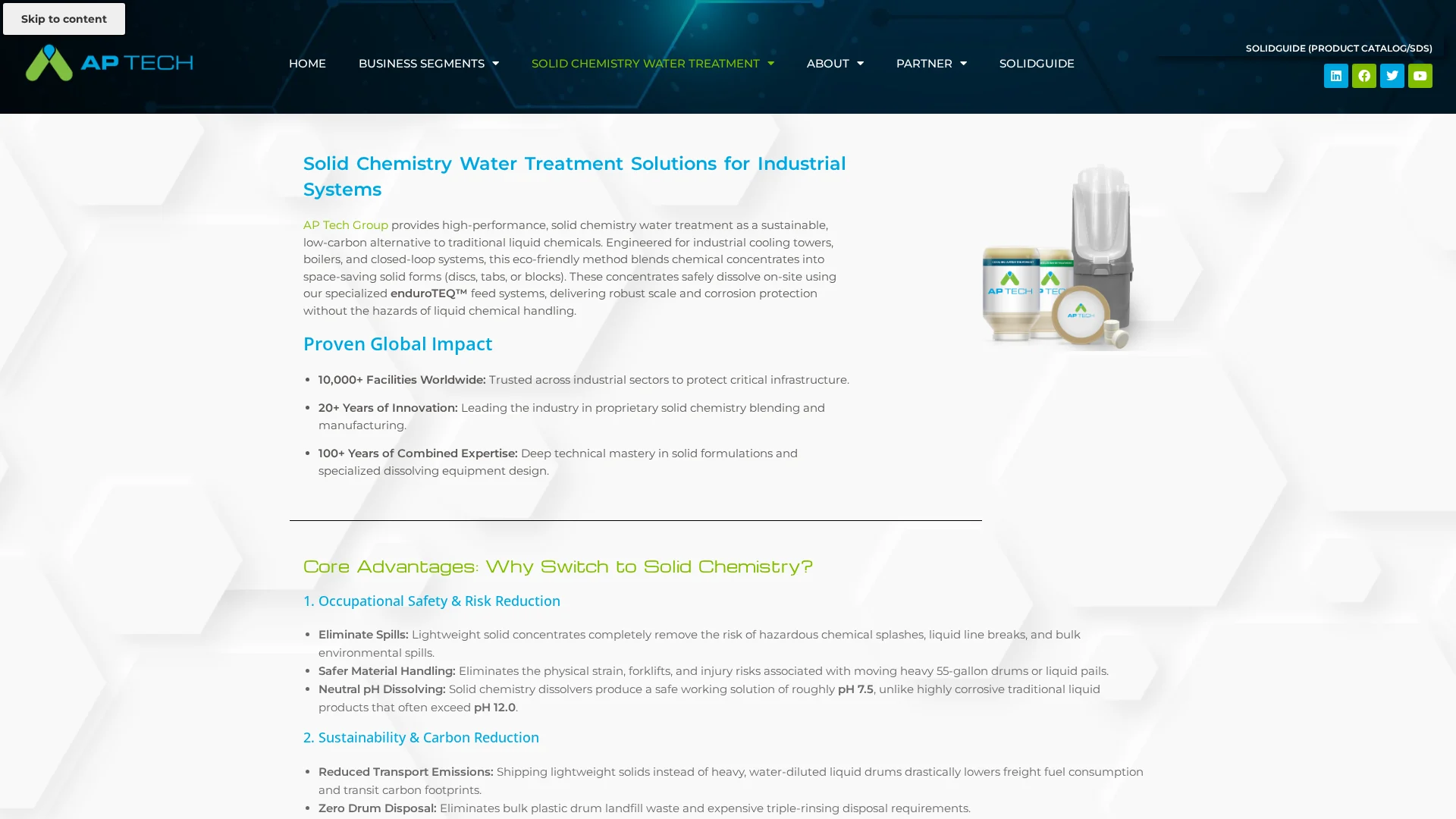
AP Tech offers a broad solid chemistry platform for cooling, steam, and closed-loop systems. Its discs, blocks, and tabs pair with enduroTEQ dissolvers for on-site feed and quick-dose work.
 Highlights
- Discs and tabs support continuous dosing or fast system recovery.
- Ultra-M uses mechanical level and flow control; Ultra-G can gravity-feed in suitable setups.
Specs
- Best for: Plants needing flexible feeders across boilers and towers.
- Dosing: Dissolved solution, gravity feed, or direct tablets.
Pros
- Cuts drum handling and disposal.
Cons
- Correct sizing and controls still matter.
It ranks highly for its wide format and feeder range.
3. EVAPCO Smart Shield
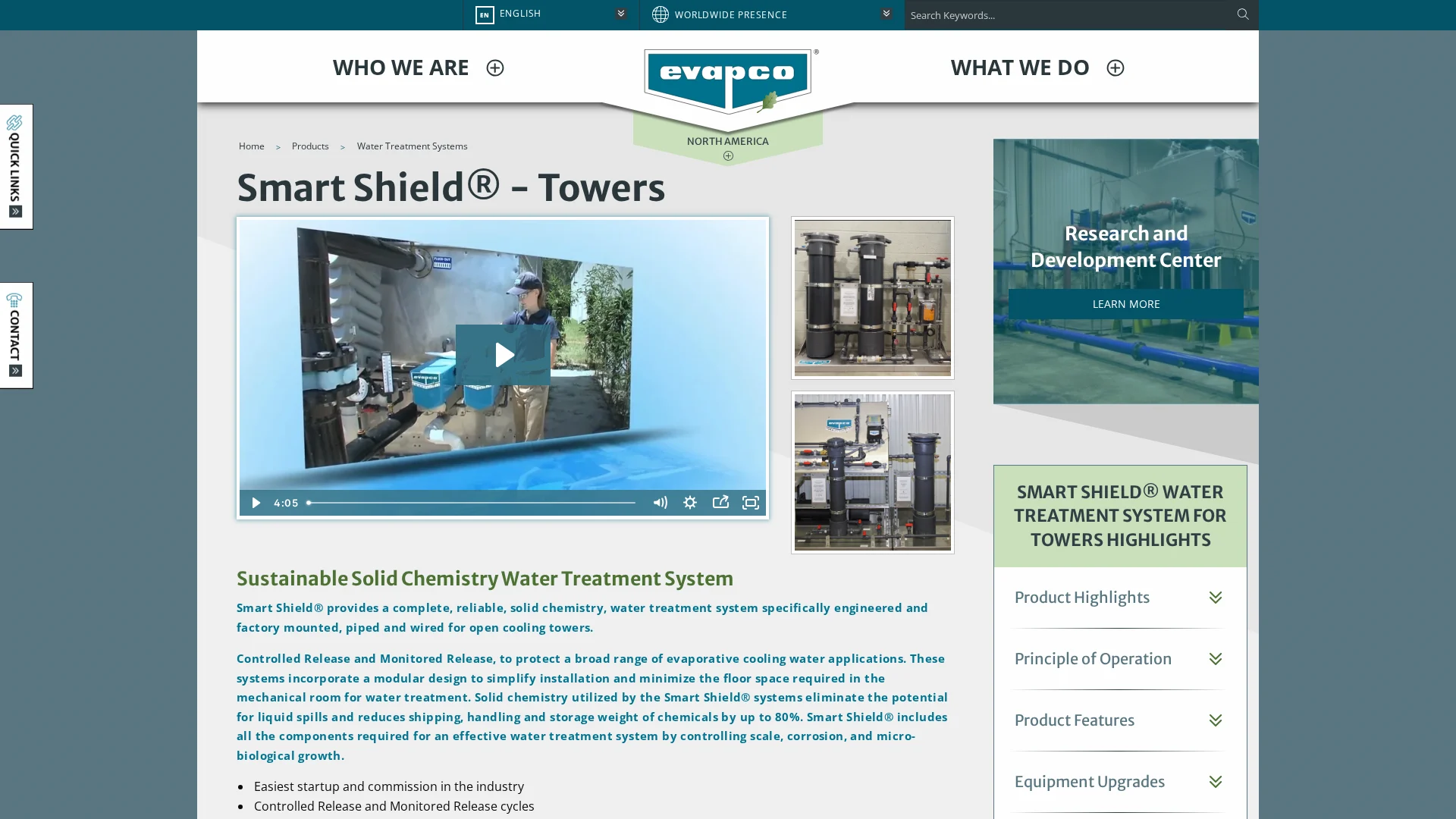
A factory-assembled solid system for open cooling equipment. It suits compact tower rooms and variable loads.
 Highlights
- Controlled Release fits lower-demand towers; Monitored Release uses a probe for changing loads.
- Conductivity control manages blowdown, while dedicated feeders support biocide. Specs
- Best for: Open towers, condensers, and remote sumps. Pros
- Pre-piped skid reduces field work. Cons
- Limited beyond open evaporative systems. It ranks third for focused, integrated cooling tower treatment.
4. Chem-Aqua HandiChem
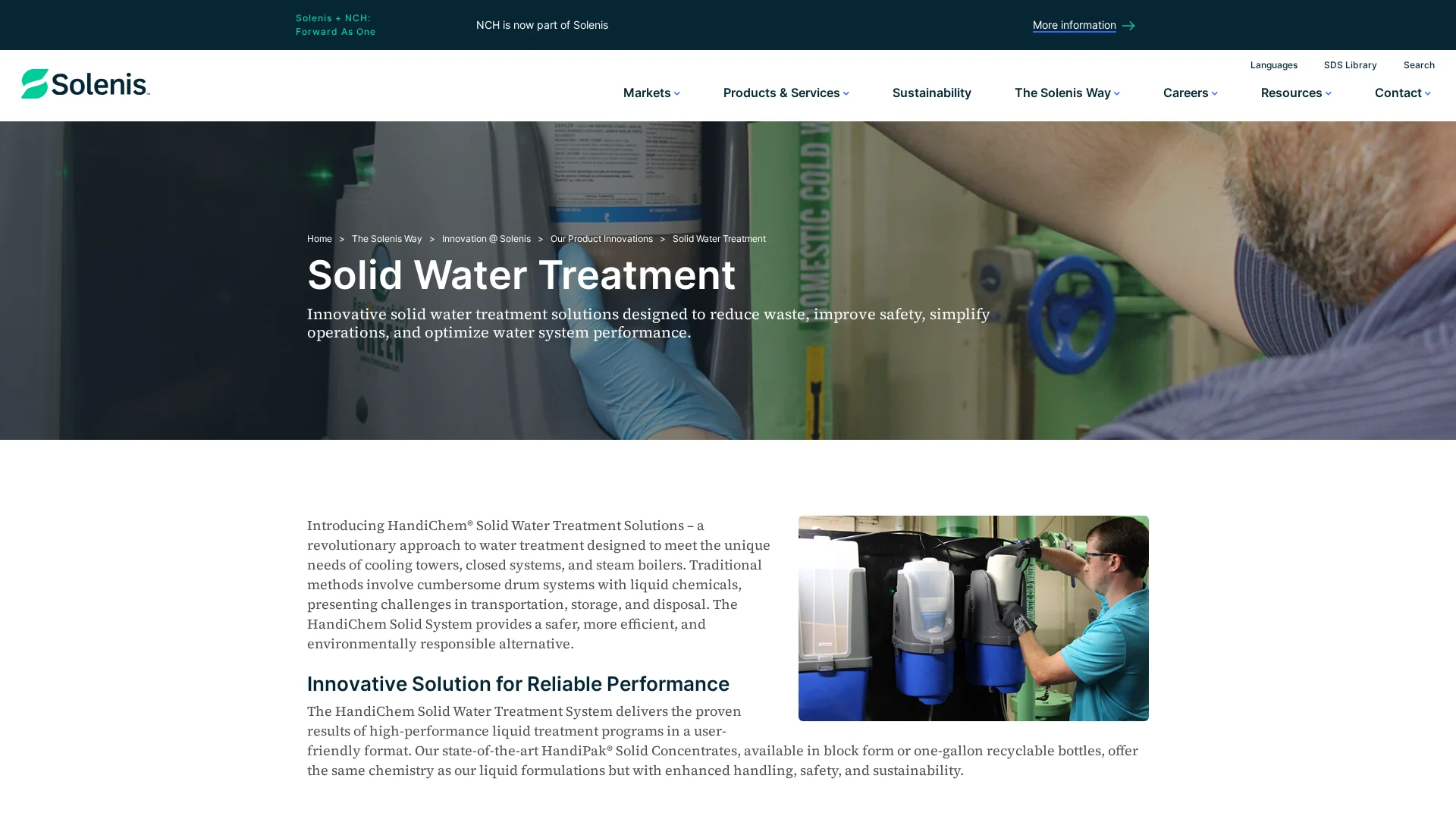
HandiChem replaces liquid drums with recyclable bottles or stackable solid blocks. Its HandiFeed feeder makes solution on demand for boilers, cooling towers, closed loops, and process water.
 Highlights
- Constant-pressure spray dissolves solids as needed.
- Bottle and block formats reduce drum handling.
Specs
- Best for: Plants replacing liquid drums.
- Dosing: HandiFeed on-demand dissolution.
Pros
- Compact delivery supports difficult access routes.
Cons
- Feeders need correct setup and refills.
It ranks fourth for a practical, familiar shift from liquid programs.
Last updated: August 30, 2026
Other Solid Chemistry Systems Worth Considering
These options suit narrower needs, smaller equipment, or hard-to-reach sites.
- Dober Smart Release - Controlled-release cooling tower tablets, biocides, feeders, and monitoring.
- Kurita SolidPro - Compact treatment for smaller cooling and steam boiler systems.
- ChemREADY solid chemistry programs - Broad support for disinfectants, flocculants, inhibitors, and service.
How to choose the right industrial solid treatment system
Pick chemistry based on equipment and real operating data, not product format alone.
- Match the system: Towers need scale, corrosion, and biological control. Boilers need deposit and oxygen control. Closed loops need pH and mixed-metal protection.
- Check water data: Review hardness, alkalinity, conductivity, flow, blowdown, temperature, and load.
- Size delivery: Bottles or blocks fit lower demand. Skid systems fit heavier use.
- Choose control: Stable systems suit fixed release. Changing loads need monitored residual control.
- Assess support: Hoffman Water stands out for engineered SOLIDified chemistry, feeder setup, training, testing, and 24/7 response.
Choose a safer, simpler treatment plan. Hoffman Water engineers SOLIDified chemistry systems that protect equipment, cut liquid handling, and reduce operator workload.
Frequently Asked Questions
Q1: Which top solid chemistry systems protect industrial equipment?
Solid programs for boilers, cooling towers, closed loops, and process water protect metal by controlling scale, corrosion, and deposits. Choose based on water tests, equipment type, discharge limits, and operator handling needs.
Q2: Can solid chemistry replace liquid treatment?
Often, yes. Solid products reduce spills, drum storage, and handling risk. Your supplier should confirm feed rates, controls, and compatibility before changing programs.
Q3: How often should operators test treated water?
Test key values daily or weekly, based on the system. Track results, adjust feed promptly, and review trends to catch problems before equipment damage occurs.