 Hoffman Water
Quick Summary: Choosing a cooling tower monitoring service should not come down to price. Start by defining the scope (sensors, automated dosing, alarm escalation, not just monthly reports), then score each vendor on a weighted scorecard covering instrumentation, reporting, local response time, and compliance support. Run a 60 to 90 day pilot before signing a multi-year contract, and negotiate terms that lock in data ownership, uptime guarantees, and an exit clause. Engineer-led providers such as Hoffman Water, which tie monitoring directly to chemical treatment and offer 24/7 Ohio-based response, tend to close the loop that reporting-only vendors leave open.
Two cooling tower monitoring services can look identical on paper. But if the cheaper bid skips automated dosing and remote alarm escalation, those savings often return later as scale, corrosion, or a Legionella scare. This guide shows Ohio plant and facility managers how to score proposals with a weighted checklist, verify vendor response times, and check Ohio-specific compliance. It draws on engineer-led water treatment practice across industrial and commercial cooling systems, so you can compare bids on facts, not price alone.
Step 1: Define What the Monitoring Service Must Cover
Before you request quotes, write down exactly what you expect cooling tower monitoring services to include. Vendors define "monitoring" in very different ways, and a vague scope invites gaps later.
Sensors and Analytics Outputs
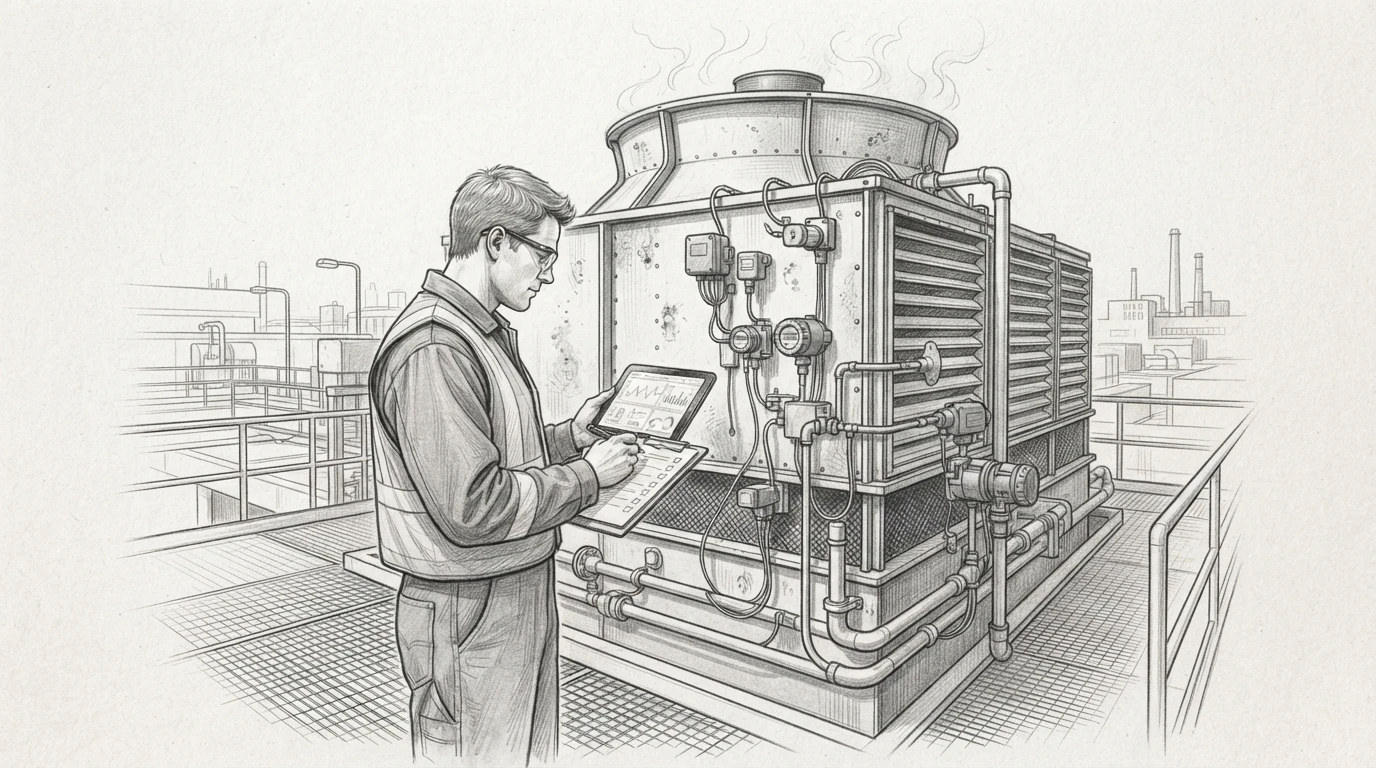
Ask each vendor which sensors they install and where: conductivity, temperature, flow, level, and corrosion probes. Then ask what reports you actually receive. Useful outputs include real-time alerts, corrosion rate trends, and cycle-of-concentration tracking, not just a monthly PDF. If a vendor cannot show a sample dashboard, treat that as a red flag during evaluation.
Treatment Integration vs. Reporting Only
Some vendors only report problems. Better ones adjust chemical feed automatically based on the data, so a drift in conductivity triggers a correction before scale or corrosion starts. Ask whether readings feed directly into chemical dosing controls, and who responds when an alert fires. An engineer-led provider like Hoffman Water ties monitoring to treatment and system design, which closes that loop. Anything less is just dashboards.
Internal link: pillar page not needed here unless natural - I'll include it in the first paragraph. For context on how providers differ, see our guide to cooling tower service providers.
(Correction: the internal link belongs inline above; see revised paragraph below.)
Step 2: Score Vendors on a Weighted Scorecard
Turn every proposal into numbers. Rate each vendor 1 to 5, multiply by a weight, and let the totals decide. A sample weighting: instrumentation 30%, reporting and data practices 25%, local response 25%, compliance support 20%.
Instrumentation and Calibration Practices
Ask exactly which sensors each vendor installs: conductivity, pH, ORP, flow, and makeup water meters. Then ask how often they calibrate and whether techs verify readings against handheld meters on site. Good vendors log calibration dates and swap probes before they drift. If a bid quotes sensors but skips calibration schedules, discount that line heavily, because uncalibrated probes quietly ruin the water treatment data you are paying for.
Reporting, Data Ownership, and Cyber Posture

Request a sample monthly report before you sign. It should flag trends, not just list readings. Confirm you own the raw data and can export it if you switch providers. Also ask how the vendor's remote platform is secured, since connected sensors add a network entry point that a plant security review should approve first.
Local Service Response and Compliance Support
Response time only matters if it is contractual. Ask for a guaranteed on-site window, in writing, for alarms and emergencies. Vendors with Ohio-based technicians can often reach your plant within hours; some providers also offer 24/7 emergency response, which matters during a summer outage. Finally, check that reports map to your local health code and legionella risk management duties, so inspections go smoothly.
Step 3: Pilot the Service Before You Sign a Multi-Year Contract
Run a 60- to 90-day pilot before committing. A short trial exposes weak sensors, slow alerts, and vague reports that a sales visit never will. Some vendors, including engineer-led providers like Hoffman Water, will scope a trial around your actual tower data.
What to Measure During the Pilot
Track alert accuracy, report turnaround, and sensor drift each week. Pull a water sample and compare lab results against the vendor's readings. Watch corrosion and scale indicators closely, since rising levels often reveal calibration problems before damage shows up.
Contract Terms That Protect the Plant
Negotiate these before signing:
- Termination clause: 30-day exit without penalty
- Uptime guarantee: defined response time for alarm failures
- Data ownership: you keep raw historical data
- Performance credits: fees reduced when service targets are missed
Scored every vendor and still torn? Put our engineers beside your scorecard. Hoffman Water's cooling tower monitoring comes with 24/7 Ohio response. Start with a visit or see Hoffman Water.
Frequently Asked Questions
Q1: Which cooling tower companies provide automated monitoring and treatment?
Regional engineer-led providers like Hoffman Water, plus national water treatment firms, offer automated dosing tied to live sensor data. Verify each bid shows integration, not reporting alone.
Q2: How long should a monitoring pilot run?
Plan 60 to 90 days. That window exposes sensor drift, slow alerts, and weak reporting before you sign.
Q3: Who owns the monitoring data?
You should. Confirm raw data ownership and export rights in the contract before committing to any multi-year term.
Conclusion
Evaluating cooling tower monitoring services comes down to three moves: define the scope, score each bid on a weighted scorecard, and pilot before signing. Insist on automated treatment, contractual response times, and data you own. Do that, and the cheapest proposal rarely wins, the best one does.