 Hoffman Water
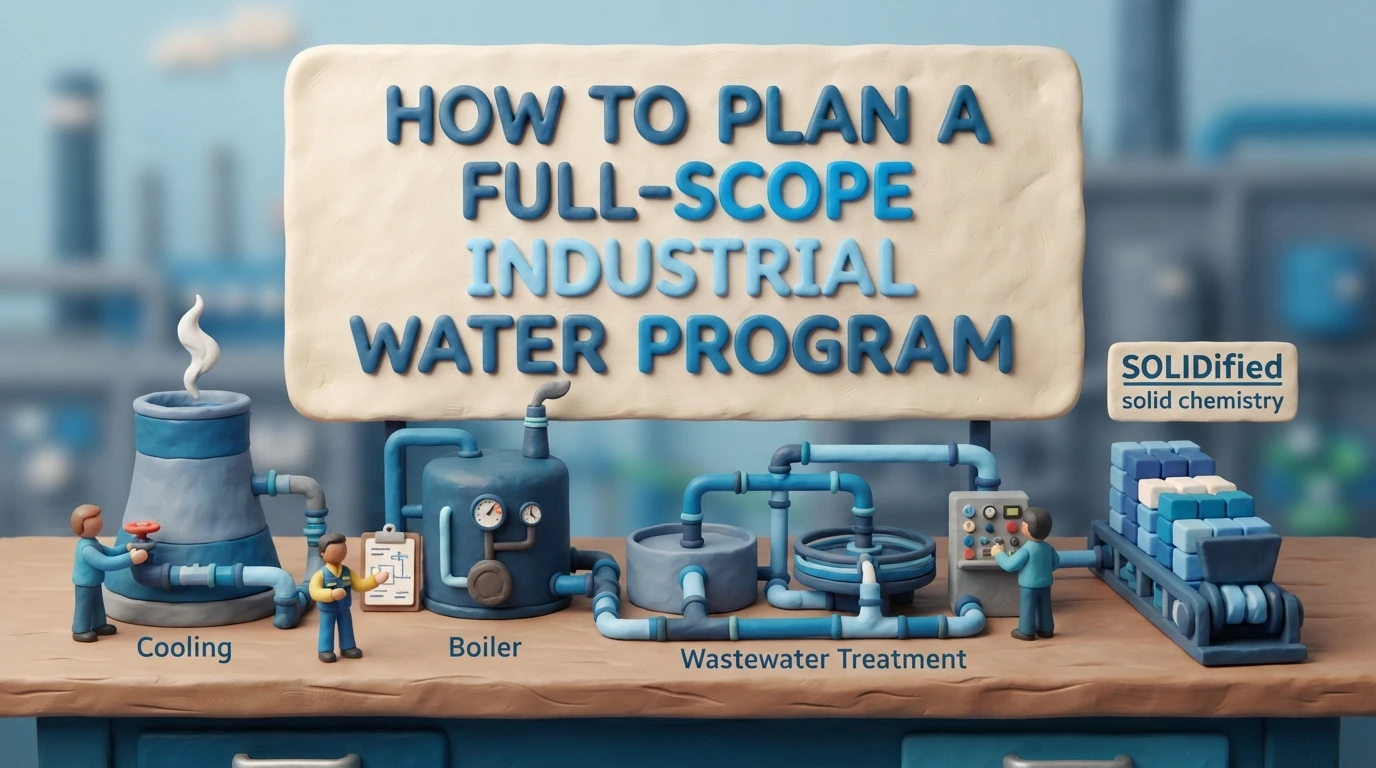
Quick Summary: Build a full-scope industrial water program around a plant-wide survey, stream-specific treatment targets, and one accountable engineer. Test make-up water and baseline conditions first, then monitor key indicators such as conductivity, hardness, pH, cycles of concentration, and inhibitor levels, with clear corrective actions. Hoffman Water’s approach treats boilers, cooling towers, wastewater, and other streams as one connected system, with quarterly reviews and updates after operational changes.
Most Ohio plants don't have one water problem. They have a boiler program, a cooling tower program, and a wastewater program, each with its own data that never gets compared. So a scaling boiler and a fouled tower show up in the same quarter. This guide walks through planning full-scope industrial water treatment solutions from your side of the table: start with a plant water survey, set shared targets across streams, and put one engineer in charge of the whole picture.
Step 1: Map Every Water System Before You Touch Chemistry
Start with a plant water survey, not a chemical quote. A full-scope industrial water treatment program moves through four planning steps: map every water system, set baseline numbers, design treatment per stream, then assign one accountable owner.

Draw the loop map for every system on site
List each system and its connections: boilers, cooling towers, closed loops, paint booth detack, and wastewater pretreatment. Note flows, temperatures, metallurgy, and where one stream feeds another. A shared cooling tower treatment program only works if you know what it touches.
Test make-up water and set baseline numbers
Lab-test the make-up water analysis first. Record hardness, alkalinity, silica, iron, and conductivity, since every target later depends on them. Then measure each loop's cycles of concentration and corrosion rates before change. Hoffman Water's engineers start every Ohio program with this measured baseline.
Step 2: Set Stream-Specific Chemistry and Measurable Objectives
Match treatment to what each stream is fighting
A full-scope industrial water treatment program covers each stream with chemistry aimed at its own threats. Match them like this:
| Stream | Main threats | Core treatment |
|---|---|---|
| Boiler | Scale, oxygen corrosion | Softening, oxygen scavengers |
| Cooling tower | Scale, biofouling, Legionella | Inhibitors, biocide rotation |
| Wastewater | Solids, metals, pH | Pretreatment, clarification |
| Paint booth | Overspray tack-up | Paint detackification |
| Closed loops | Corrosion, fouling | Corrosion inhibitors |
Each stream reacts to the next, so chemistry choices should account for shared make-up water. An engineer-led plan, like Hoffman Water builds, treats those streams as one system rather than five separate contracts.
Write objectives you can measure and defend
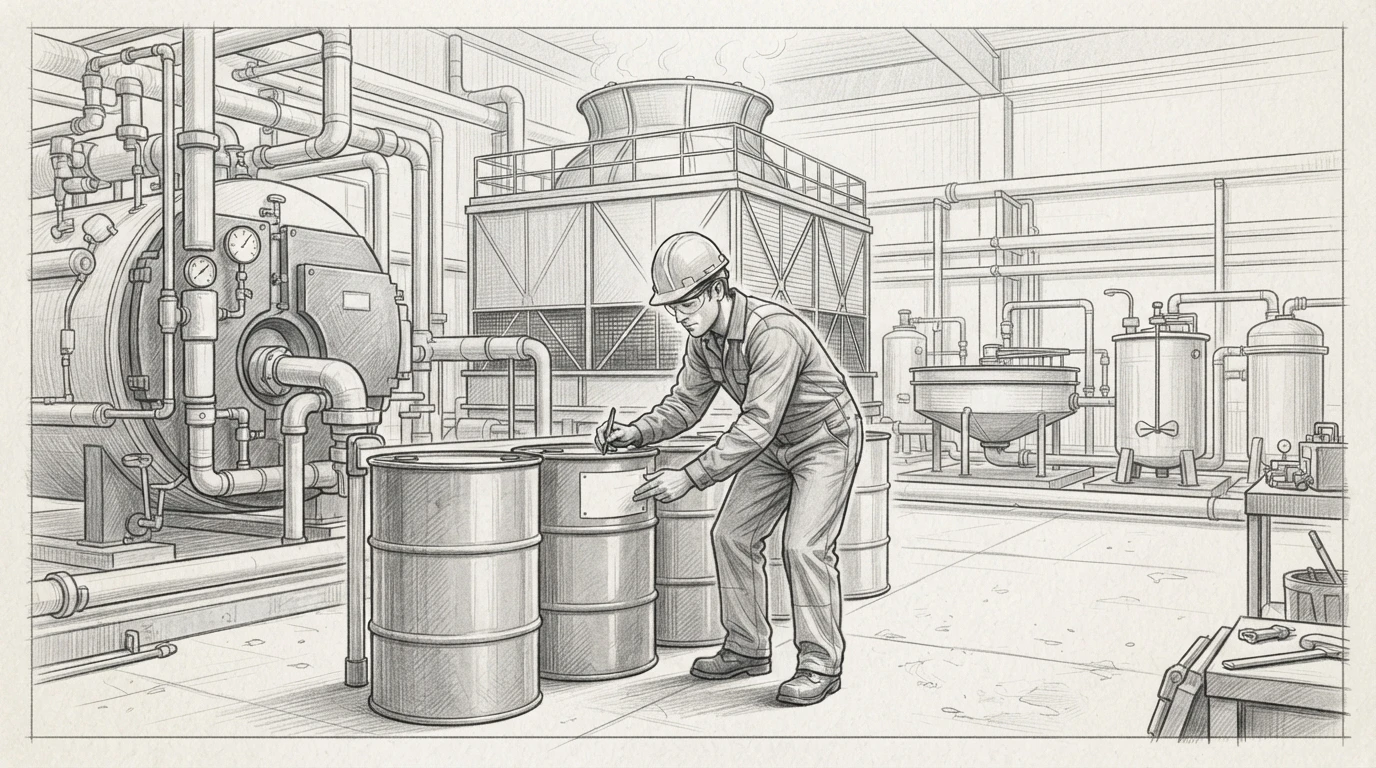
Set numeric targets before treatment starts: cycles of concentration, corrosion rates from coupon monitoring, discharge permit limits, and scale or deposit weight. Review them monthly against lab and field data. Numbers like these turn a treatment program into something you can defend to auditors, insurers, and budget holders.
Step 3: Build Monitoring, Corrective Actions, and Clear Ownership
Choose parameters, points, and frequency
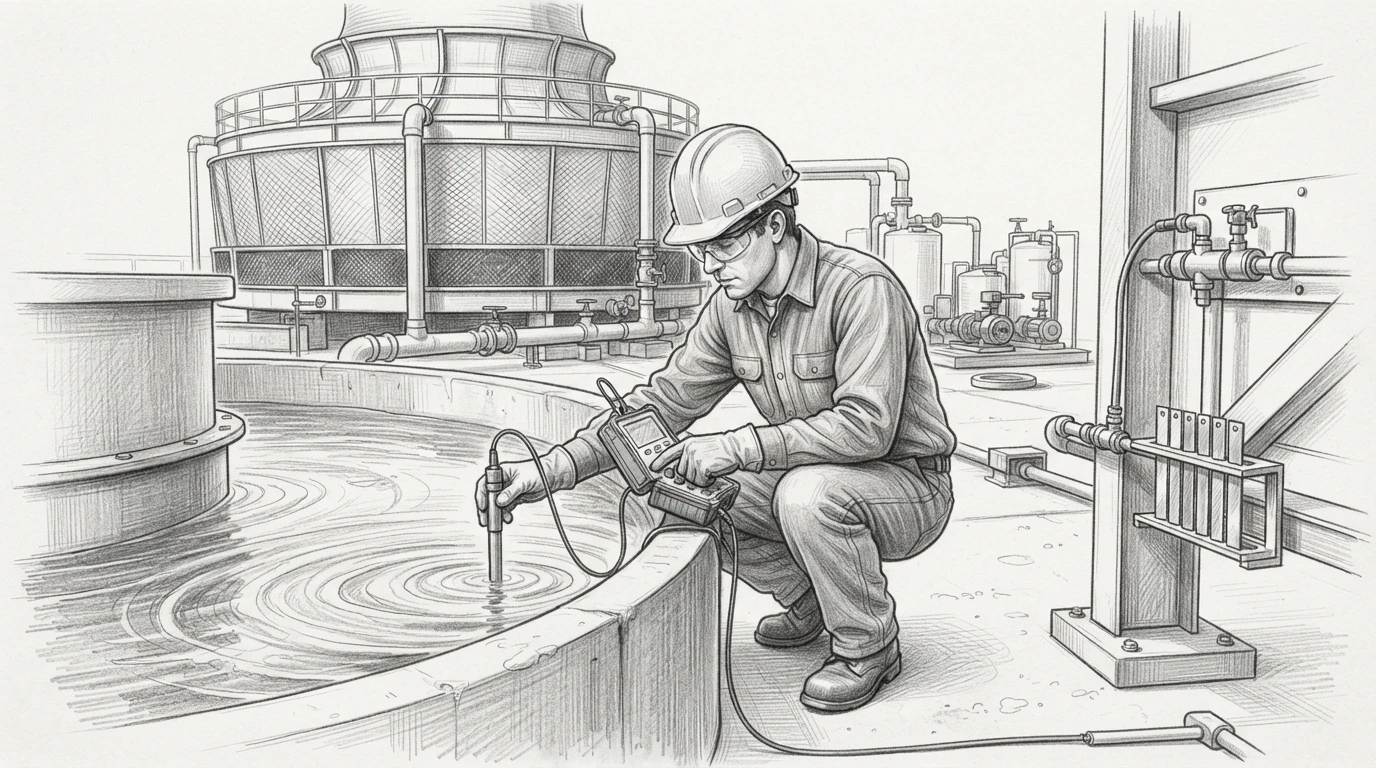
Pick the few numbers that predict failure, not every test a lab can run. Track cycles of concentration, conductivity, and inhibitor levels at your cooling tower, plus hardness and pH for boiler feed. Test daily where trends shift fast, weekly elsewhere. Corrosion coupon monitoring adds proof your program actually protects the metal.
Define the response before you need it
Write thresholds now: if conductivity passes your limit, blow down and check the softener within the hour. Every parameter gets an upper limit, a first action, and an escalation point. Vague notes like "watch it" become expensive surprises.
Give every task a name and an owner
Assign each test and corrective action to a specific role, not "the floor." When one engineer owns the whole plan, nothing falls between shifts.
Step 4: Train the Team and Review the Program as Conditions Change
Train operators on sampling, feed checks, and escalation
Your operators keep the program honest between service visits. Teach them to pull samples correctly, verify pump and drum feed rates, log readings, and know when to escalate. An operator who spots a failed feed pump in an hour saves a heat exchanger. Every operator, at every shift, owns that first line of defense.
Review on a schedule and on change
Review the program quarterly, and immediately after any change in production, make-up water source, equipment, or discharge permit limits. Conditions shift faster than annual visits can catch. A quarterly check, plus a review whenever anything changes, keeps treatment matched to reality. Many plants pair these reviews with a unified program covering boiler, cooling, and wastewater streams together.
Ready to run your boilers, cooling towers, and wastewater as one program? Talk to Hoffman Water about engineer-led, full-scope industrial water treatment solutions for your Ohio facility.
Frequently Asked Questions
Q1: How do plants plan a full-scope industrial water treatment program?
Map every system in a plant water survey, test make-up water, set stream-specific targets, and assign one engineer to own the whole program.
Q2: How often should we review the program?
Quarterly, plus immediately after any change in production, water source, equipment, or permit limits.
Q3: Which parameters matter most for monitoring?
Cycles of concentration, conductivity, hardness, pH, and inhibitor levels, tested daily where trends shift fast.
Conclusion
A full-scope industrial water treatment program starts with a plant water survey, sets measurable targets per stream, and gives one engineer ownership of the whole plan. Review it quarterly and after any change, and your boiler, cooling tower, and wastewater systems work together instead of drifting apart.