 Hoffman Water
Quick Summary: Preventing cooling tower scale during summer requires adjusting cycles of concentration to account for increased evaporation rates. You must calibrate chemical feed pumps and conductivity probes regularly to ensure inhibitors keep pace with peak heat loads. Hoffman Water engineers recommend weekly inspections of fill and basin surfaces to catch mineral deposits before they harden and block heat transfer.
As Ohio temperatures climb, your cooling tower works double time. Hot water and high evaporation concentrate minerals fast, so cooling tower scale prevention becomes the difference between smooth summer runs and choked heat transfer.
This guide shows you how to spot early scale, control cycles of concentration, and treat water before deposits harden on fill and tubes.
At Hoffman Water, our engineers build cooling tower scale prevention programs for Ohio plants every summer, so the steps below come straight from field work, not theory.
Step 1: Audit and Adjust Cycles of Concentration for High Heat
Summer heat changes the math. Higher evaporation rates concentrate dissolved minerals faster, so the cycles you ran safely in April can push your system past its scale threshold by July. Cooling tower scale prevention starts with knowing your real numbers, not last season's.
Calculating Your Summer Limits
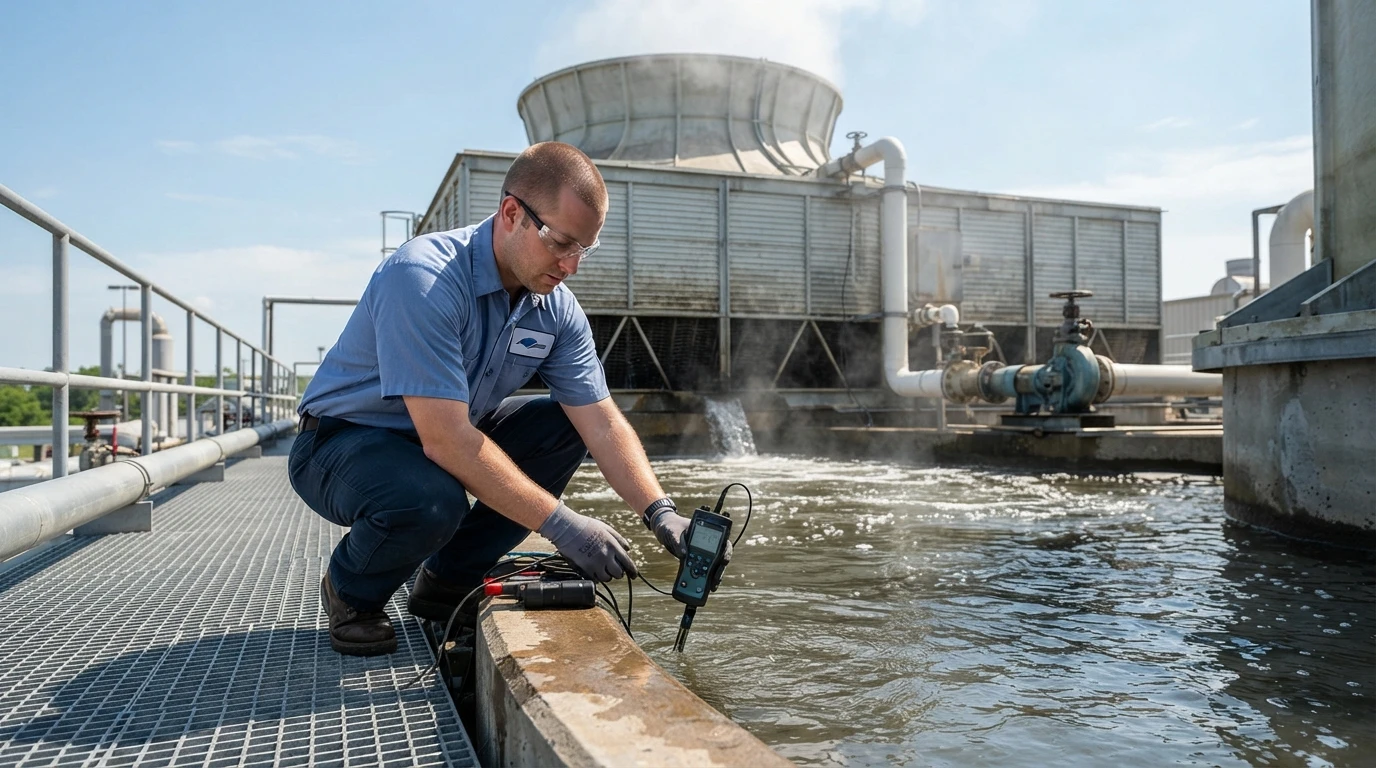
Cycles of concentration measure how many times dissolved solids are concentrated in your recirculating water compared to the makeup water. Run the math with a conductivity meter:
- Divide tower water conductivity by makeup water conductivity. That ratio is your cycles.
- Check the result against your water chemistry's limits for calcium hardness, silica and pH.
- If your limits sit near 4 to 6 cycles, hold steady. If summer blowdown slips and cycles drift past them, calcium carbonate drops out of solution and coats your fill and heat exchange surfaces.
Recheck weekly, not monthly, because evaporation spikes during heat waves. Most plants pair this with a chemical program tuned to the actual water; Hoffman Water's engineers audit tower chemistry and adjust inhibitor dosing before peak season hits.
Learn how cooling tower service programs handle seasonal audits in our cooling tower maintenance guide.
Step 2: Calibrate Your Chemical Feed System for Summer Demands
Your feed system that worked in April will underdose in July. Hot water drives scale, so your inhibitor demand climbs right when evaporation doubles. If the pump can't keep up, you'll feed the same amount into much more makeup water. Check it before the first heat wave, not after the first scale complaint.
Verify Pump Output
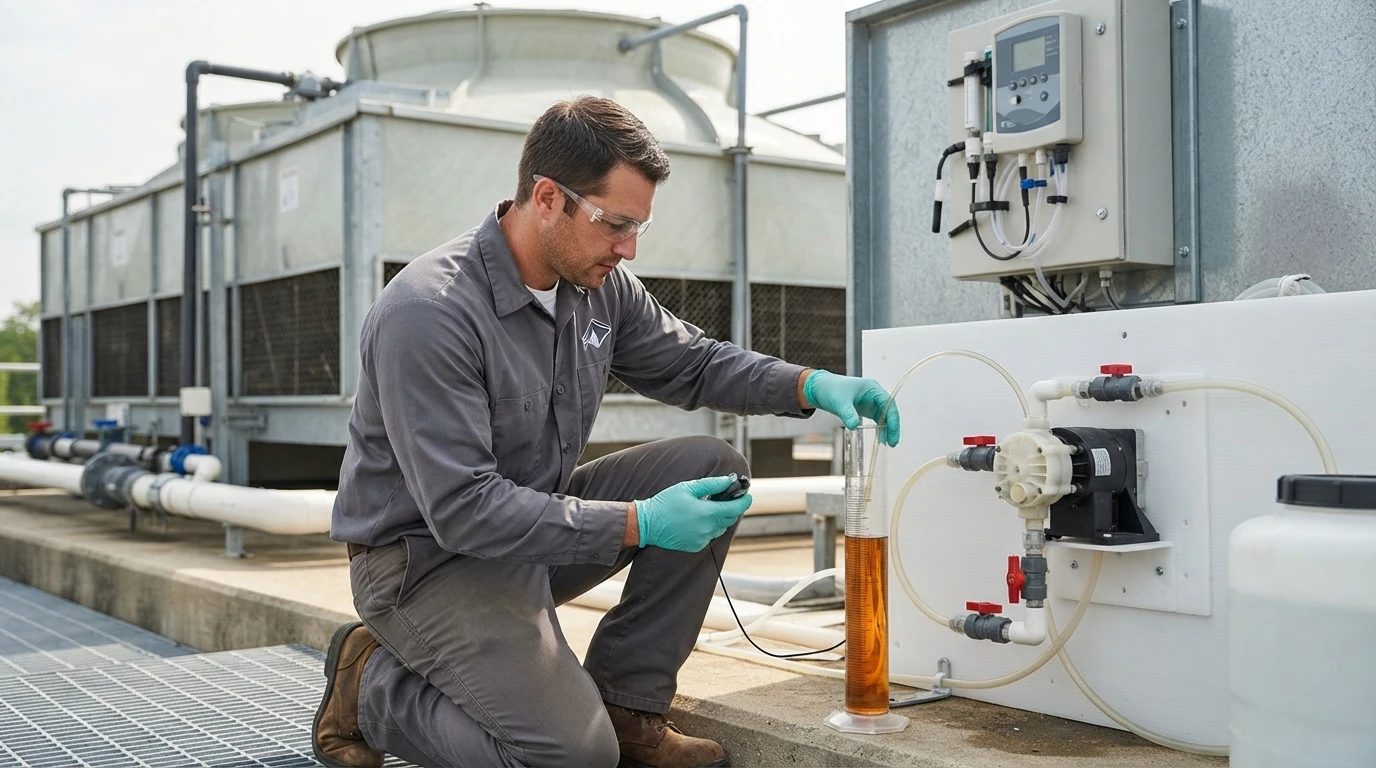
Start with a drawdown test. Mark the solution tank level, run the pump for a timed period, and measure how much chemical it actually moved. Compare that to the pump's rated output. Diaphragm pumps lose accuracy as check valves wear, so a pump rated for 10 gallons per day might deliver 7 by midsummer.
Next, confirm your setpoints against real water use. Pull the last three meter readings and calculate your cycles of concentration. If your inhibitor is dosed off conductivity, verify the probe is clean and calibrated with a standard solution. A fouled probe reads low, the controller holds the bleed valve open, and you dump chemical down the drain.
| Check | What to Do | How Often in Summer |
|---|---|---|
| Drawdown test | Time pump output against rated capacity | Monthly |
| Conductivity probe | Calibrate with standard solution | Every 2 weeks |
| Solution tank level | Log daily usage and spot swings | Daily |
| Bleed valve operation | Confirm it closes at setpoint | Monthly |
Keep a simple log. If daily usage jumps 20% with no change in production, something slipped.
If your system still can't hold residual inhibitor at peak load, a solid chemistry setup with higher concentrate feed may solve it. Hoffman Water engineers feed systems around each tower's actual summer load.
Explore cooling tower service options if you want a second set of eyes on your calibration.
Step 3: Monitor for Early Signs of Mineral Accumulation
Visual and Performance Checks
Catching scale early saves weeks of downtime. Walk your tower weekly and look at fill, basin, and distribution decks for white, chalky film or crusty deposits. Check performance numbers too: rising approach temperature, falling cycles of concentration, or higher pump pressure all point to buildup.
| Sign | What It Suggests |
|---|---|
| White film on fill | Early calcium scale |
| Rising approach temp | Deposits blocking heat transfer |
| Cloudy basin water | High hardness or solids |
Log readings daily so trends stand out. If deposits appear, your water treatment program needs adjusting before summer peaks.
Summer scale doesn't have to shut your tower down. Talk to Hoffman Water about a cooling tower treatment plan built for Ohio heat, and request your free water assessment today.
Frequently Asked Questions
Q1: How often should I perform professional cooling tower maintenance in summer?
Weekly during peak heat. In summer, evaporation concentrates minerals fast, so short inspection intervals catch fouling early.
Q2: How to calculate and optimize cooling tower cycles of concentration?
Divide dissolved solids in tower water by makeup water levels. Raise cycles gradually until scale inhibitors reach their limit.
Q3: What are the signs of mineral scale buildup in cooling towers?
White deposits on fill, rising head pressure, higher approach temperatures, and dropping heat exchange efficiency all point to scale.
Conclusion
Summer scale forms fast, but it is preventable. Watch cycles of concentration, keep blowdown and chemical feed on target, and inspect fill and basins weekly. Pair those habits with a solid cooling tower water treatment plan, and your tower stays clean and efficient all season.