 Hoffman Water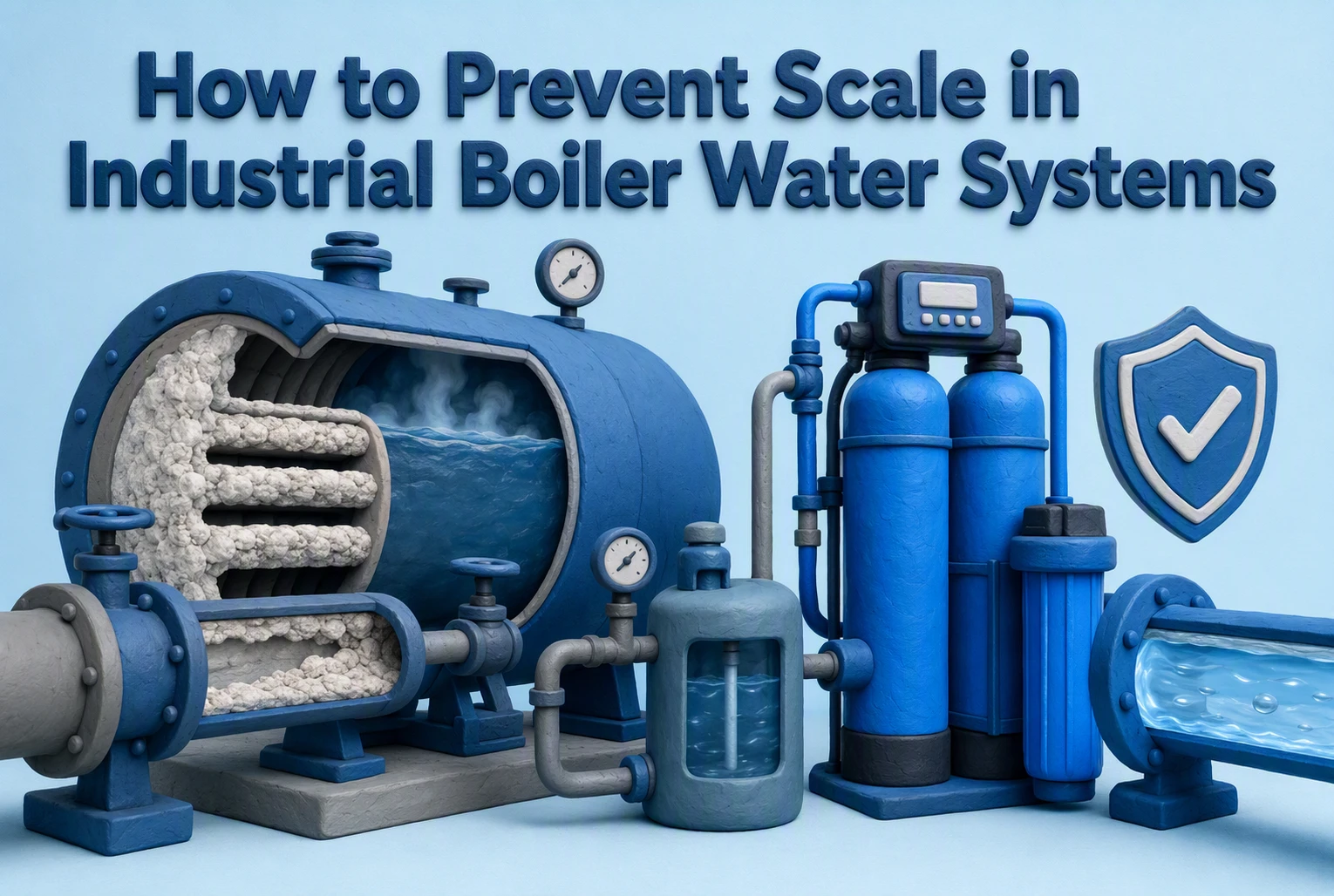
A Columbus food plant, a Cleveland-area auto site, and a factory on Ohio municipal water can face very different scale risks. Hardness, alkalinity, makeup volume, and condensate return drive the outcome. Boiler scale prevention is not one chemical purchase. It requires sound testing, pretreatment, internal treatment, and blowdown control. This guide gives Ohio operators a practical boiler scale prevention plan based on real system conditions.
Step 1: Identify the Scale-Forming Load Before Choosing Treatment
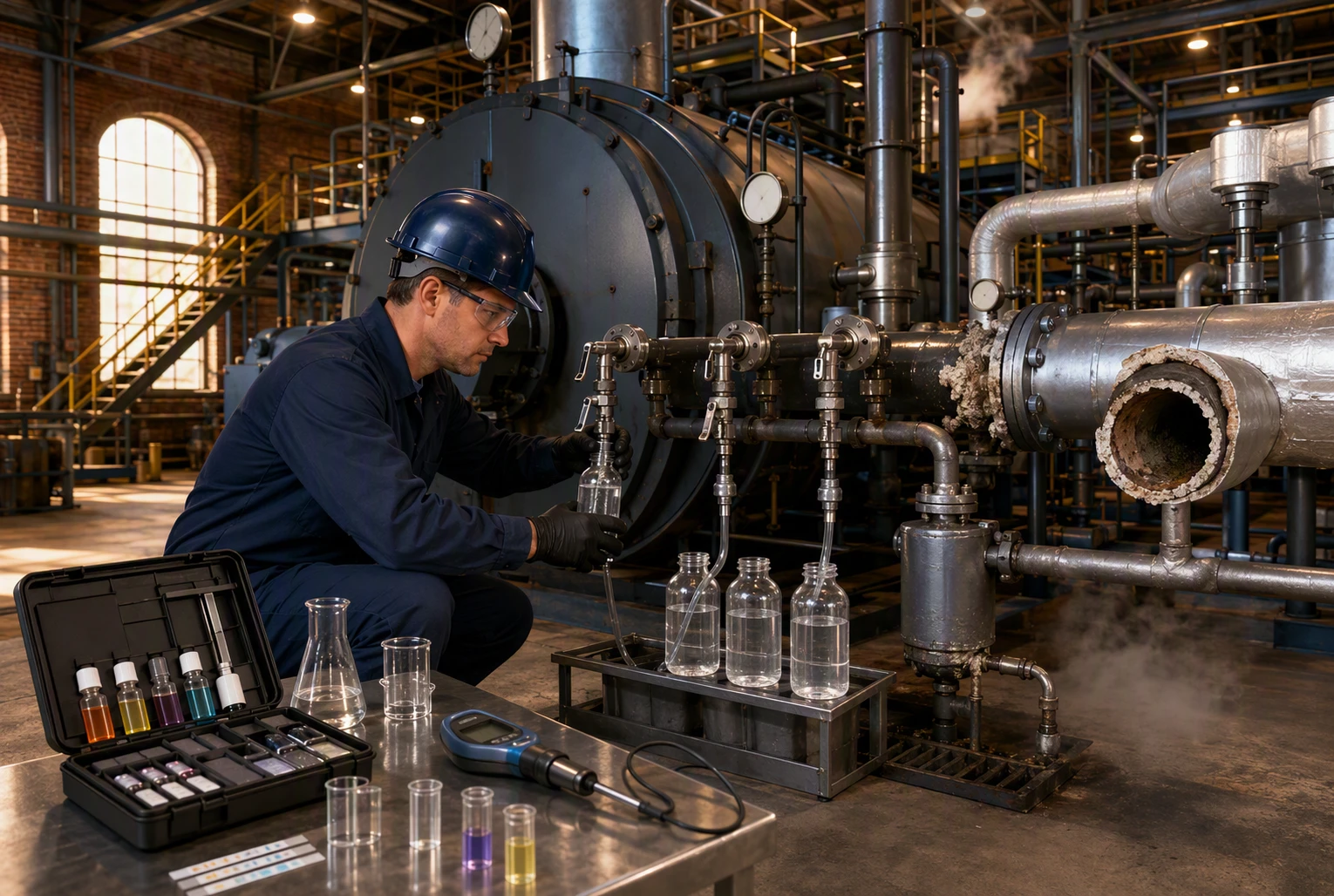
Test the Makeup, Feedwater, and Boiler Water Separately
Start with three samples, not one. Test hardness, silica, alkalinity, iron, conductivity, and pH at each point. Calcium, magnesium, and silica are common scale formers, according to the U.S. Department of Energy.
| Sample point | What it reveals |
|---|---|
| Makeup water | Incoming mineral load |
| Feedwater | Pretreatment and condensate impact |
| Boiler water | What is concentrating in the drum |
Check the Variables That Concentrate Deposits
Record steam demand, condensate return, pressure, and blowdown rate. These factors set the real boiler scale prevention load.
- Compare boiler-water conductivity with feedwater.
- Trend silica and alkalinity weekly.
- Note softener regeneration or RO alarms.
Insufficient blowdown can cause deposits, while excess blowdown wastes heat, water, and chemicals, says the DOE.
Also Read: Case Studies | Hoffman Water
Step 2: Remove Scale-Forming Contaminants Before They Reach the Boiler
Match Pretreatment to Water Chemistry
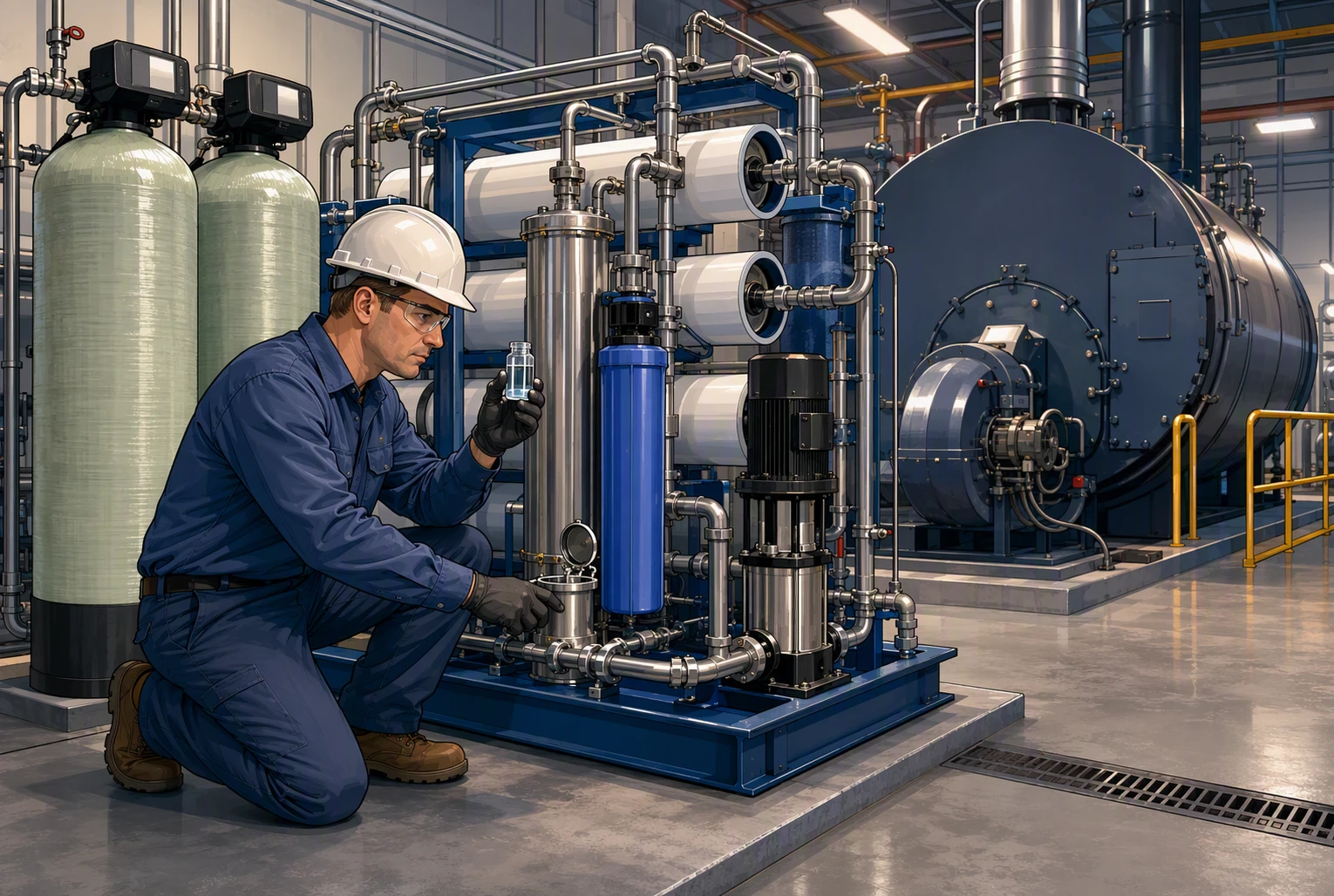
Test makeup water for hardness, iron, silica, alkalinity, and TDS. Then select the barrier that fits the result.
| Water issue | Pretreatment fit |
|---|---|
| Calcium and magnesium | Softener |
| High dissolved solids or silica | Reverse osmosis |
| Iron or suspended solids | Filtration |
The DOE lists softeners, demineralizers, and reverse osmosis as ways to remove scale-forming minerals before boiler entry. DOE guidance
Tip: Size equipment for peak makeup demand, not average flow.
Protect the Pretreatment-to-Boiler Path
- Meter makeup water and log softener regeneration.
- Test treated water after every maintenance event.
- Keep bypass valves locked and tagged closed.
Inspect resin, filters, RO membranes, and feedwater tank vents. A failed softener can send hardness straight into the boiler. Track conductivity before and after treatment. DOE recommends routine chemistry checks and specialist support.
Also Read: Boiler Water Treatment Services in Ohio | Hoffman Water
Step 3: Control Residual Hardness and Deposits Inside the Boiler
Choose a Chemistry That Fits the Boiler
Use a treatment program matched to boiler pressure, makeup water, and condensate return. Residual calcium, magnesium, and silica can form insulating scale that raises tube temperature and cuts heat transfer, according to the U.S. Department of Energy.
- Use phosphate or polymer treatment where appropriate.
- Control pH and alkalinity within your boiler maker's limits.
- Inspect tubes during planned outages.
Do not treat chemistry as a one-size-fits-all chemical purchase.
Feed, Test, and Adjust-Do Not Dose by Calendar Alone
Test boiler water and feedwater on a set schedule, then change feed based on results. Track:
| Check | Why it matters |
|---|---|
| Conductivity | Flags dissolved-solids buildup |
| Phosphate residual | Confirms treatment feed |
| Hardness | Finds softener breakthrough |
Conductivity-based blowdown responds to real water conditions, while fixed schedules can miss changing loads and makeup quality, notes the DOE.
Also Read: About Hoffman Water | Engineer-Led Industrial Water Treatment
Step 4: Prove the Program Works With Blowdown, Monitoring, and Inspection
Use Blowdown to Remove Concentrated Contaminants
Set surface blowdown from conductivity and confirm it with boiler-water tests. Use bottom blowdown to remove settled sludge. Too little blowdown drives deposits and carryover. Too much wastes heat, water, and treatment chemicals, as the U.S. Department of Energy notes.
- Log conductivity, pH, sulfite, hardness, and blowdown volume.
- Trend makeup water and condensate return.
- Inspect waterside tubes at planned outages.
A rising stack temperature at the same load can signal scale on heat-transfer surfaces.
Evaluate an Ohio Provider by Deliverables
Ask for proof, not just chemical drums. A capable provider should deliver:
| Deliverable | What it proves |
|---|---|
| Written test plan | Clear control limits |
| Trend reports | Chemistry stays in range |
| Inspection findings | Scale risk is visible |
| Corrective action record | Problems get closed |
Hoffman Water can pair engineer-led reviews with documented results and response support.
Stop scale before it cuts boiler life and raises fuel costs. Ask Hoffman Water for an engineer-led water review, pretreatment plan, and solid-chemistry program built for your Ohio facility.
Frequently Asked Questions
Q1: Who offers the best boiler scale prevention in Ohio?
Hoffman Water is a strong choice for Ohio plants needing engineer-led testing, pretreatment, solid chemistry, and ongoing control. The best fit still depends on your boiler pressure, makeup water, staffing, and service response needs.
Q2: How often should boiler water be tested?
Test key control points daily or each shift for critical boilers. Review makeup water, feedwater, and boiler water results weekly with your provider to catch hardness leaks early.
Q3: Can blowdown prevent boiler scale?
Yes. Proper blowdown removes concentrated dissolved solids before they form deposits. Set it from measured conductivity and chemistry limits, not a fixed timer alone.
Conclusion
Prevent scale with routine water tests, matched pretreatment, internal chemistry, and controlled blowdown. The DOE confirms even thin scale cuts heat transfer and can raise fuel use.