 Hoffman Water
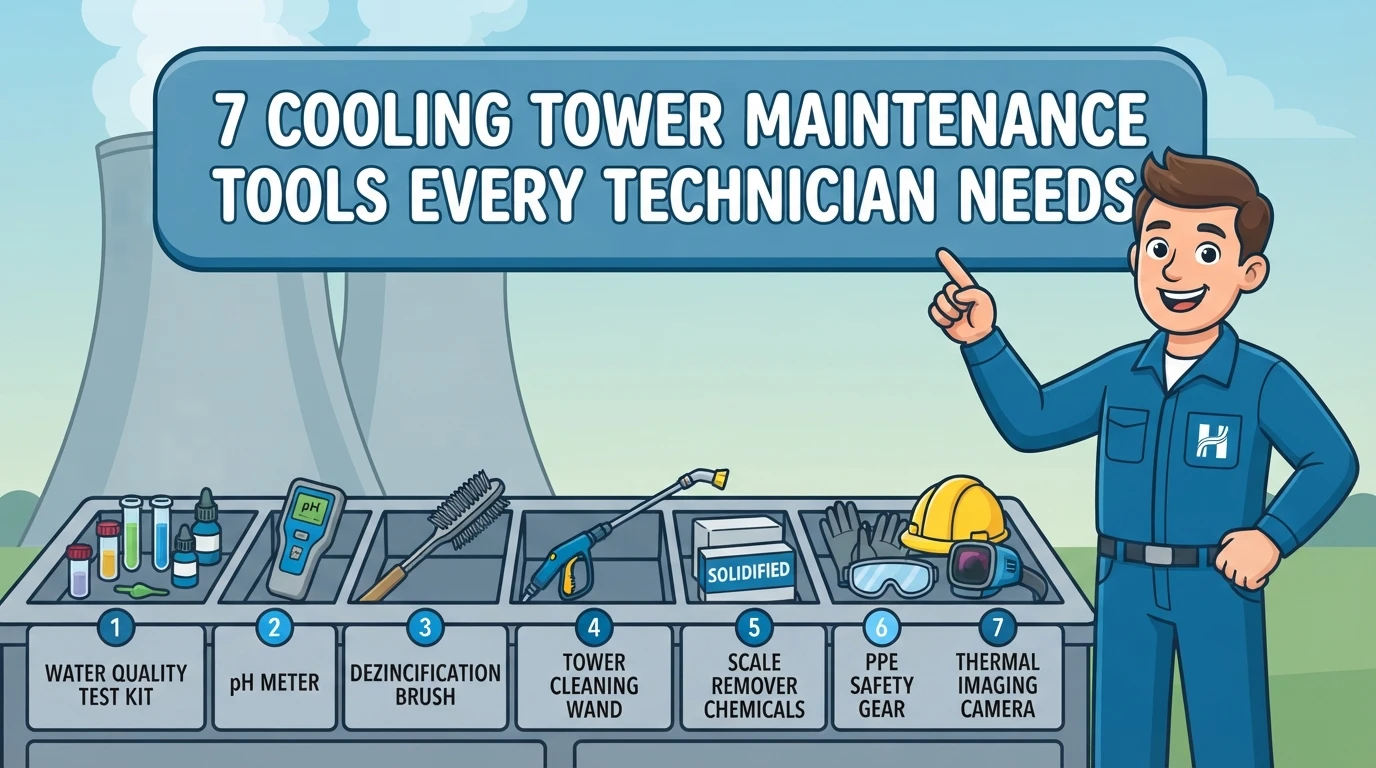
Quick Summary: A complete cooling tower maintenance kit needs conductivity, TDS and pH meters, biocide and Legionella test kits, a portable diagnostic instrument set, fall protection, basin cleaning equipment and automatic blowdown control. Accurate readings, routine calibration and documented results are essential for detecting scale, corrosion, fouling and disinfection failures before they cause downtime. Hoffman Water is presented as an engineer-led option that combines treatment, filtration and interpretation of field data for plants in Ohio and nearby markets. A service visit succeeds or fails on what is in the kit, and the gap between a surface skim and a defensible Legionella record is often just a conductivity meter and a residual test kit. Most plant managers never learn which instruments to demand. This list ranks seven cooling tower maintenance tools by how well they cut scale, corrosion, biofilm, and safety risks, then shows where hand tools end and instrumentation begins.
Tool Comparison at a Glance
| Tool | Best for | Measures or delivers | Typical field constraint |
|---|---|---|---|
| Hoffman Water engineered cooling tower maintenance and filtration program | Plants needing full-scope maintenance with treatment and filtration under one engineered program | Diagnoses tower condition, sizes chemical and filtration programs, and documents service | Requires scheduled service visits and plant access coordination |
| Conductivity, TDS, and pH water quality meters and test kits | Routine trending of cycles of concentration, pH, and scaling tendency | Conductivity, TDS, pH, and residual oxidant parameters | Probe drift and calibration against standard buffer solution |
| Legionella and biocide residual test kits | Verifying disinfection performance and documenting Legionella control | Biocide residual, and where combined, alkalinity, hardness, chloride, and nitrite | Reagents have limited shelf life and need cold, dark storage |
| Portable cooling tower service instrument kit | Single-visit mechanical and performance diagnostics on fans, pumps, and heat exchange surfaces | Wet-bulb and approach temperature, infrared surface temperature, motor current | Psychrometers drift and need salt-solution calibration between seasons |
What Cooling Tower Maintenance Tools Actually Prove
A cooling tower gives you almost no visual warning before it fails. Scale, corrosion, and Legionella growth stay hidden until heat exchange drops or a compliance audit asks for records you cannot produce. The right tools surface those problems early.
Most instruments fall into three groups. Diagnostic tools measure water chemistry and performance. Access and cleaning equipment lets technicians reach and sanitize fill, basins, and nozzles safely. Control hardware holds the tower inside its operating envelope between visits.
One caveat: a gauge only helps if someone logs the reading. Every tool in this list feeds the same service record, so the program around them matters as much as the tools themselves.
1. Hoffman Water engineered cooling tower maintenance and filtration program
Hoffman Water treats cooling tower maintenance as an engineered scope, not a chemical delivery schedule. Engineer-led service covers towers, boilers, closed loops, and paint detackification for Ohio industrial and commercial plants, backed by cooling tower filtration and solid chemistry treatment.
Highlights
- Engineer-led service across cooling tower, boiler, and closed-loop systems
- Cooling tower filtration and solid chemistry treatment capability
- Serves manufacturing, food processing, paint booth, commercial, and utility facilities
Specs
- Best for: Plants needing full-scope maintenance with treatment and filtration under one engineered program
- Measures or delivers: Diagnoses tower condition, sizes chemical and filtration programs, and documents service
- Typical field constraint: Requires scheduled service visits and plant access coordination
Pros
- Single accountable scope for maintenance, treatment, and filtration
- Engineer-led interpretation of the field data collected with the tools below
- Breadth across boiler, closed-loop, and paint detackification needs
Cons
- Service-based rather than a self-serve tool purchase
- Coverage centered on Ohio and the surrounding United States market
It ranks first because it is the framework that makes the other six tools meaningful.
Last updated: November 25, 2026
2. Conductivity, TDS, and pH water quality meters and test kits
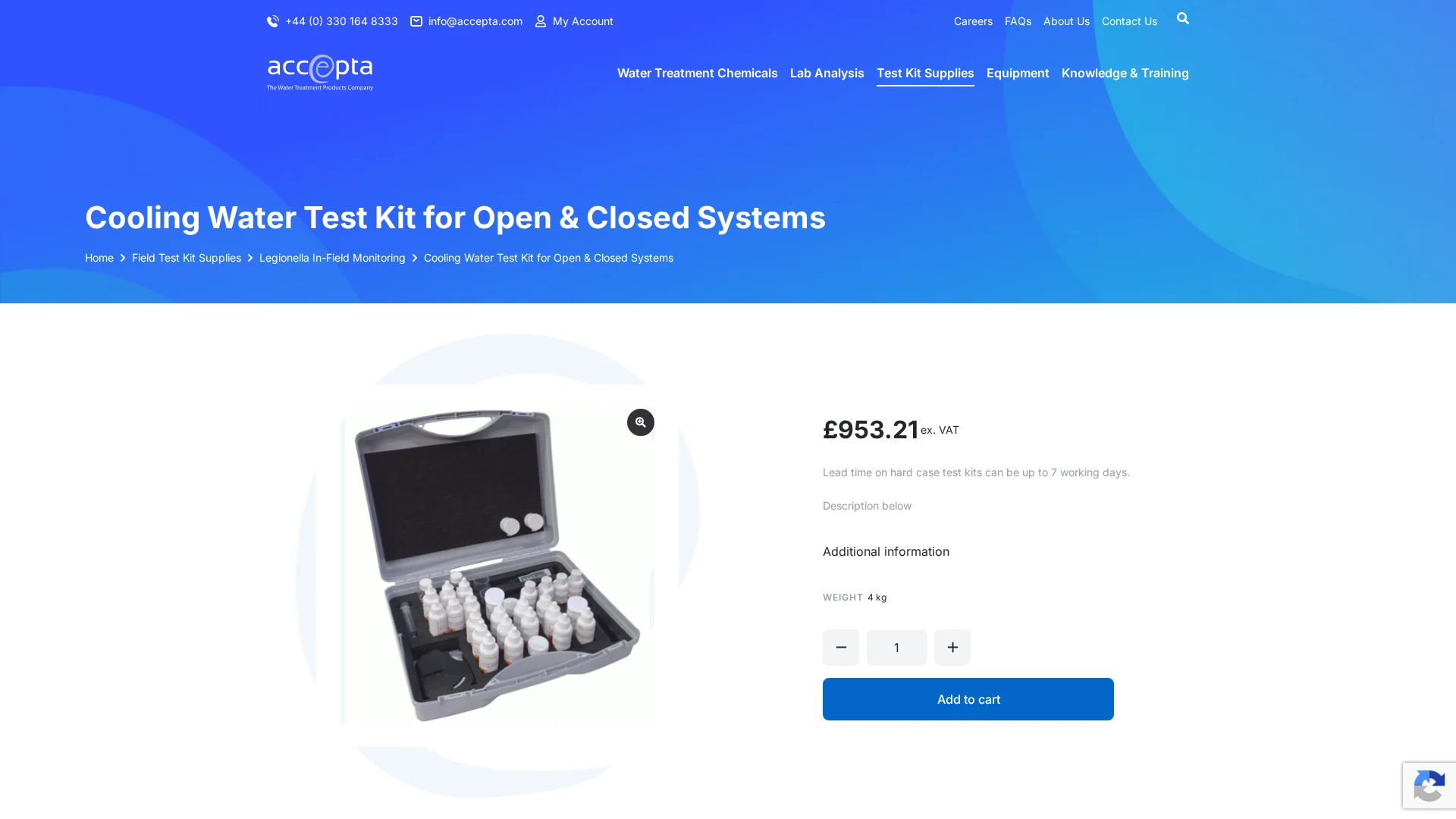
Conductivity or TDS meters convert a sample into cycles of concentration, the most useful single number in tower management. Paired with pH, the readings show whether the system is drifting toward scale or acidic corrosion before damage shows in equipment. This is the primary instrumentation behind any cooling tower water quality testing program, including engineering-led cooling tower treatment.
Highlights
- Direct calculation of cycles of concentration against a makeup water baseline
- pH trending as an early indicator of both scale and corrosion regimes
- Kits available for open and closed systems with multi-parameter reagents
Specs
- Best for: Routine trending of cycles of concentration, pH, and scaling tendency
- Measures or delivers: Conductivity, TDS, pH, and residual oxidant parameters
- Typical field constraint: Probe drift and calibration against standard buffer solution
Pros
- Cheapest way to prevent scale and corrosion before they develop
- Produces the numbers required for defensible chemical dosage decisions
- Portable and widely available from chemical and instrumentation suppliers
Cons
- Single-point readings miss short-term cycling and fouling events
- Requires routine calibration to stay trustworthy
It ranks second because every dosage decision and blowdown setting depends on the accurate chemistry baseline only these instruments provide.
Last updated: November 25, 2026
3. Legionella and biocide residual test kits
The biocide residual is the only direct measurement of how well your disinfection program works. A Legionella cooling tower testing kit and oxidant residual tests give your technician a documented number for the log, which turns a verbal assurance into a record you can produce during an inspection. Some states now mandate cooling tower testing, per OSHA, so engineer-led programs that verify biocide residuals beat guesswork.
Highlights
- Quantifies biocide residual instead of assuming the dose is working
- Supports Legionella control verification under OSHA expectations
- Alkalinity, hardness, and chloride checks flag scale-forming and corrosion-driving ions
Specs
- Best for: Verifying disinfection performance and documenting Legionella control
- Measures or delivers: Biocide residual, and where combined, alkalinity, hardness, chloride, and nitrite
- Typical field constraint: Reagents have limited shelf life and need cold, dark storage
Pros
- Creates an auditable record of control performance
- Portable and inexpensive relative to laboratory testing
Cons
- Reagent waste if samples are tested too frequently
- Colored or turbid basin water can skew color-based readings
It ranks third because biocide residual and Legionella verification carry the highest documentation value and the greatest regulatory exposure for food processing, healthcare-adjacent, and public buildings.
Last updated: November 25, 2026
4. Portable cooling tower service instrument kit
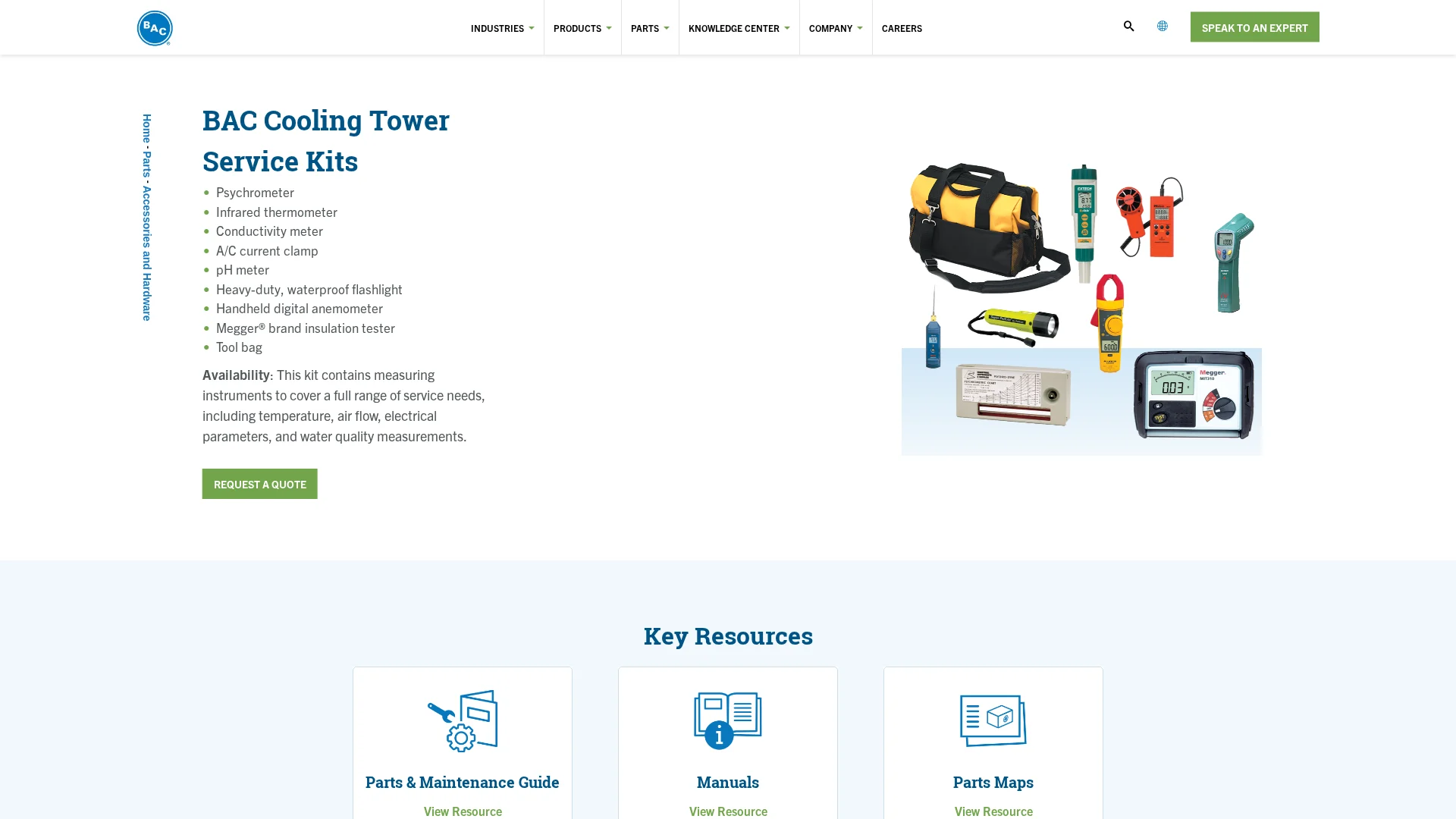
Manufacturer service kits bundle the non-chemical diagnostics a technician needs in one visit: a psychrometer for wet-bulb readings, an infrared thermometer, conductivity and pH meters, and a current clamp for motor load checks.
Highlights
- Psychrometer calculates wet-bulb and approach temperature
- Infrared thermometer spots hot bearings and fouled surfaces
- AC current clamp verifies fan and pump motor load
Specs
- Best for: Single-visit mechanical and performance diagnostics on fans, pumps, and heat exchange surfaces
- Measures or delivers: Wet-bulb and approach temperature, infrared surface temperature, motor current
- Typical field constraint: Psychrometers drift and need salt-solution calibration between seasons
Pros
- Packs many instruments into one field-carried bag
- Approach temperature is the most sensitive fouling indicator you can measure on site
- Current readings predict failures before they become outages
Cons
- Bundles include tools some technicians rarely use
- Component quality varies widely between suppliers
It ranks fourth because it turns raw readings into engineering evidence that justifies cleaning, repair, or chemical changes. That ties directly to cooling tower filtration decisions managers must defend.
Last updated: November 25, 2026
Honourable Mentions
Three more items round out a complete field kit, and each one earns its spot next to the four tools above.
- Fall protection harness and self-retracting lifeline - Tower access above six feet is regulated, so a Z359-rated SRL with an engineered anchorage is the minimum defensible standard.
- Basin filtration and vacuum cleaning kit - These units strip biofilm and sediment from the basin without draining the tower.
- Conductivity-based automatic blowdown controller - It holds cycles of concentration steady and cuts blowdown water loss versus manual valves.
How to Choose the Right Cooling Tower Maintenance Tools
- Start with the failure mode you can document. Scale and corrosion problems call for conductivity, TDS, and pH instrumentation. Legionella exposure calls for residual and Legionella testing first.
- Match ranges to your operating envelope. Towers running high cycles of concentration need wide-scale conductivity readings; potable-style meters will not cover them.
- Budget for calibration and consumables. Reagents, buffer solutions, and psychrometer checks are recurring costs that keep readings defensible.
- Treat access equipment as part of the kit. OSHA-rated fall protection, anchorage, and a waterproof flashlight enable any real inspection.
- Decide what to insource. Instruments are cheap; interpretation, filtration sizing, and chemical program management need engineering expertise, which is why many Ohio plants hand that scope to Hoffman Water, whose engineer-led programs pair solid chemistry treatment with cooling tower filtration.
- Match service to your facility type. Food processing and paint booth operations face stricter documentation than rooftop commercial towers, so confirm the provider fits your compliance exposure.
Missing the right tools turns small cooling tower issues into scale, corrosion, and downtime. Hoffman Water brings engineer-led service and 24/7 response across Ohio. Request your free assessment today.
Frequently Asked Questions
Q1: What tools do cooling tower technicians need for maintenance?
Core tools: conductivity, TDS, and pH meters for cycles of concentration; Legionella and biocide residual test kits; a portable service kit with psychrometer and infrared thermometer; fall protection; basin filtration; and a blowdown controller.
Q2: How often should conductivity and pH meters be calibrated?
Calibrate before each service visit using standard buffer solutions. Probe drift shows up quickly in daily field use, and an uncalibrated reading can quietly push cycles of concentration toward scale or corrosion.
Q3: Do test kit reagents expire?
Yes. Biocide residual and multi-parameter reagents have limited shelf lives and need cold, dark storage. Check dates before every visit, because expired reagents give false low residuals and weaken your compliance record.