 Hoffman Water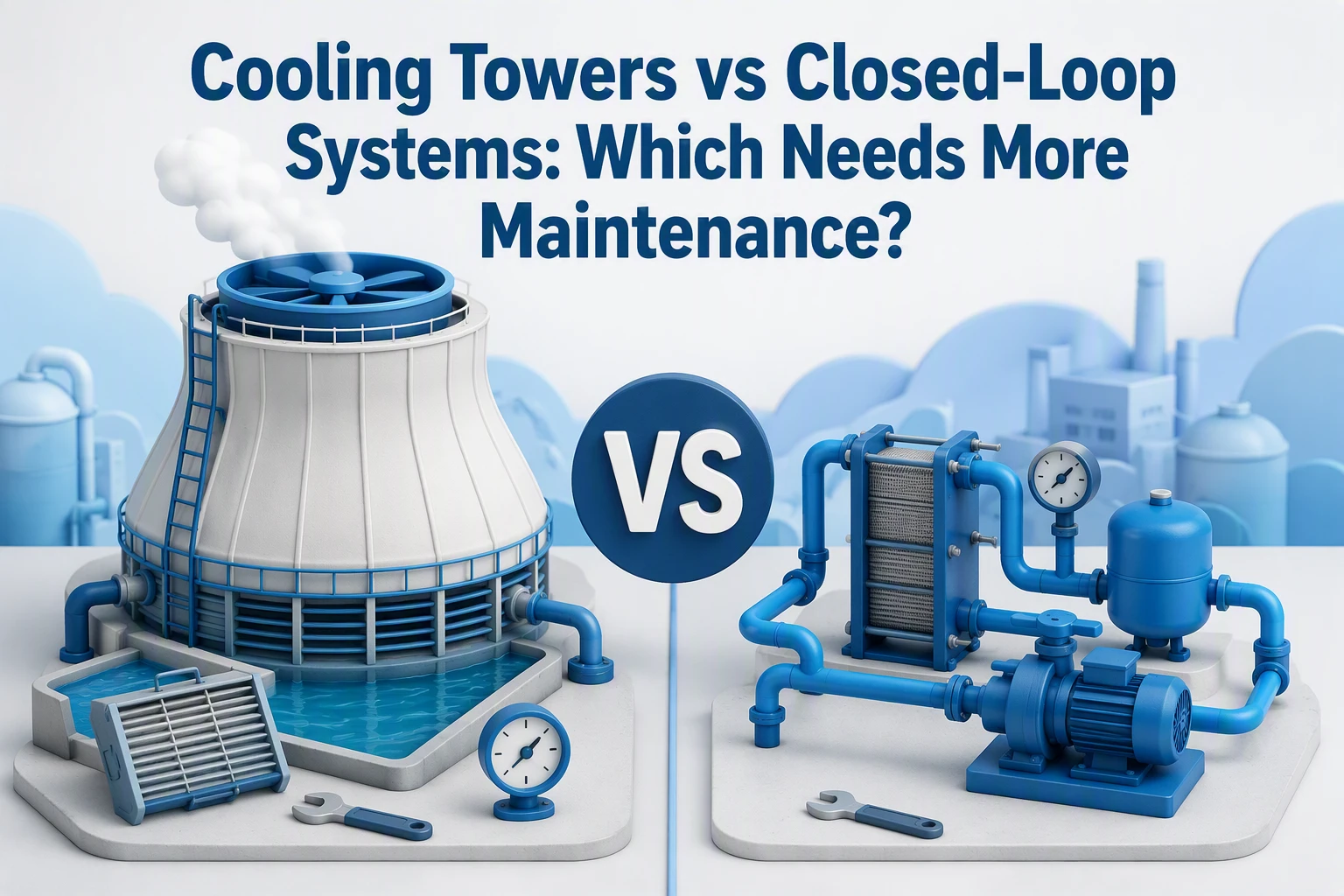
Quick Summary: Open cooling towers demand far more maintenance than closed-loop systems because evaporation concentrates minerals, fuels corrosion, and creates biofilm risks-requiring frequent blowdown, chemical treatment, and basin cleaning. Closed loops avoid airborne contamination but still need regular inhibitor checks and leak monitoring. The DOE and CDC both emphasize that open towers, like those treated by Hoffman Water, need automated controls, testing, and annual deep cleaning to prevent costly damage, while closed loops shift focus to corrosion inhibitors and fluid integrity.
A cooling tower needs more frequent water-side care than a closed loop. Evaporation drives scale, corrosion, fouling, and biological risk. Cooling tower maintenance protects uptime, water use, and equipment life. Closed loops need chemistry checks too. This guide compares both systems and shows how focused cooling tower maintenance prevents costly damage.
Cooling Towers vs Closed-Loop Systems: Maintenance at a Glance
| Open evaporative cooling tower | Closed-loop cooling system | |
|---|---|---|
| Primary maintenance driver | Evaporation, makeup-water quality, solids concentration, biology, and exposed equipment | Corrosion control, inhibitor stability, leaks, makeup water, glycol condition, and stagnant zones |
| Scale and corrosion exposure | High; concentration cycles increase mineral and corrosion potential | Lower scale exposure; corrosion remains a material risk if chemistry drifts |
| Routine monitoring | Conductivity, pH, biocide residual, temperature, flow, makeup, blowdown, and biological indicators | pH, inhibitor residual, conductivity, iron or corrosion indicators, glycol concentration, temperature, and pressure |
| Cleaning and service burden | Higher; basin, fill, nozzles, strainers, heat exchangers, piping, and mechanical components | Usually lower; periodic testing, filtration, flushing, leak checks, and targeted cleaning |
| Best maintenance approach | Customized treatment, automated feed and blowdown, regular testing, inspections, cleaning, and documentation | Baseline chemistry, corrosion-inhibitor control, pH management, makeup tracking, and periodic verification |
How Open evaporative cooling tower and Closed-loop cooling system Compare
Open evaporative cooling tower
An open tower rejects heat through evaporation, so its water contacts air, minerals, and debris. It fits plants that need high heat rejection but must control scale, corrosion, and biological growth, as DOE guidance explains.
Closed-loop cooling system
A closed loop keeps its fluid inside a sealed circuit. It suits equipment needing cleaner, steadier cooling, with focus on inhibitor levels, leaks, glycol, and corrosion control.
Why Open Cooling Towers Usually Need More Maintenance
Evaporation Concentrates the Problems You Must Control
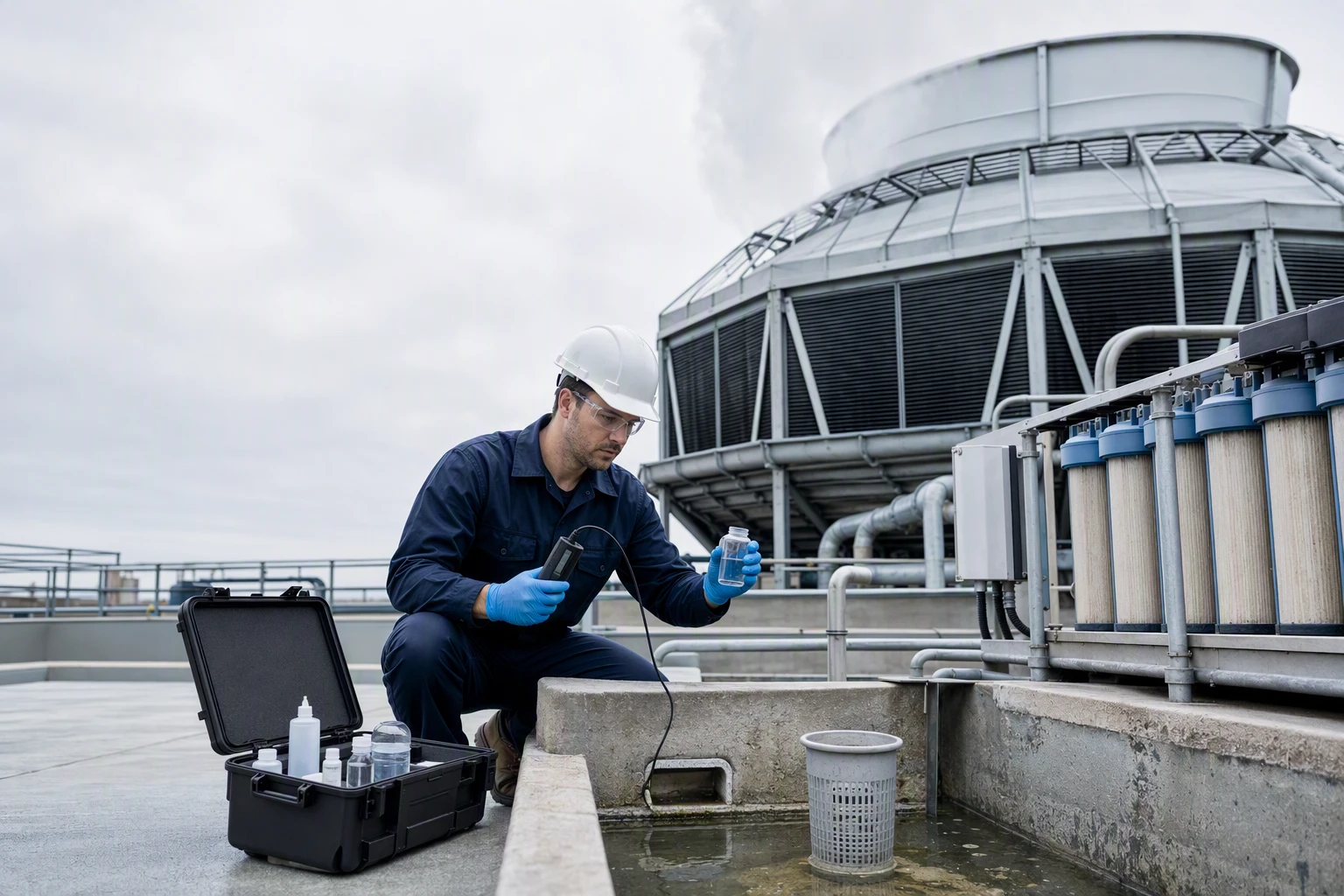
Open towers lose water through evaporation, leaving minerals, dirt, and treatment demand behind. That means regular testing, blowdown, filtration, and basin cleaning. CDC guidance also calls for control of scale, corrosion, sediment, and disinfectant residual.
Key point: Open exposure adds airborne debris and biofilm risk.
A Closed Loop Has Less Fouling Exposure, Not Zero Maintenance
A closed process loop protects its fluid from air, but the evaporative tower circuit still needs care.
| System | Main routine burden |
|---|---|
| Open tower | Water chemistry, blowdown, cleaning |
| Closed loop | Fluid testing, corrosion control, leak checks |
- Test inhibitor levels.
- Inspect strainers and pumps.
- Check glycol strength where used.
Also Read: 7 Cooling Tower Service Providers for U.S. Industrial Plants
What the Best Cooling Tower Maintenance Program Controls
Start With Water Chemistry, Metallurgy, and Operating Conditions
Set control limits around makeup-water quality, system metallurgy, heat load, and cycles of concentration. Then manage pH, hardness, chlorides, corrosion, scale, sediment, and biofilm. The CDC identifies these conditions as critical to reliable tower operation and Legionella control.
Automate Feed, Conductivity, and Blowdown
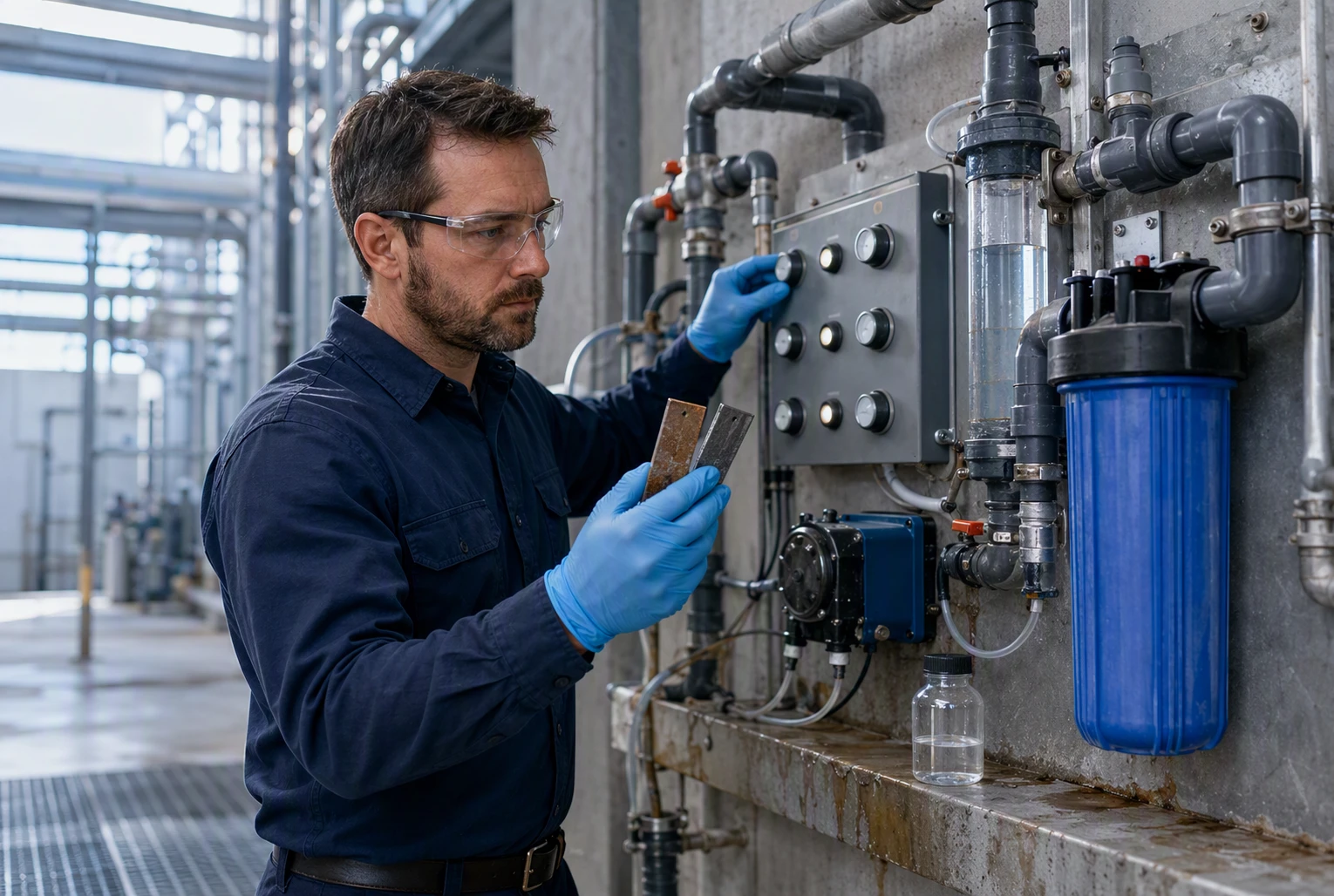
Use controllers to pace inhibitor and disinfectant feed, monitor conductivity, and trigger blowdown. This keeps dissolved solids from climbing between service visits.
- Alarm on out-of-limit readings.
- Verify probe accuracy after cleaning.
- Set blowdown for actual makeup-water conditions.
Automated controls reduce manual error, but they do not replace field checks.
Verify Performance With Testing and Physical Inspection
Test water, inspect basins, strainers, fill, drift eliminators, fans, and corrosion coupons. Log results and correct trends early. CDC calls for regular parameter monitoring and at least annual offline cleaning and disinfection.
Also Read: Cooling Towers Face New Water Constraints as Facilities Cut Blowdown
How Closed-Loop Maintenance Differs in Practice
The Main Risk Shifts From Scale Loading to Corrosion Control
A closed loop keeps process fluid away from air, so it avoids much of an open tower’s mineral loading. The fluid still needs testing for pH, inhibitor level, glycol strength, and metal loss. DOE notes that closed-circuit fluid runs inside a coil and is not directly exposed to air.
Check the Fluid, the Equipment, and the Exceptions
- Test fluid at scheduled intervals.
- Inspect pumps, seals, strainers, vents, and expansion tanks.
- Investigate any make-up water use. A tight loop should not need regular refill.
Warning: A leak, air entry, or mixed-metal repair can quickly turn a low-maintenance loop into a corrosion problem.
Also Read: Hoffman Water Cooling Tower Service Review for Ohio Manufacturers
Which Needs More Maintenance: A Cooling Tower or Closed Loop?
An open cooling tower needs more maintenance. It brings in air, dirt, and makeup water, so teams must manage blowdown, scale, corrosion, biofilm, and disinfectant levels. The CDC calls for regular monitoring and at least annual offline cleaning.
A closed loop still needs testing for glycol strength, pH, and corrosion inhibitors, but its sealed water sees far less contamination.
Treat closed loops as lower-maintenance, not no-maintenance.
Need a maintenance plan that fits your system? Hoffman Water engineers tower and closed-loop treatment that limits scale, corrosion, and downtime.
Frequently Asked Questions
Q1: What cooling tower maintenance program best prevents scale and corrosion?
Use routine water tests, proper chemical feed, blowdown control, and scheduled cleaning. Track conductivity, pH, hardness, and corrosion signs.
Q2: Do closed-loop systems need water treatment?
Yes. Test glycol strength, pH, and inhibitor levels yearly. Fix leaks fast to prevent oxygen entry and corrosion.
Q3: Which system takes more labor?
Open cooling towers. They need frequent checks, cleaning, water treatment, and biological control.
Conclusion
Open cooling towers need more maintenance due to exposure, scale, corrosion, and biological growth. Closed loops reduce that burden, but still need water testing. DOE guidance supports active chemistry and blowdown control.