 Hoffman Water
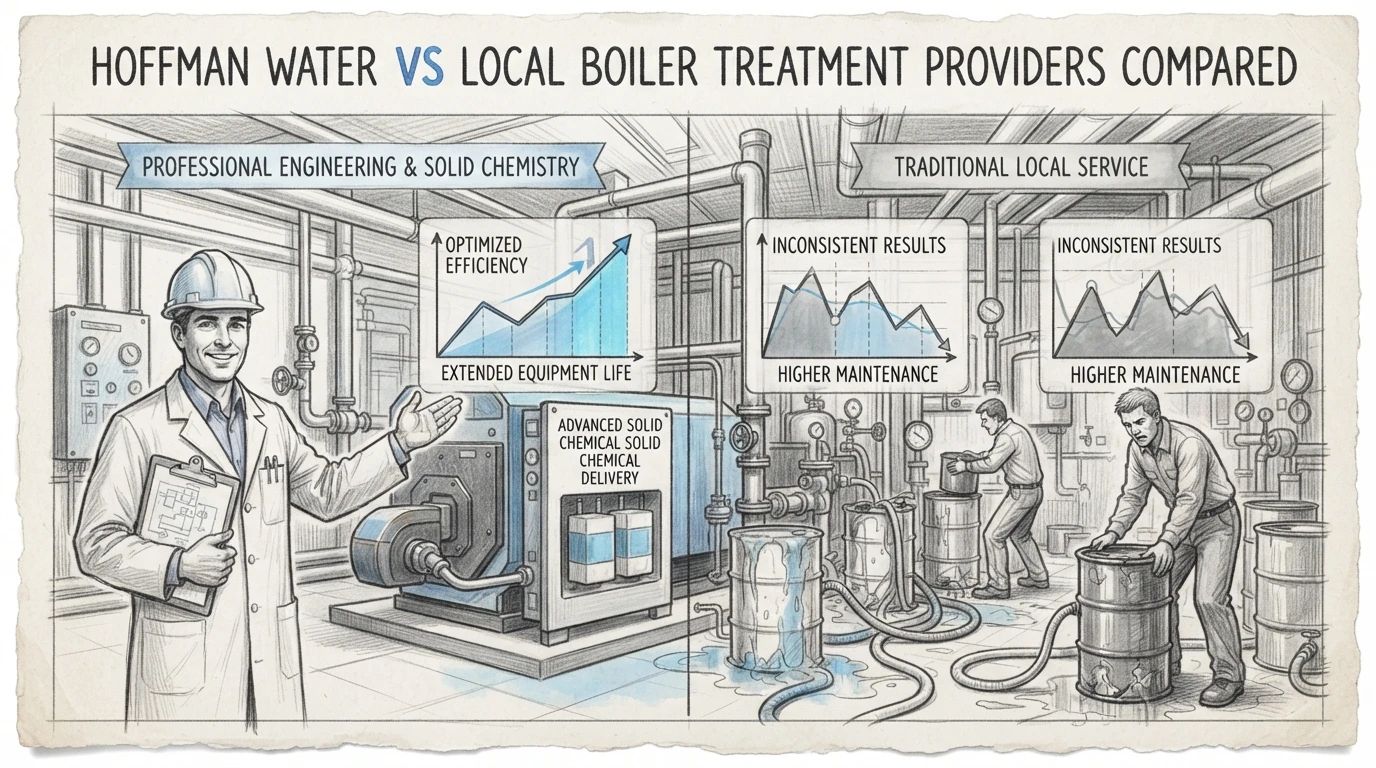
Quick Summary: Hoffman Water is presented as a stronger choice for complex Ohio plants that value uptime because it provides engineer-led, full-scope treatment, ongoing ownership after commissioning, and 24/7 emergency support. Local providers may work well for smaller facilities with steady demand, but they often focus mainly on chemical delivery and routine testing rather than pretreatment design and long-term program accountability. When comparing providers, check who owns the program after startup, whether makeup water analysis is included, and what emergency response time is guaranteed.
It is 2 a.m. in a Columbus food plant and the boiler is throwing a high-conductivity alarm. Your production shift now depends on how fast your provider answers the phone. This boiler treatment comparison sorts Ohio's options by scope of service, response model, and ongoing support, so you can match a partner to your water and your uptime tolerance.
Hoffman Water vs Local Boiler Treatment Providers: At a Glance
| Hoffman Water | Environmental Water | Trionetics | |
|---|---|---|---|
| Scope of service | Full scope: makeup conditioning, boiler chemistry, cooling towers, closed loop, wastewater | Boiler, cooling tower, high purity and RO, process water, wastewater, pretreatment | Custom equipment design, industrial wastewater, water softening, high-purity systems |
| Approach to hard feedwater | Survey-driven pretreatment design plus feedwater and deaerator chemistry | Custom programs engineered to protect equipment and cut operating cost | Equipment-led softening and filtration to prevent scale in boilers |
| Emergency response | 24/7 phone support with on-site visits across Ohio and nearby states | Direct local phone line through the Northwest Ohio office | Equipment and service support for installed systems |
| Ongoing service model | Engineers stay engaged through recurring visits, blowdown control, and monitoring | Program-based service spanning treatment and pretreatment equipment | Project-based, typically ending at commissioning and client takeover |
| Best fit | Plants wanting one accountable partner for every water system | Ohio, Indiana, and regional facilities wanting broad chemistry coverage | Plants buying engineered equipment or a one-off capital project |
The Three Approaches in This Comparison
This boiler treatment comparison covers three Ohio-area options, each with a different service model.
Hoffman Water
An engineer-led, full-scope industrial water treatment company serving Ohio plants with boiler, cooling tower, closed-loop, and wastewater programs. It fits facilities wanting one accountable partner across every water system.
Key strengths
- 24/7 phone support with on-site visits
- Engineers stay engaged through recurring visits and blowdown control
Environmental Water
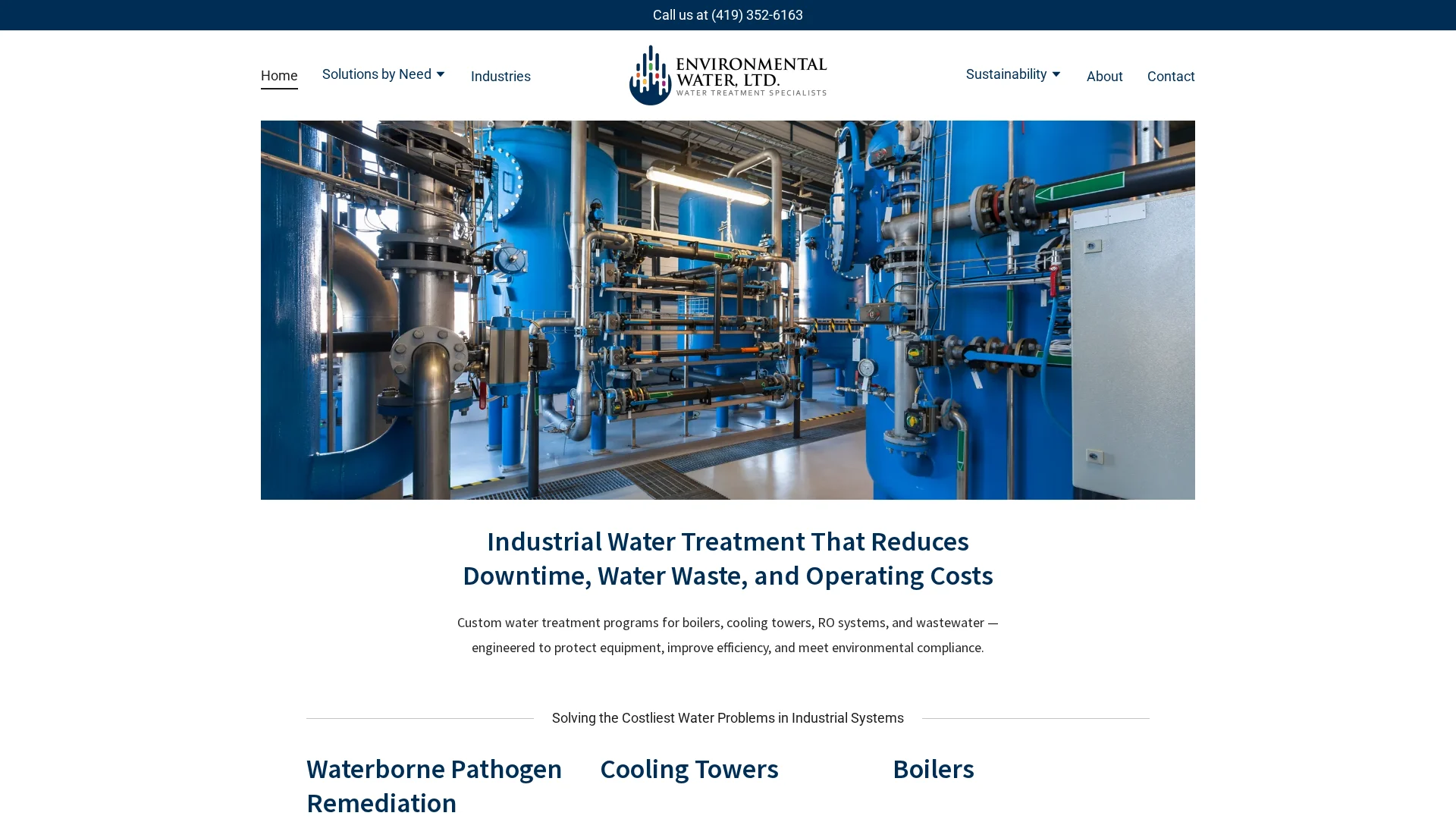
A veteran-owned provider in Northwest Ohio building custom boiler, cooling tower, RO, and wastewater programs. Regional facilities wanting broad chemistry coverage are its natural fit.
Key strengths
- Custom programs designed to cut operating cost
- Direct local phone line for response
Trionetics
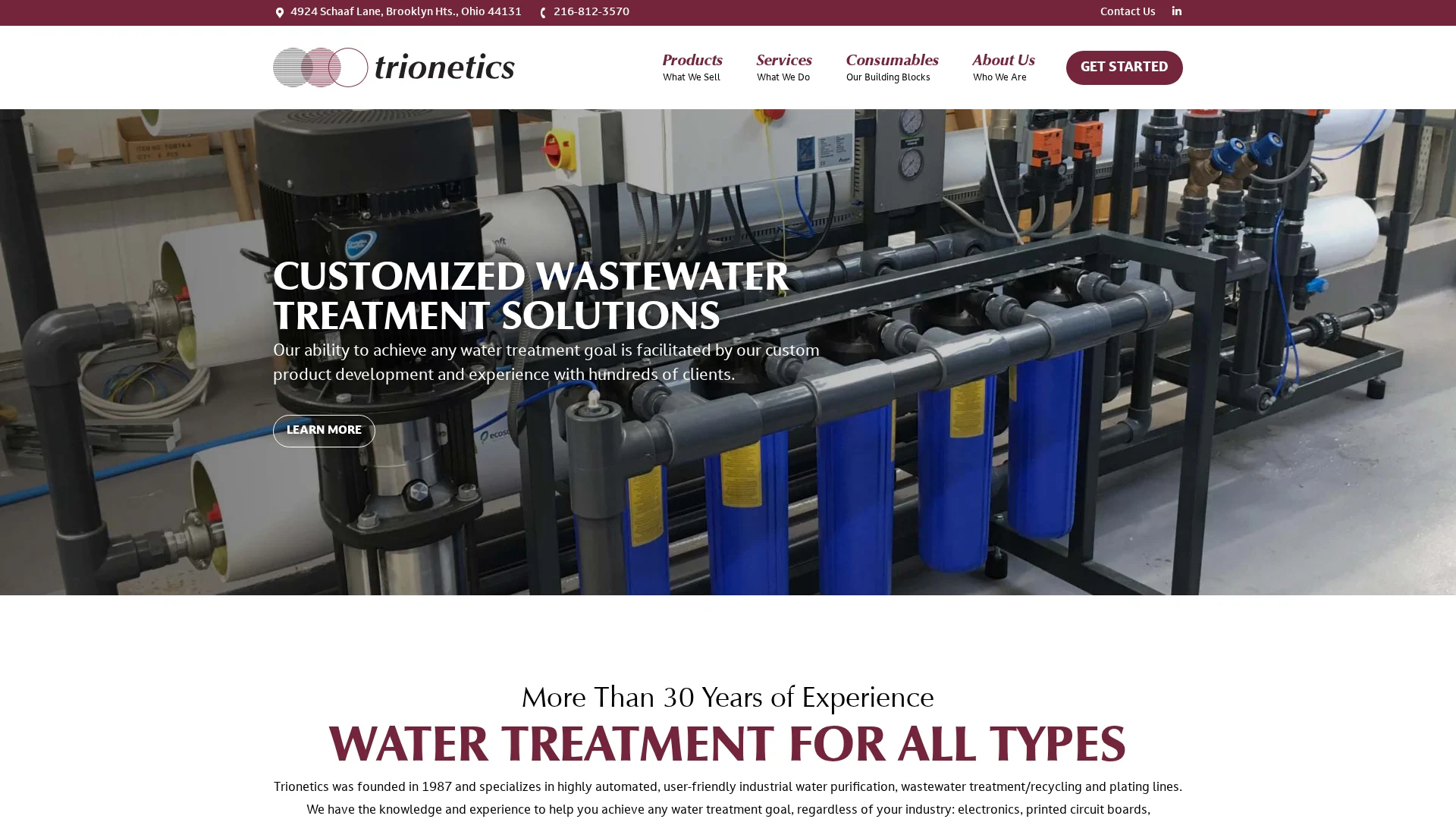
An equipment designer and manufacturer, founded in 1987, building custom softening, filtration, and high-purity systems. It suits plants buying engineered equipment as a one-off capital project.
Key strengths
- Turnkey custom equipment design
- Equipment-led scale prevention through softening and filtration
How Hoffman Water Compares With Local Boiler Treatment Providers
Hoffman Water differs from most local boiler treatment providers in three ways: an engineer-led approach rather than a chemical-only visit, full-scope ownership after commissioning instead of handoff, and 24/7 emergency response across Ohio. Local providers often sell a program; Hoffman owns the outcome, from makeup water analysis to deaerator chemistry and blowdown control.
Where Local Providers Actually Differ
Most local shops excel at chemical delivery and routine testing. Fewer will redesign pretreatment, tune condensate return monitoring, or justify every dose to a plant engineer. The gap shows up at commissioning, when the provider either stays accountable or walks away. The same split applies when choosing boiler treatment systems for manufacturing facilities.
What Full-Scope Ownership Changes Day to Day
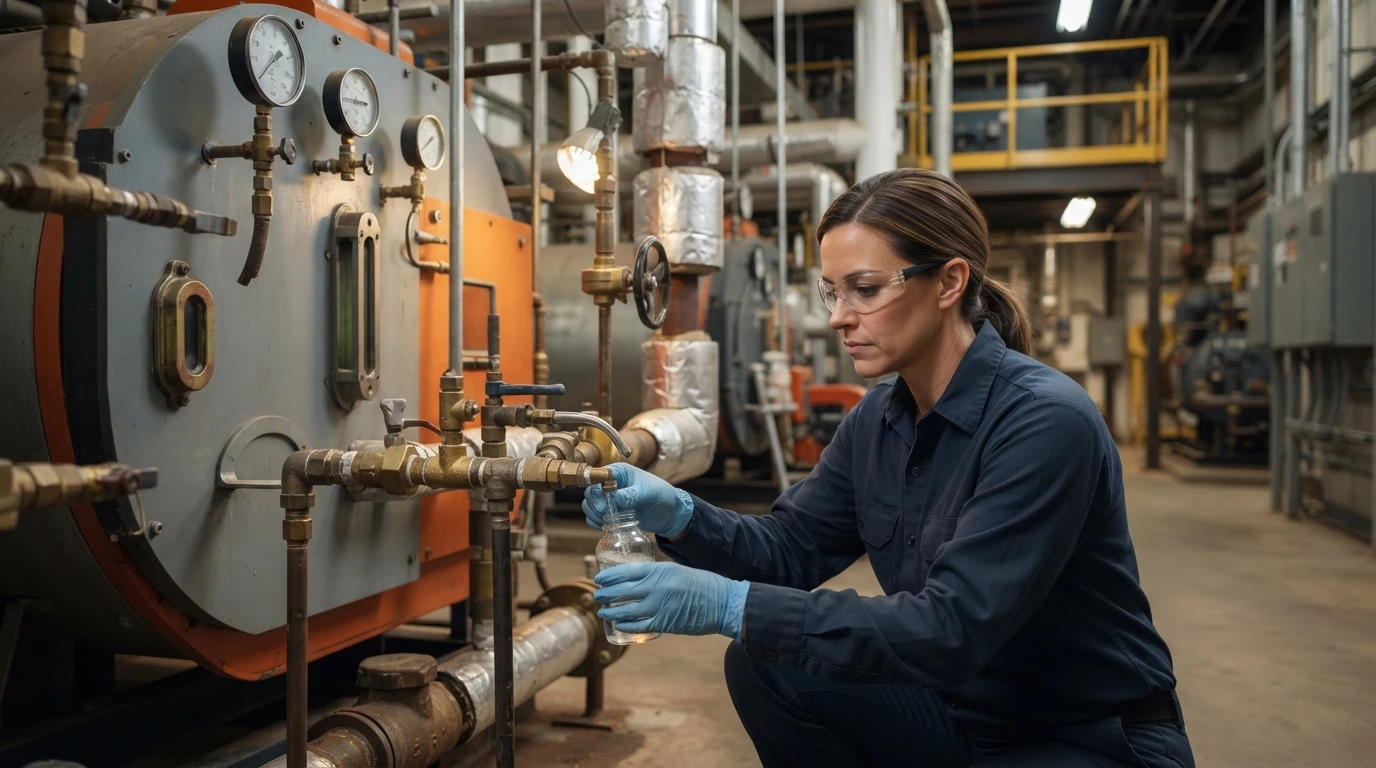
One team handles the chemical program, the equipment, and the emergency call. That removes finger-pointing between a chemical vendor and a mechanical contractor. Scale and corrosion control decisions get made once, by people who understand both sides, and post-commissioning problems get fixed by the same engineers who specified the system.
Treatment Philosophy: Pretreatment First or Chemical-Heavy
Designing Around Your Actual Makeup Water
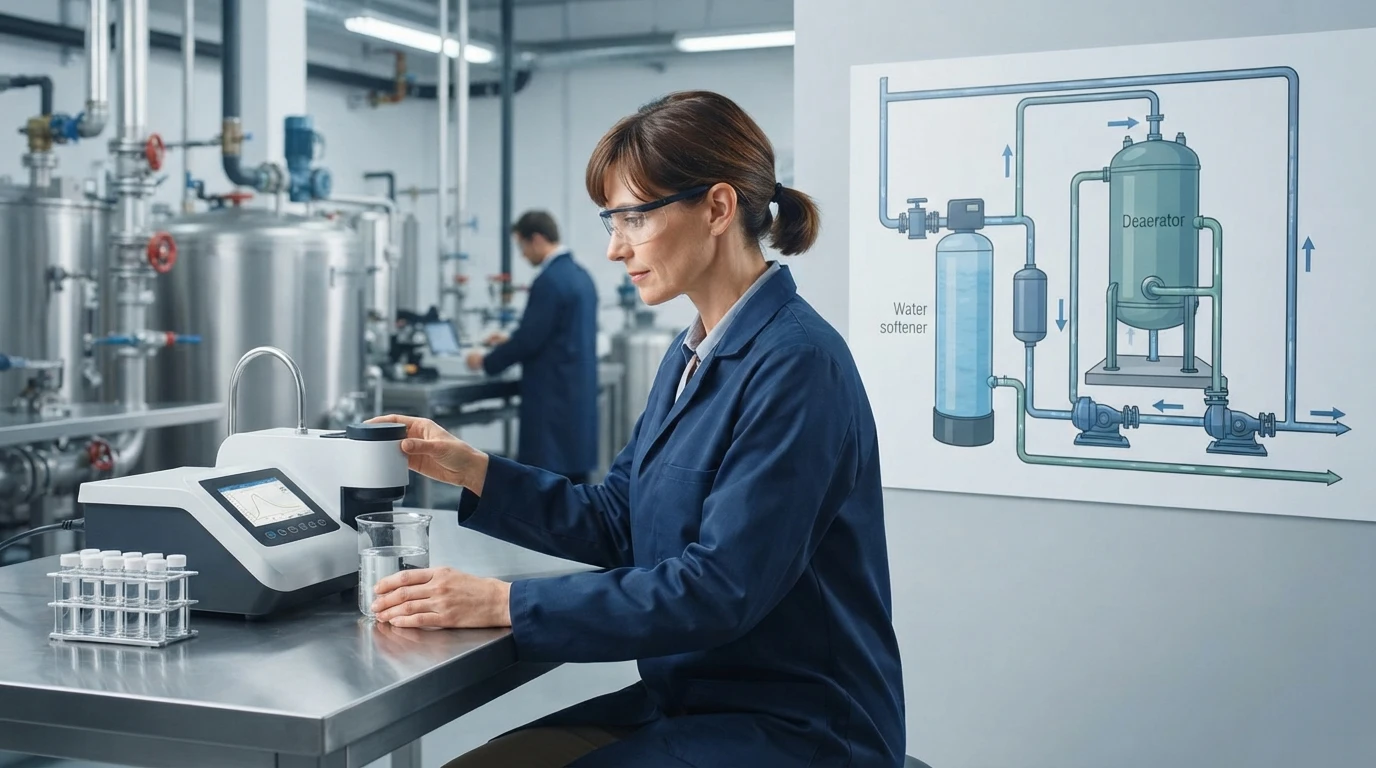
An engineer-led provider starts with makeup water analysis, deaerator performance, and blowdown control, then sizes pretreatment to match. Chemical-heavy vendors often dose more product instead of fixing the feedwater source. Hoffman Water designs around your water, not its drum inventory, so scale and corrosion control starts at the root.
Where Chemical Spend Goes Over Five Years
Treating soft feedwater needs less chemistry, so five-year spend stays flat. When feedwater hardness goes untreated, chemical use climbs every year to compensate. Ask each boiler pretreatment candidate to model chemical cost against your hardness data.
Response Speed, Monitoring and Service After the Install
What Happens at 2 a.m. With a Failed Feed Pump
When a feed pump fails overnight, the question is who answers the phone. Hoffman Water offers 24/7 emergency response with on-site visits across Ohio, so a technician shows up rather than a callback. Ask any provider for its actual response commitment in writing.
Who Owns the Program After Commissioning
Some providers hand over the chemistry and leave. A full-service provider stays accountable for testing, blowdown control, and condensate return monitoring for the life of the system. Put that ownership in the service agreement before you sign.
Which Boiler Treatment Partner Should You Choose?
Pick the provider that matches your situation. Large plants with complex steam loads often need an engineer-led partner like Hoffman Water. Smaller facilities with steady demands may do fine with a local outfit like Environmental Water or Trionetics.
Three Questions to Ask Before You Sign
- Who owns the program after start-up?
- Is a makeup water analysis included?
- What is the guaranteed emergency response time?
Matching the Provider to Your Facility Type
| Facility | Best Fit |
|---|---|
| Food processing plant | Engineer-led, full-scope provider |
| Small manufacturing shop | Local chemical supplier |
| 24/7 continuous operation | Provider with on-site emergency visits |
Boiler trouble at 2 a.m.? Talk to an engineer, not a call center. Get a free plant assessment from Hoffman Water and see the difference full-scope ownership makes.
Frequently Asked Questions
Q1: How does Hoffman Water compare with local boiler treatment providers?
Hoffman Water offers engineer-led full-scope service, post-commissioning ownership, and 24/7 emergency response, while many local providers focus mainly on chemical delivery and routine testing.
Q2: What questions should I ask a boiler water treatment vendor?
- Who owns the program after start-up?
- Is makeup water analysis included?
- What is the guaranteed emergency response time?
Final Takeaway for Ohio Plant Operators
Compare providers on scope, response, and post-commissioning ownership, not just price. Engineer-led, full-scope service wins when uptime matters most.