 Hoffman Water
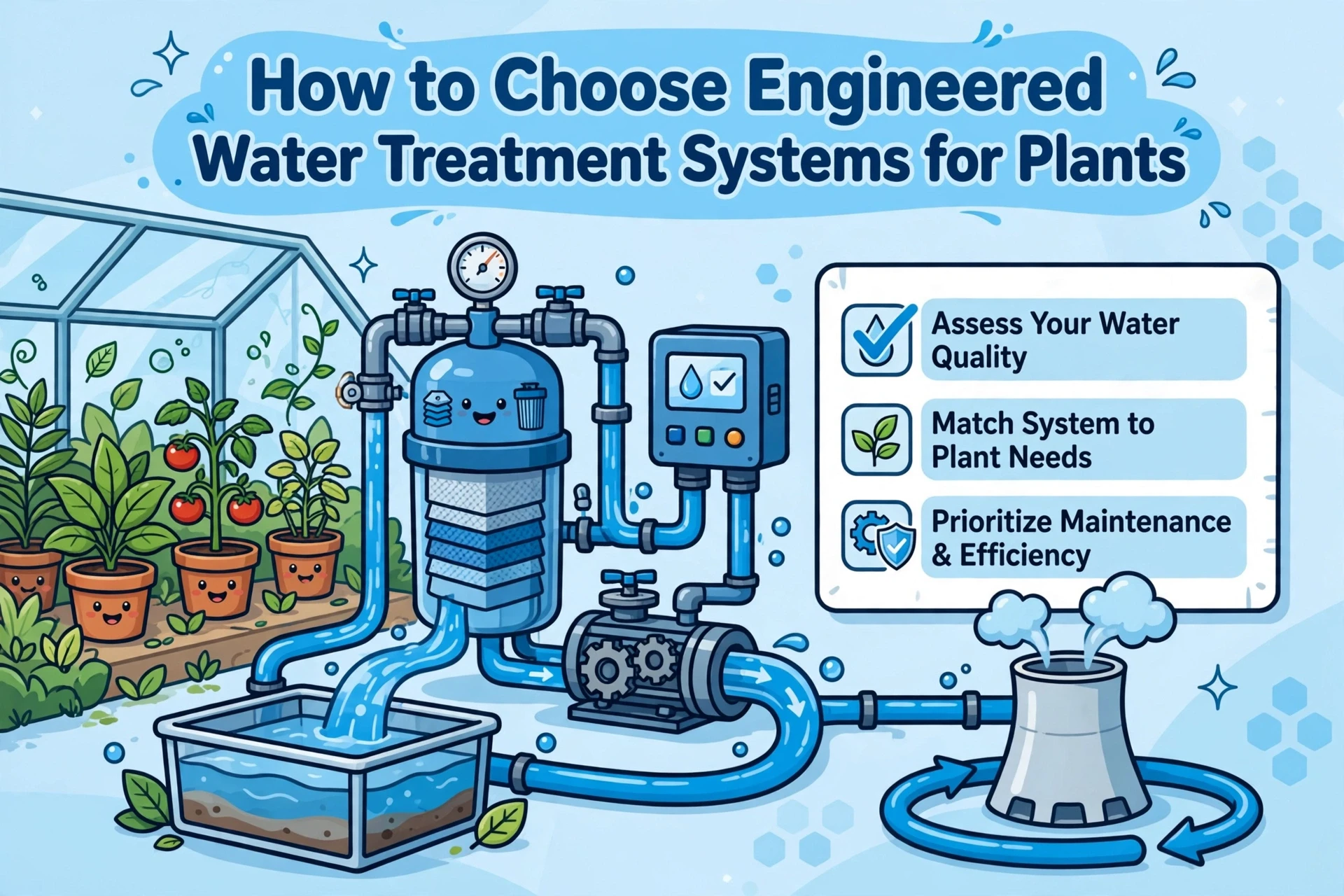
Quick Summary: Choose water treatment by testing the actual raw water, setting application-specific quality targets, and matching each process to the right technology. Size systems for peak demand plus 20 to 30 percent growth capacity, then compare providers on custom engineering, 24/7 emergency support, and 10-year total cost rather than the lowest bid. Hoffman Water stands out for offering engineer-led designs, commissioning, operator training, and emergency response built around each plant's water and operating conditions.
Two plants in the same Ohio corridor can run identical chillers yet face very different results once water chemistry, blowdown rates, and discharge limits enter the picture. The system that works for one is often wrong for the other. This guide walks you from a raw water analysis to application-specific engineered water treatment systems, provider selection, and true lifecycle cost. Engineer-led industrial water treatment solutions, built around your facility, start with matching the design to your water rather than a catalog.
Characterize Your Water and Define Quality Targets
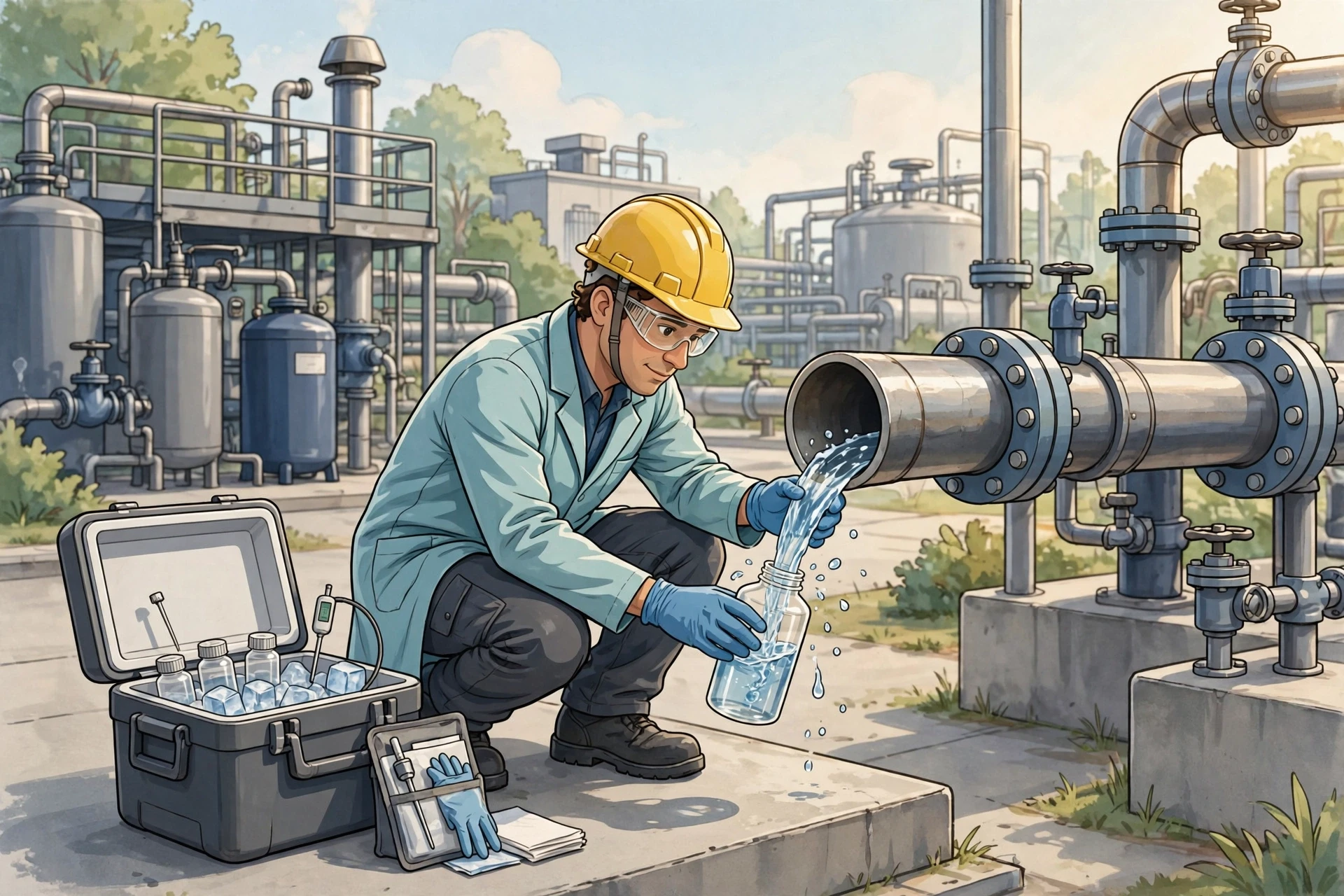
Before you select any engineered water treatment systems, test the water you actually have. What should you test before selecting an industrial water treatment system? A certified lab should measure:
- Hardness, alkalinity, and pH
- Total dissolved solids and silica
- Iron, manganese, and chlorides
- Temperature, turbidity, and organic load
Building the Raw Water Analysis Basis
A complete raw water analysis for treatment design draws from every source feeding your plant: municipal supply, wells, and recycled streams. Collect samples across seasons, since well water shifts with rainfall and table levels. One snapshot rarely captures the real range.
Translating Process Requirements Into Water Quality Specs
Next, write down what each process needs. Boilers demand very low hardness and oxygen; cooling towers tolerate more but resist scale and biological growth. Food processing adds sanitation limits. Turn these needs into written numbers, not vague goals.
Sizing for Demand, Peak Load, and Growth
Size the system for peak daily demand, not the average. Add a 20 to 30 percent buffer for expansion so you avoid a costly rebuild later.
Match Treatment Technology to the Application
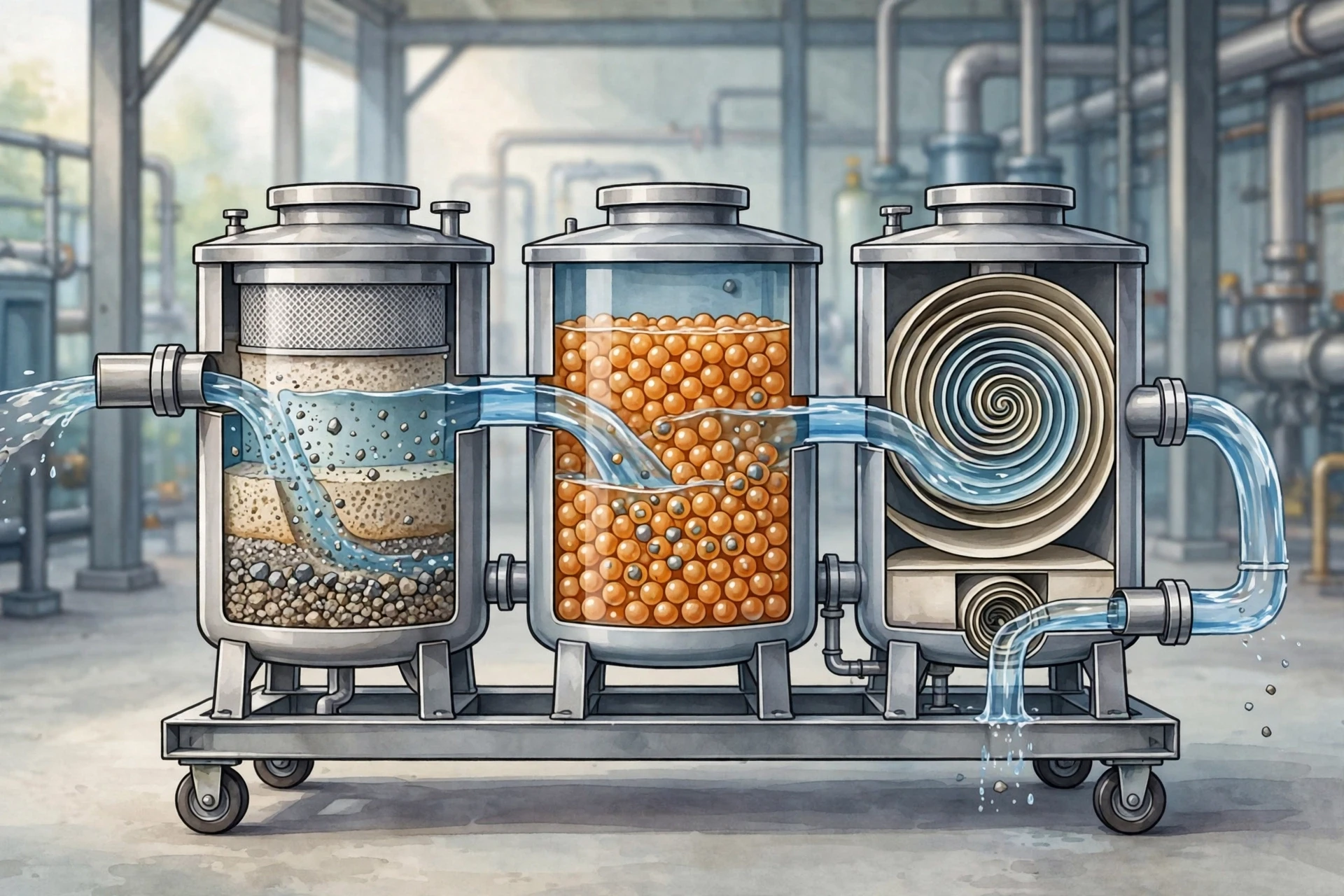
No single technology fits every facility. Filtration removes suspended solids, softening cuts hardness, and membranes handle dissolved minerals. For many plants, a custom engineered water treatment system beats a packaged unit when your raw water analysis shows unusual chemistry, tight discharge limits, or space constraints.
Filtration, Softening, and Membrane Configurations
Start with multimedia filtration for sediment, then ion exchange softening for scale control. Reverse osmosis suits high-purity needs like boiler feed. Size each stage to your flow and water quality.
Chemical Treatment Programs and Solid Chemistry
Inhibitors, biocides, and pH controls protect equipment between mechanical steps. Solid chemistry water treatment dissolves from dissolving capsules, so staff avoid hauling and dosing hazardous liquids.
Application Matching: Boiler, Cooling Tower, Paint, and Wastewater
Boiler water treatment systems focus on oxygen scavenging and condensate protection. Cooling towers need scale and Legionella control. Paint booths rely on detackification, and wastewater needs solids separation before discharge.
Evaluate Providers on Engineering Depth and Service Capability
Shortlist providers that offer both custom engineering and 24/7 emergency response. Verify these capabilities before you sign:
- In-house engineers who design systems for your water, not a catalog model
- After-hours support with guaranteed response times
- A service model covering your entire Ohio footprint
What Custom Engineering Actually Means
Real custom engineering starts with your raw water analysis, flow rates, and treatment goals. The provider should size equipment, select chemistry, and handle commissioning and operator training for your specific application, not sell a standard skid.
Emergency and After-Hours Response Coverage
Ask directly: who answers the phone at 2 a.m., and how fast do they arrive? A provider like Hoffman Water commits to 24/7 emergency response, because downtime in a boiler or paint booth gets expensive by the hour.
Service Model, Coverage, and Reference Programs
Request reference customers in your industry and confirm the provider visits your sites on a fixed schedule. Consistent service visits catch scaling, corrosion, and chemistry drift early, which protects equipment life and keeps treatment costs predictable.
Build the Business Case and Plan for Implementation
Comparing Proposals on Total Cost of Ownership
How do you compare two water treatment proposals? Score each on five points:
- Equipment and installation price
- Chemical cost per 1,000 gallons
- Labor for service and testing
- Energy and water savings
- Downtime risk and parts availability
The lowest bid often wins only until hidden costs show up. Ask each vendor to project costs over ten years, then compare on total cost of ownership, not sticker price.
From Selection to Running System
Signing the contract is the halfway point. A good install includes commissioning, operator training, a start-up water test, and a written response plan for upsets. Providers that offer custom engineering, such as solid chemistry water treatment, can also set dosing targets before day one. Schedule a 90-day performance review to confirm savings are real.
Ready to choose the right system with confidence? Talk to Hoffman Water about engineer-led treatment for your Ohio facility, from raw water analysis through custom design.
Frequently Asked Questions
Q1: Which providers offer custom engineering and 24/7 emergency response?
Look for Ohio providers with in-house engineers, guaranteed response times, and references in your industry. Hoffman Water offers both, designing systems around your raw water analysis rather than a catalog skid.
Q2: How much water should I treat for before expansion?
Size for peak daily demand and add a 20 to 30 percent buffer so growth does not force a costly rebuild.
Q3: Is solid chemistry safe for food processing plants?
Yes. Solid chemistry removes hazardous liquid drum handling and dosing, which simplifies safety compliance and fits food and beverage sanitation requirements well.
Q4: What should a proposal include beyond equipment price?
Demand chemical cost per 1,000 gallons, labor, energy savings, and a ten-year total cost projection before comparing bids.
Conclusion
Choosing among engineered water treatment systems comes down to four steps: test your raw water, match the technology to your application, verify the provider's engineering depth and 24/7 emergency response, then compare proposals on total cost of ownership. An Ohio partner offering industrial water treatment solutions built around your facility protects both equipment and budget for the long run.