 Hoffman Water
Quick Summary: Cooling tower corrosion usually starts months before any visible leak, so the fix is prevention tied to water chemistry and routine monitoring. The guide outlines four steps: spotting localized pitting and microbiologically influenced corrosion, holding cycles of concentration between 3 and 6 with pH near 7.5 to 8.5, rotating biocides, and running weekly water tests plus corrosion coupons. Hoffman Water offers engineer-led monthly programs for Ohio plants that pair solid chemistry inhibitor feeds with 24/7 emergency response to keep metal loss in check.
A pinhole leak found in the basin on Tuesday morning can idle your process line by Friday. Most of those leaks start as cooling tower corrosion control failures months earlier, long before the first stain shows. Corrosion eats thin metal quietly, so the fix is prevention, not patching. This guide links each corrosion mechanism to water-chemistry targets and monthly actions your team can run. Hoffman Water builds these engineer-led programs for Ohio plants every day.
Step 1: Identify the Corrosion Threats Hiding in Your Tower
Good cooling tower corrosion control starts with knowing which failure mode you face. Most metal loss in towers falls into two categories.
Localized vs. Generalized Metal Loss
Generalized corrosion thins all wetted metal evenly, so it's easier to track with coupon weight loss. Localized attack is the real danger: pitting and crevice corrosion concentrate at deposits, welds, and under scale. A pit can perforate a tube wall while average thickness readings still look acceptable. Inspect hot decks, basins, and fill supports during every shutdown.
Microbiologically Influenced Corrosion (MIC)
MIC happens when bacteria, especially sulfate-reducing types, form colonies under biofilm. The film creates acidic micro-environments that pit steel and copper-nickel fast. Slimy deposits, hydrogen sulfide odor, or sudden unexplained pitting all point to it. A solid chemistry water treatment program pairs biocide dosing with deposit control to cut MIC risk.
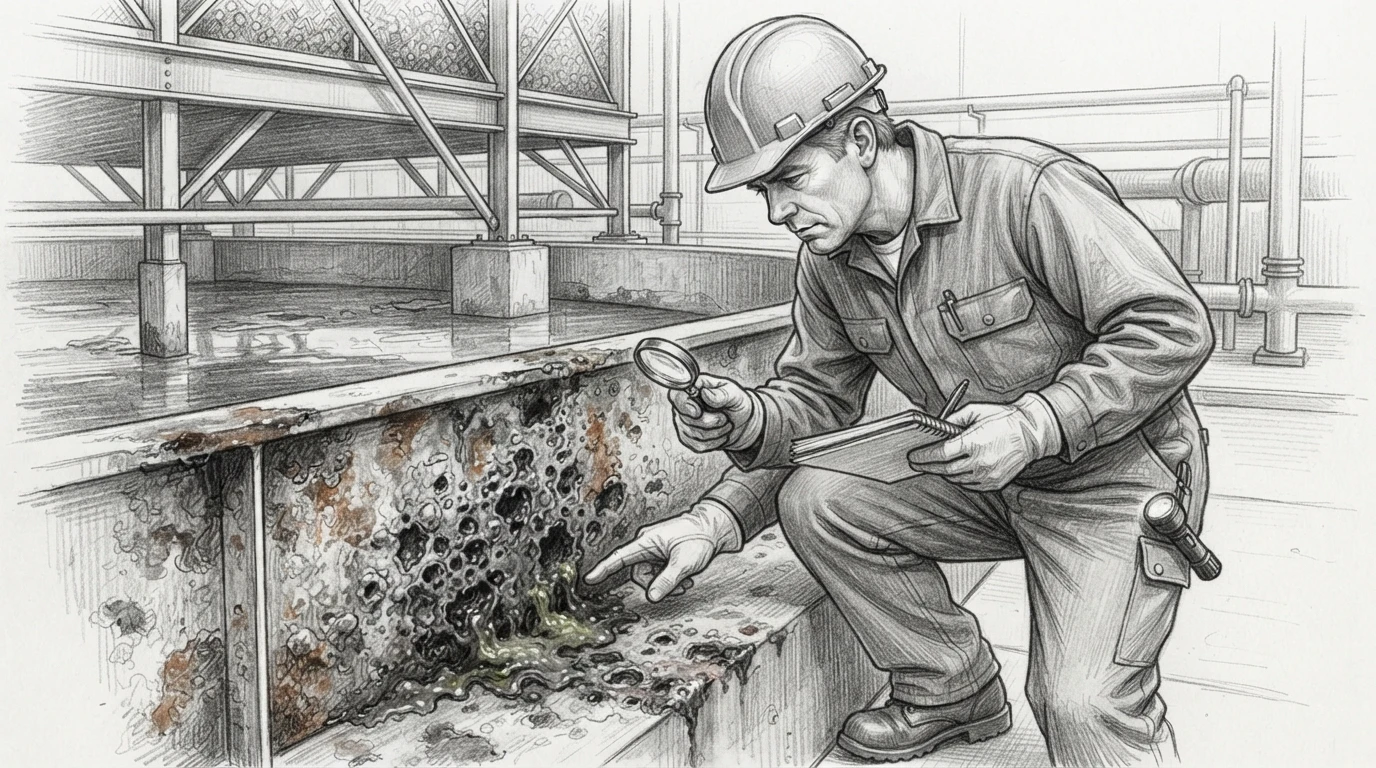
Watch for: rust-colored water, brown slime, and under-deposit tubercles on basin walls. Each is an early warning worth acting on before perforation.
Step 2: Run the Water Chemistry That Stops Corrosion
Cooling tower corrosion control starts with chemistry you can measure. Water left unchecked either eats metal or scales it up, so you hold a narrow operating band and correct drift daily.
Hold Cycles of Concentration and pH in Range
Cycles of concentration (COC) measure how many times dissolved solids have concentrated in your recirculating water. Most systems run best between 3 and 6 COC. Above that, scale and chloride stress cracking follow. Below it, you dump treated water down the drain. Keep pH near 7.5 to 8.5 and verify conductivity controllers weekly with a grab-sample meter.
| Parameter | Target | Check Frequency |
|---|---|---|
| Cycles of concentration | 3-6 | Daily |
| pH | 7.5-8.5 | Daily |
| Conductivity | Match COC limit | Weekly calibration |
Use Inhibitors, Dispersants, and a Rotating Biocide Program
Feed an azole for copper alloys and a phosphate or polymer inhibitor for steel. Dispersants keep suspended solids from settling into under-deposit pits. Then rotate two non-oxidizing biocides monthly so bacteria cannot adapt, and pair them with a steady oxidant residual. Solid chemistry simplifies this feed program, which is how Hoffman Water engineers most cooling tower corrosion control packages for Ohio plants.
Step 3: Detect Early Warning Signs Before Damage Appears
Read the Water, Not Just the Walls
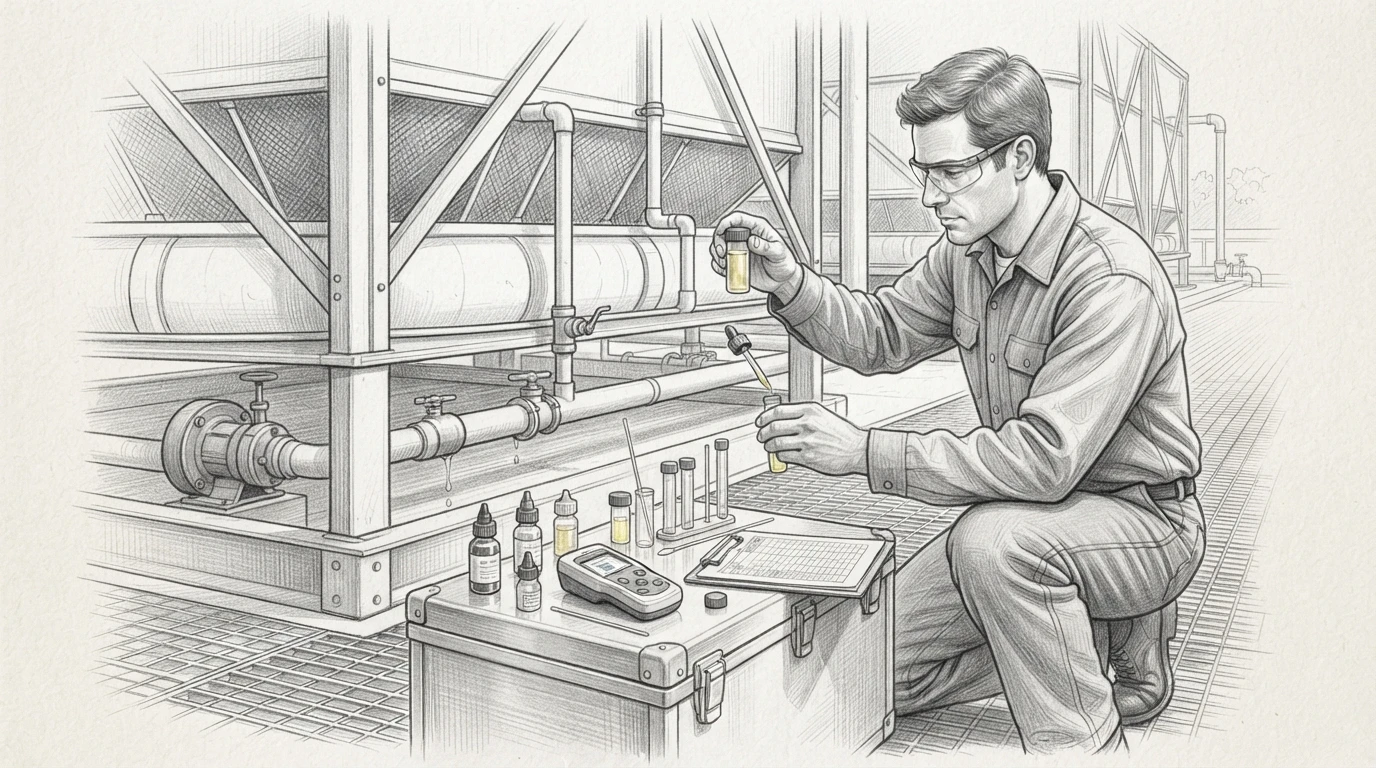
Catch corrosion in the water test before it shows up as metal loss. Track pH, conductivity, inhibitor residual, and iron or copper every week against your target range. Rising iron means steel is dissolving somewhere. Log every result, because a slow drift matters more than one bad reading.
Use Corrosion Coupons and Visual Inspections
Install corrosion coupons in the recirculating line for 30 to 90 days, then weigh them to measure mils per year. Pair coupons with monthly visual checks: rust streaks, scale, white deposits, or slimy film. Hoffman Water's engineers review both during regular cooling tower service visits.
Step 4: Lock In a Corrosion Control Schedule With a Specialist
Set Monthly, Quarterly, and Annual Tasks
Put the plan on a calendar so nothing slips. Monthly: check inhibitor levels, log corrosion coupons, and verify water chemistry targets. Quarterly: clean the basin and inspect the fill. Annually: test metal thickness and review the full program with your water treatment team.
Hand the Program to Hoffman Water
Hoffman Water builds engineer-led cooling tower programs for Ohio plants, with clear chemistry targets, solid chemistry that removes hazardous liquid handling, and 24/7 emergency response. A monthly service visit keeps your schedule honest and catches corrosion before it becomes equipment damage. Request a site assessment to start.
Corrosion never waits, and neither should you. Hoffman Water sets the water-chemistry targets your towers need. Contact our Ohio engineers today for a free system review.
Frequently Asked Questions
Q1: What causes corrosion in cooling tower systems?
Low pH, high chlorides, oxygen pitting, and galvanic contact between mixed metals drive most corrosion.
Q2: How do you prevent corrosion in a cooling tower before equipment damage occurs?
Hold inhibitor residuals and pH within target ranges, and verify monthly with testing.
Q3: What are the warning signs of cooling tower corrosion?
Watch for rust-colored water, pitting on heat exchanger tubes, and rising iron levels.
Conclusion
Cooling tower corrosion is controllable when you match each mechanism to a specific water-chemistry target and a monthly action. Monitor the basics, keep an [internal link] https://www.hoffmanwater.com/blog/7-cooling-tower-service-providers-for-u-s-industrial-plants service partner accountable, and document every reading.