 Hoffman Water
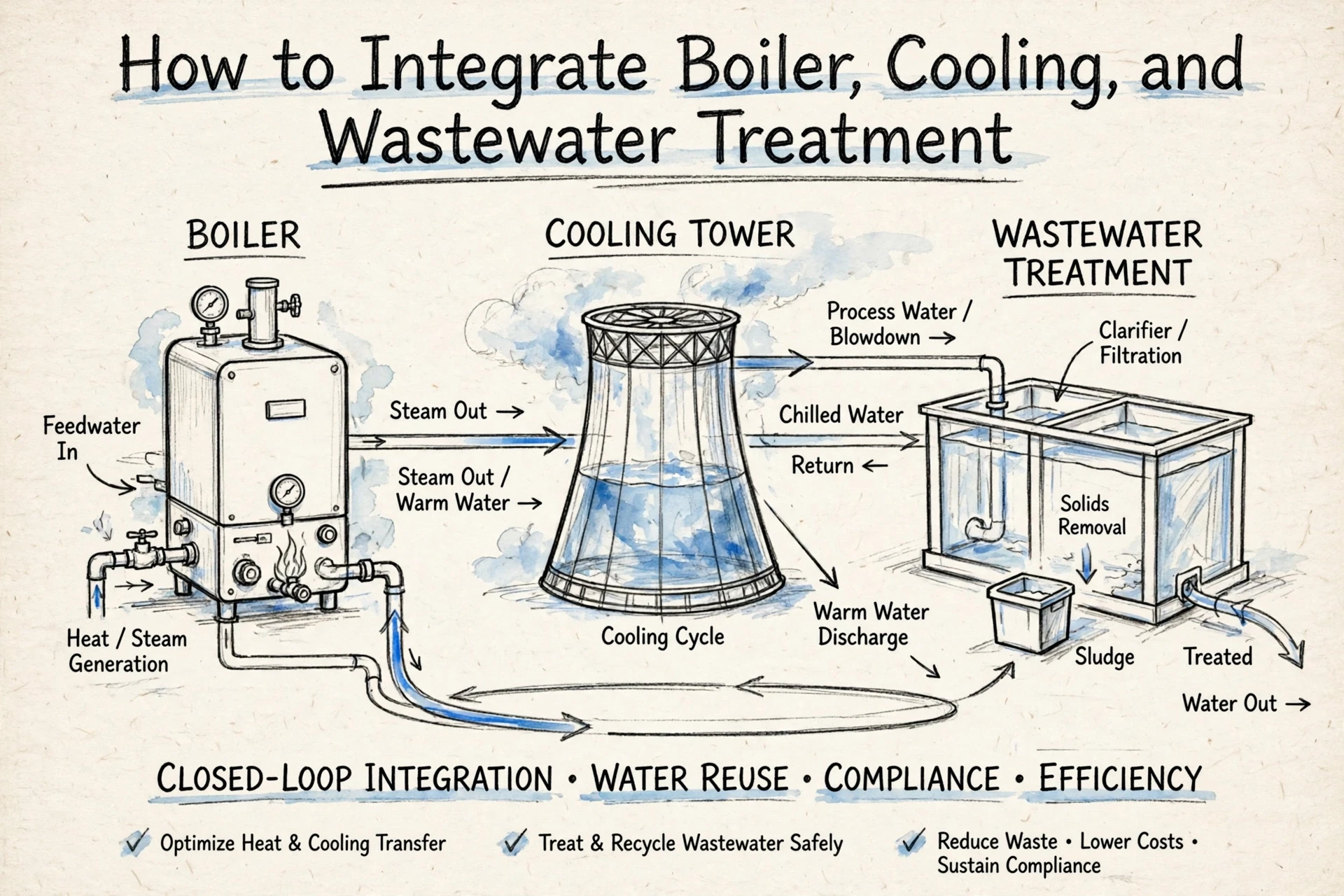
Quick Summary: Plants should manage boiler, cooling tower, closed-loop, and wastewater treatment as one connected system rather than separate vendor programs. Start by mapping water flows, testing make-up water, setting stream-specific chemistry, and finding practical reuse or pretreatment options for cooling tower blowdown, with one engineer-led provider coordinating data, compliance, and costs. Hoffman Water is presented as an Ohio-focused provider offering this integrated approach, including solid closed-loop chemistry and site assessments.
Most plants do not have a water treatment problem. They have three separate programs: one vendor for boiler and cooling tower treatment, another for wastewater, and three sets of data that never talk to each other. That is usually why a scaling boiler and a struggling cooling tower show up in the same quarter. Treating boiler and cooling tower treatment as one connected system, with blowdown feeding pretreatment, fixes the root cause. Engineer-led providers serving Ohio industrial plants have seen this pattern for decades. This guide walks through the integration order, the recovery logic between streams, and how to pick a vendor who can run all three programs together.
Step 1: Map the Water Before You Touch the Chemistry
Before designing a boiler and cooling tower treatment program, analyze three things: every system in the building, your make-up water chemistry, and current operating numbers.
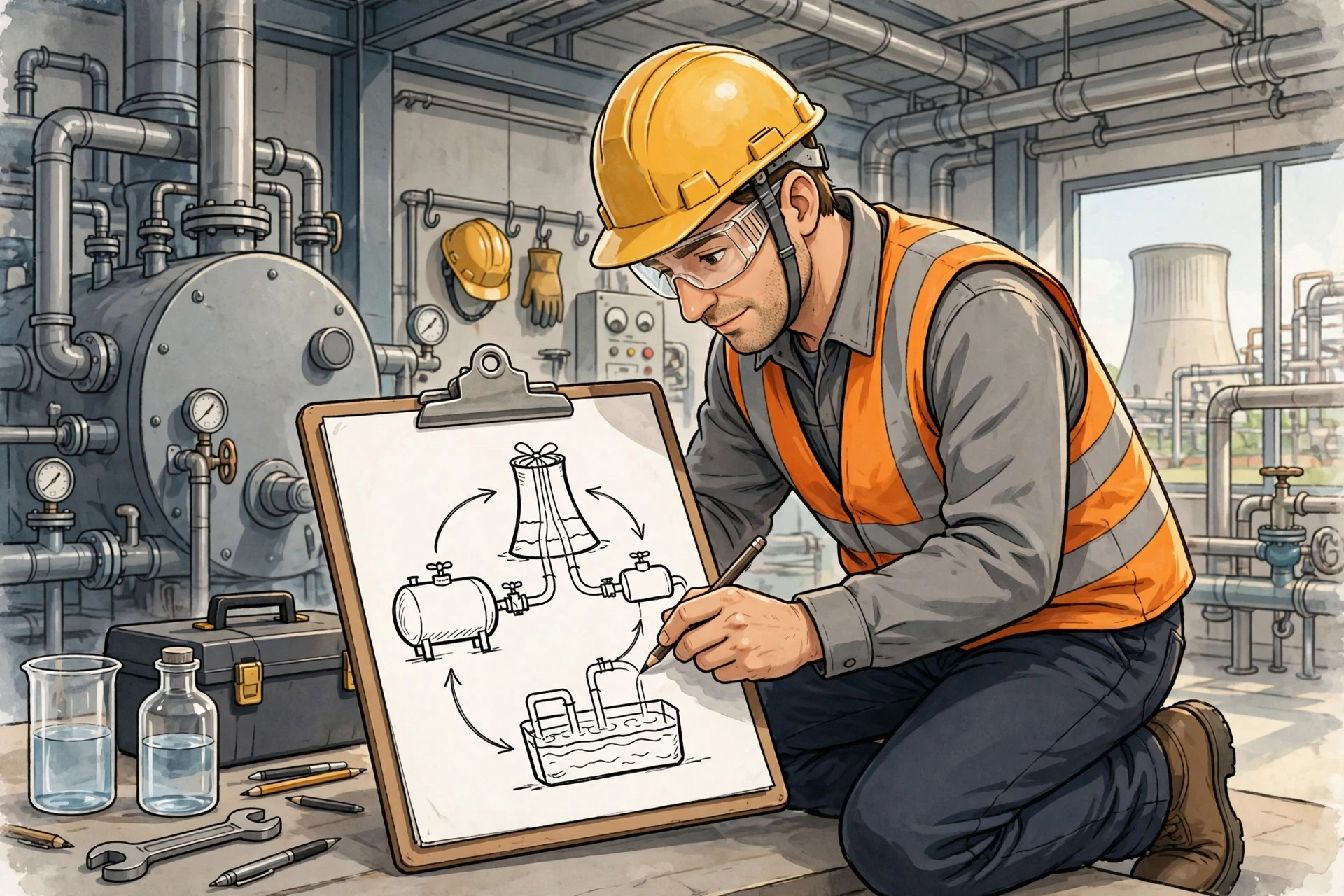
Draw the Loop Map for Every System
Walk the plant and sketch each water loop: steam boiler, cooling tower, closed loop, and wastewater discharge points. Note sizes, metallurgy, temperatures, and how streams connect. Overlooked dead legs and crossover lines cause most cross-contamination surprises later.
Know Your Make-Up Water and Your Limits
Test the incoming make-up water for hardness, alkalinity, silica, and chlorides, because those numbers set your safe cycles of concentration. Then pull your industrial discharge permit limits so blowdown and pretreatment plans fit the rules, not fight them.
Set Baseline Numbers You Can Actually Track
Record today's conductivity, pH, chemical feed rates, and corrosion coupon results. An engineer-led survey, like those Hoffman Water performs for Ohio facilities, turns these baselines into targets. Without them, you cannot prove a program works.
Step 2: Set the Chemistry for Each Stream
Each stream needs its own program. Boilers fight scale and oxygen under heat, cooling towers fight scale, corrosion and microbes in open water, and closed loops mostly fight corrosion. The differences come down to temperature, water loss and oxygen exposure.
| Stream | Main threats | Core treatment |
|---|---|---|
| Boiler | Scale, oxygen pitting | Softened make-up, oxygen scavenger, phosphates |
| Cooling tower | Scale, corrosion, microbes | Inhibitors, cycles of concentration, biocides |
| Closed loop | Corrosion, freezing | Nitrite or molybdate inhibitors, glycol |
Match the Program to Operating Pressure
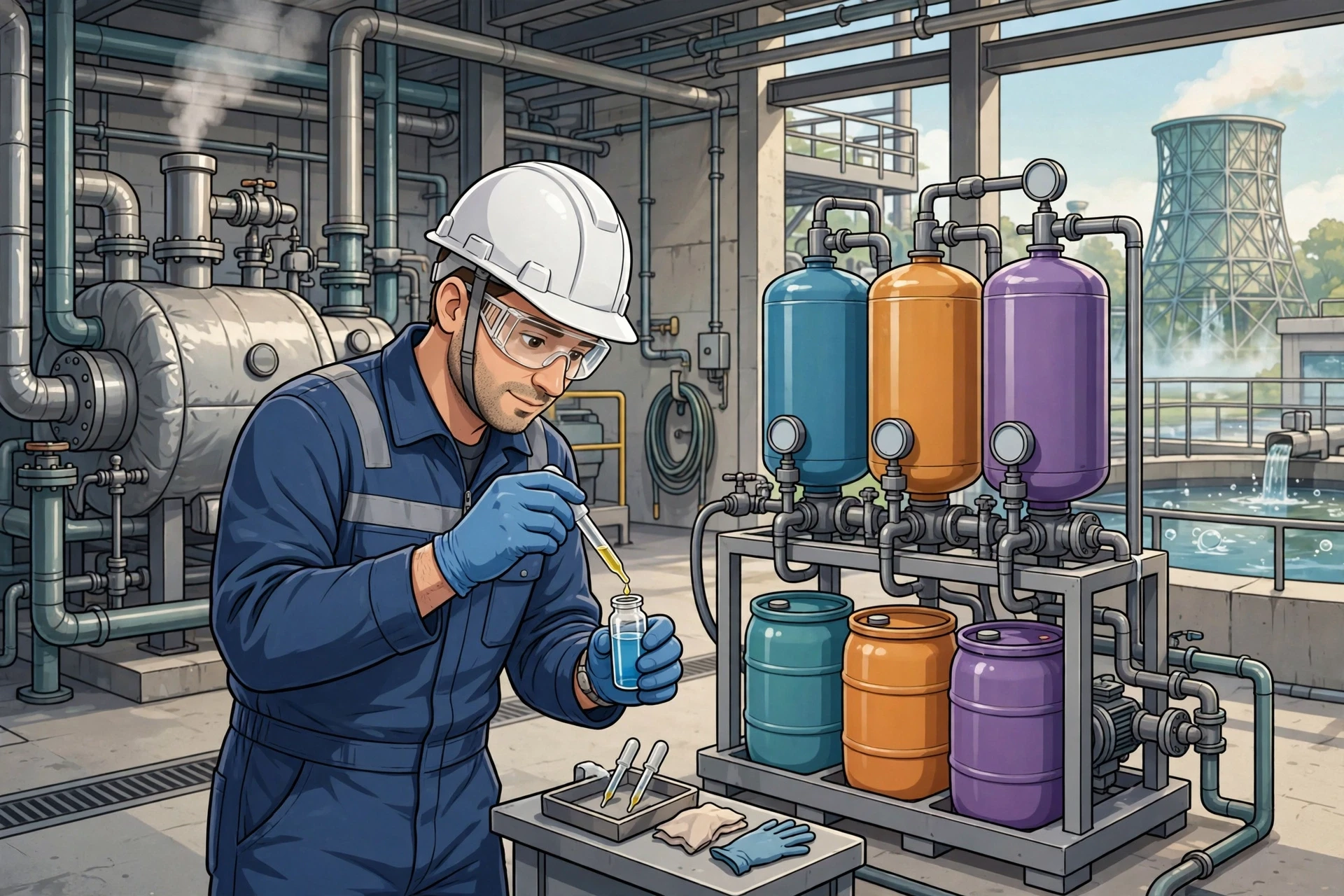
Set boiler chemistry by operating pressure. Low-pressure steam boilers usually need a sulfite scavenger and phosphate, while high-pressure units demand tighter control of silica, alkalinity and conductivity. Test feedwater hardness before anything else, because even trace hardness forms scale fast under heat.
Cooling Towers: Scale, Corrosion and Microbes
Run towers at the highest cycles of concentration your water allows, then control scale and corrosion with inhibitors. Biocide rotation matters here: alternating oxidizing and non-oxidizing products prevents resistant strains and lowers Legionella risk, especially where towers sit near air intakes.
Closed Loops: Why Solid Chemistry Is Usually the Answer
Closed loops lose little water, so one well-dosed inhibitor charge can protect a system for years. Low make-up means low labor, which makes solid chemistry for closed-loop treatment a natural fit. It cuts hazardous liquid handling and keeps dosing steady without frequent site visits.
Step 3: Connect the Wastewater Side and Pick the Right Partner
Follow the Blowdown and Pretreat What You Discharge
Can cooling tower blowdown be reused as boiler feedwater? Sometimes, but not straight from the tower. Blowdown carries concentrated hardness, chlorides, and biocide residues, so it needs softening, filtration, or reverse osmosis before any boiler will accept it. If reuse is not practical, pretreat the stream to meet your industrial discharge permit limits before it leaves the plant. Tracking cycles of concentration and blowdown volume also cuts what you pay to discharge.
Who Actually Handles Boiler, Cooling and Wastewater Together
Which leading companies handle boiler, cooling, and wastewater systems? Three provider types do:
- Full-service industrial water treatment providers - one vendor for boiler, cooling, and wastewater chemistry
- Engineer-led contractors - design systems, not just dose chemicals
- Wastewater specialists - best when discharge compliance drives everything
A full-service industrial water treatment provider avoids the finger-pointing that happens when three vendors share one water loop.
The Vendor Checklist Before You Sign
Before signing any water treatment service agreement, confirm:
- Site coverage - Ohio industrial facility service coverage with fast emergency response
- Engineering support - corrosion coupons, trend monitoring, and system design
- Chemistry options - solid chemistry programs that cut handling risk
- Reporting - clear data you can show an inspector
Hoffman Water checks each box for Ohio plants, but compare every bidder on this list, not on price alone.
Ready to bring your boiler, cooling, and wastewater programs under one plan? Talk to Hoffman Water's engineers and request a site assessment at Hoffman Water.
Frequently Asked Questions
Q1: Which leading companies handle boiler, cooling, and wastewater systems?
Full-service industrial water treatment providers cover all three streams under one plan. Engineer-led contractors design integrated systems, while wastewater specialists focus on discharge compliance. For Ohio plants, Hoffman Water combines all three capabilities in one engineer-led program.
Q2: How often should I test boiler and cooling tower water?
Test cooling towers weekly for conductivity, pH and biocide levels; boilers by pressure class, usually weekly or daily at high pressure. Review corrosion coupon results quarterly to confirm trends.
Q3: Can I run solid chemistry in an open cooling tower?
Yes, though solid chemistry fits closed loops best because they lose little water. Towers with high evaporation work better with liquid programs tailored to your make-up water hardness and cycles of concentration.
Q4: What should a water treatment service agreement include?
Require defined service frequency, lab testing and corrosion coupons, trend reporting you can show an inspector, emergency response times, and chemistry options matched to each stream, not a one-size program.
Conclusion
Integrating boiler, cooling, and wastewater treatment starts with mapping your water, setting the right chemistry for each stream, and connecting blowdown to your discharge plan. Pick one engineer-led partner who runs all three programs, and your data, compliance, and costs will finally line up.