Closed-Loop System Treatment.
Corrosion protection and pH control for heating and chilled-water loops, including mixed-metallurgy systems.
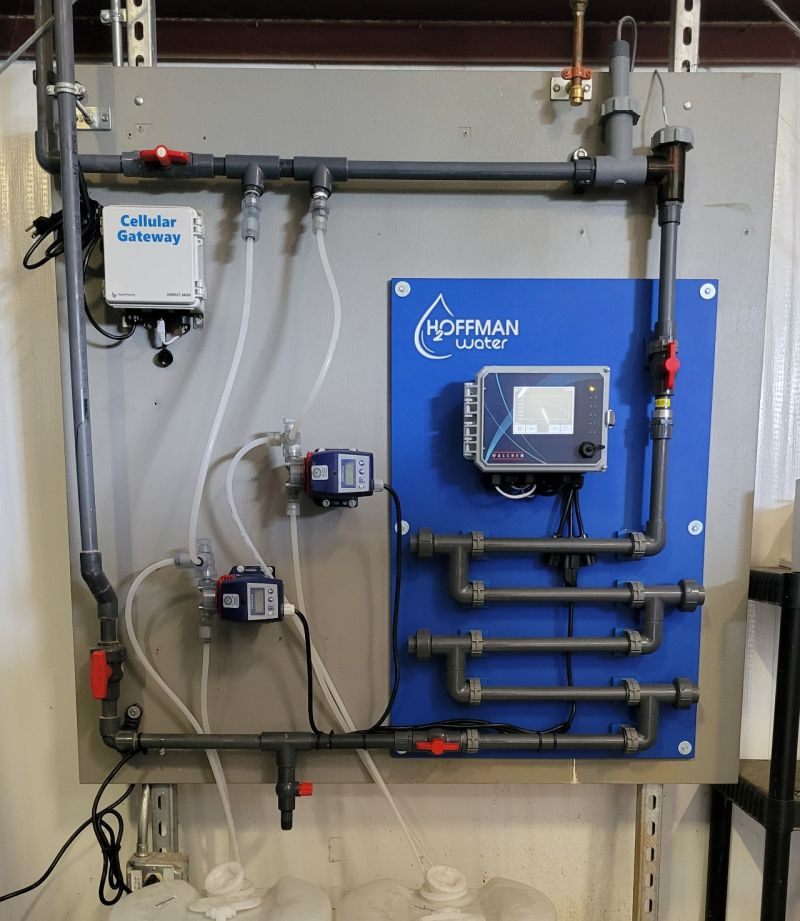
Closed Loops Corrode From the Inside
Closed loops are easy to ignore. They run sealed, the makeup volume is small, and nothing seems to be happening, until corrosion products break loose and clog coils, control valves, and heat exchangers.
Every gallon of makeup brings fresh oxygen and hardness into the loop. Without the right inhibitor and pH, that adds up to corrosion from the inside, even when the makeup volume is small. We build closed-loop programs around the metals in your system and check them on a regular schedule. Some loops need makeup water cleaner than the tap supplies. Our pretreatment division sizes commercial reverse osmosis for those systems.
“If a closed loop needs makeup water often, something is leaking, and that leak feeds oxygen and corrosion straight into the system.” Doug Hoffman, Hoffman Water
Inside a Closed Loop
Sealed and recirculating, so the right inhibitor protects mixed metals for years with little makeup.
What a Closed-Loop Program Covers
One program for hot and chilled systems, matched to the metals in your loop and the way it runs.
Corrosion Inhibitor Selection
The right inhibitor depends on the metals in the loop. We select and dose nitrite, molybdate, or another chemistry to fit your system.
Deposition & Scale Control
Even sealed, a loop can drop scale and deposits from hardness in the makeup. We add deposition and scale control to the program so coils and heat exchangers stay clean.
pH Adjustment for Mixed Metallurgy
Copper, steel, and aluminum each have a different safe pH range. We adjust pH to protect the most sensitive metal in the loop.
Glycol & Freeze Protection
Concentration checks, inhibitor levels, and fluid replacement before degraded glycol turns acidic and starts attacking metal.
Loop Cleaning & New-System Prep
Cleaning, pre-treatment, and start-up of new or fouled loops, so the inhibitor protects clean metal instead of sitting on top of debris.
Inhibitor & Contaminant Testing
Regular testing for inhibitor level, pH, and contaminants, so you catch a problem before it reaches a coil.
Ongoing Monitoring
Scheduled service to keep inhibitor and pH in range as the loop ages and makeup comes and goes.
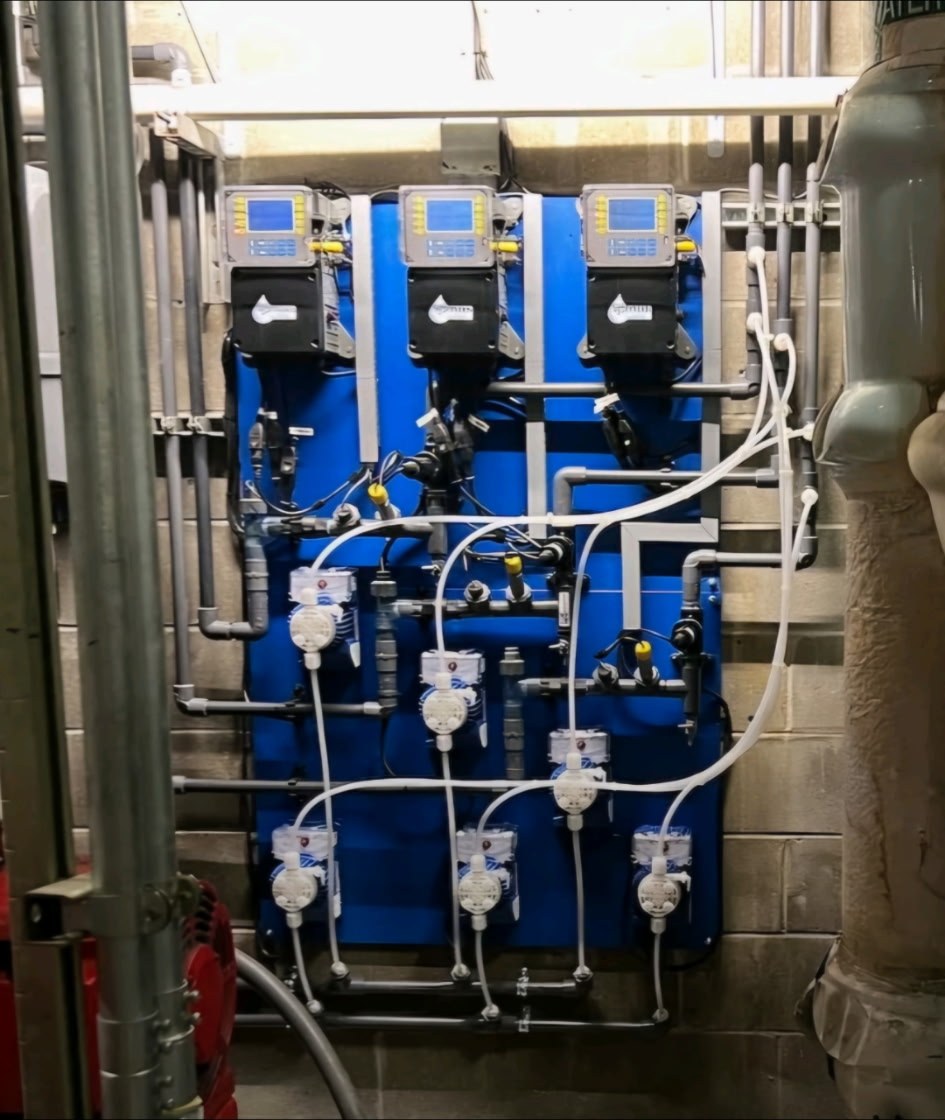
Clean Installs, Quiet Loops
The Hoffman Water team keeps this closed-loop install clean and serviceable.
Closed-loop install by Hoffman Water.
Not sure what's happening inside your loop?
We'll test the loop, check inhibitor and pH, and tell you what it needs.
Closed-Loop Questions
Related reading: Cooling Towers vs Closed-Loop Systems: Which Needs More Maintenance →
Protect the loop before it clogs.
Request a site assessment and we'll build a closed-loop program around your system.