 Hoffman Water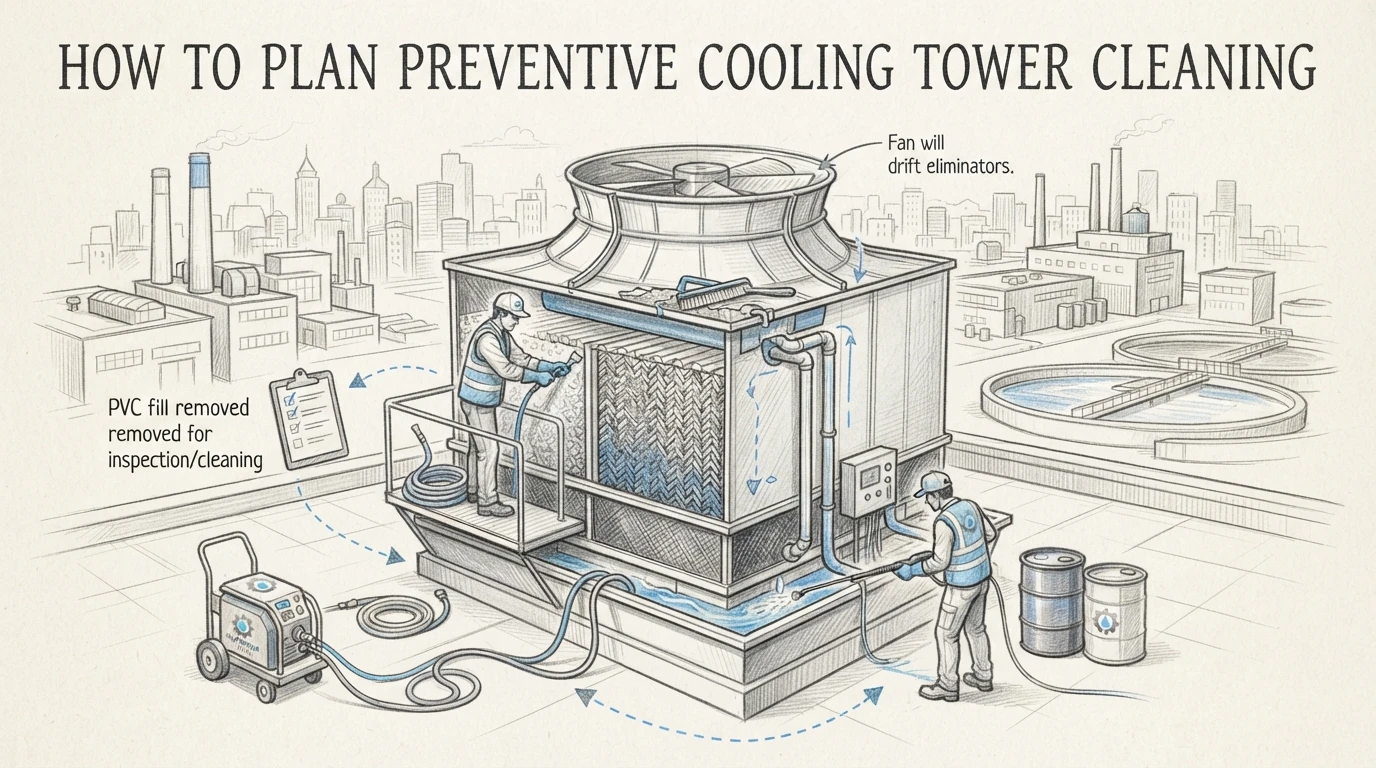
Quick Summary: Preventive cooling tower cleaning protects chiller efficiency and eliminates dangerous biofilm like Legionella. Effective maintenance requires a structured process: audit baseline fouling, circulate offline bio-dispersants for 24 hours, mechanically scrub the basin, and re-passivate freshly exposed metal. Industrial facilities, including those working with Hoffman Water across Ohio, rely on this planned sequence every six months to prevent costly emergency shutdowns.
Sediment in the basin and biofilm that slips past your biocide feed will drag down chiller efficiency fast, and the health risks climb just as quickly. Planned cooling tower cleaning prevents both. This guide walks you through scheduling downtime, running offline bio-dispersant cycles, cleaning the basin, and validating the results, based on the same step-by-step approach Hoffman Water uses with industrial facilities across Ohio.
Step 1: Audit System Conditions and Schedule Planned Downtime
Every effective cooling tower cleaning plan starts with a documented condition audit, not a calendar date. Inspect before you drain, so you know what the clean must fix.
Assess Biofilm, Scale, and Basin Silt Accumulation
Open the basin hatch and check for slime on fill, drift eliminators, and hot-deck surfaces. Scrape a small sample: soft, slick film means biofilm; hard, chalky crust means scale. Note basin silt depth and where it collects. Photograph everything. These findings set your dispersant choice, cleaning hours, and disposal needs, and give you a baseline for post-clean validation.
Coordinate Plant Operating Windows and Air Intake Shutdowns
Pick a window tied to planned production downtime, not an emergency. Shut fans and lock out the unit, then isolate nearby HVAC air intakes so aerosols and debris never enter occupied spaces. 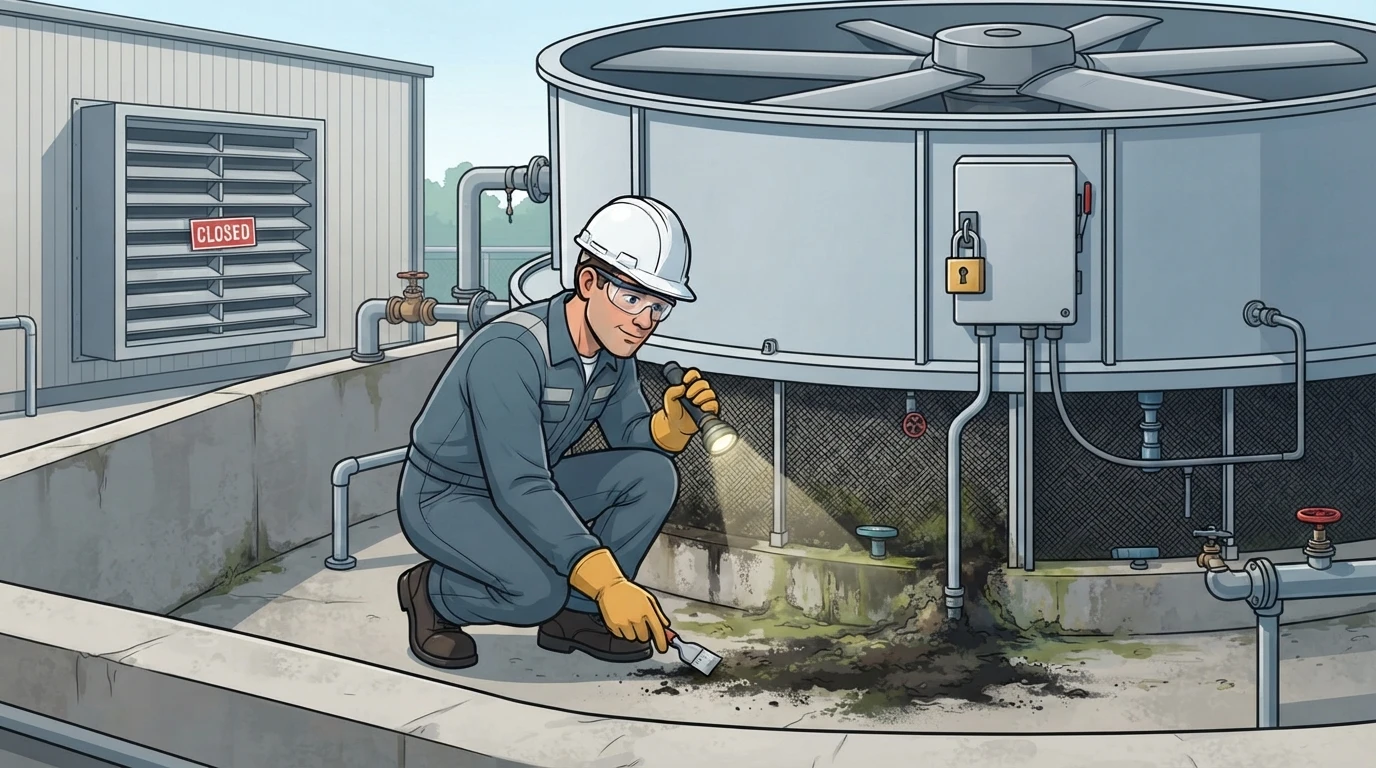
For timing benchmarks, see this cooling tower service guide.
Step 2: Administer Pre-Cleaning Chemical Disinfection and System Isolation
Dose Bio-Dispersants and Elevate Free Halogen Residuals
Before any physical cleaning, circulate a bio-dispersant through the system. It breaks the sticky extracellular film that binds scale, sludge, and Legionella biofilm to wetted surfaces. Dose at your supplier's rate, then raise free chlorine or bromine residuals to 1-2 mg/L and hold them for 24 hours. This kills organisms loosened from the film so they flush out instead of spreading downstream.
Execute Lockout/Tagout and Valve Isolation
Chemistry alone won't protect your crew. Apply lockout/tagout to fans, pumps, and makeup water feeds before draining. Then close isolation valves on fill, basin drains, and connected loops so treated water stays where it belongs. For a workable shutdown sequence, see this cooling tower cleaning checklist.
Step 3: Execute Mechanical Basin Washout and Media Scrubbing
With the bio-dispersant cycle done, it's time for hands-on cleaning. Chemicals loosen deposits, but only physical removal clears them out.
Clear Sludge, Debris, and Sump Strainers
Start at the cold water basin. Pump out standing water, then shovel or vacuum the sludge layer off the floor. Pull leaves, scale chips, and process debris from corners where flow stalls. Remove and rinse the sump strainers, since a clogged screen starves the pump and can pull debris into heat exchangers. A professional basin cleanout handles sludge disposal safely.
Flush Fill Packs, Distribution Nozzles, and Drift Eliminators
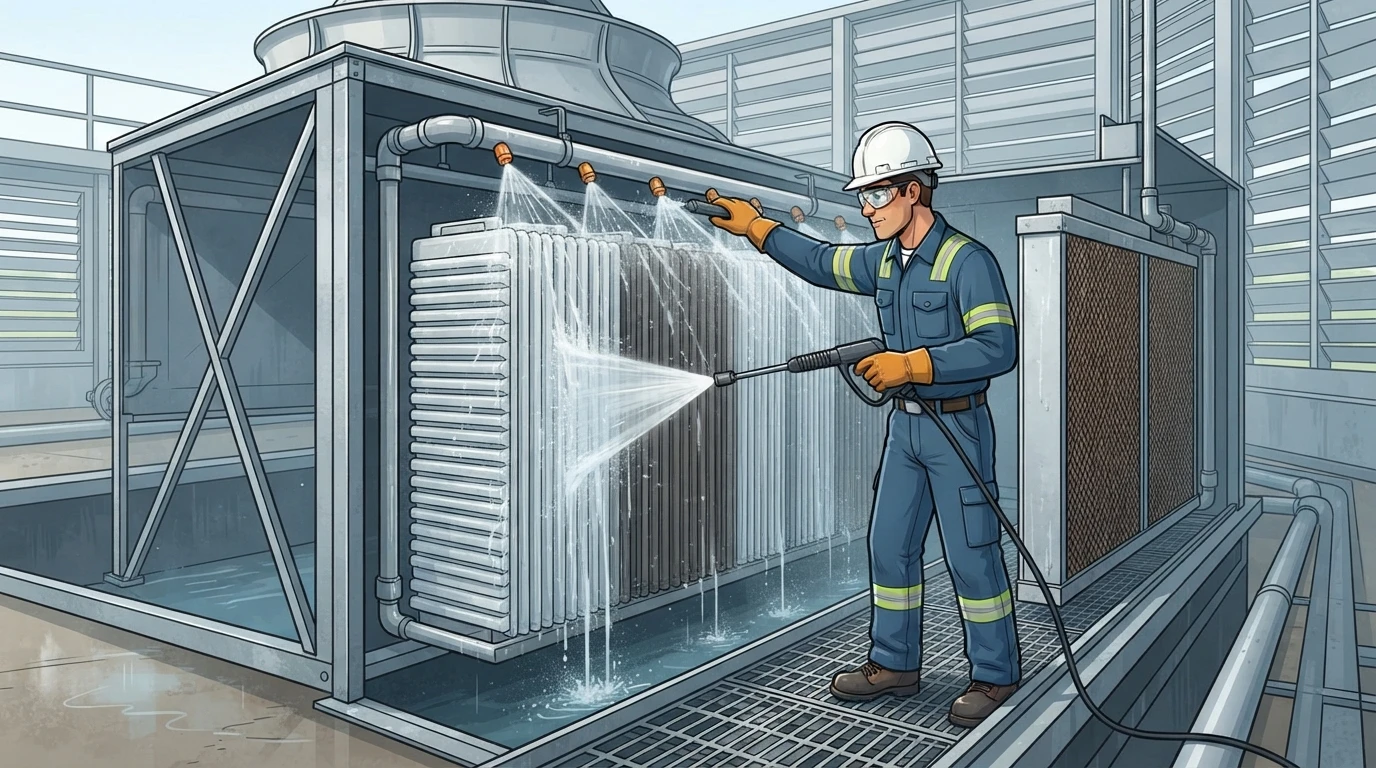
Next, work upward. Spray or pressure-rinse fill packs to strip loosened biofilm, and flush distribution nozzles so every spray pattern covers the fill evenly. Check drift eliminators and rinse them gently; bent fins raise water loss. Air-lift fouled fill instead of hosing it in place.
Step 4: Refill, Passivate, and Rebalance Water Treatment Chemistry
Refill Fresh Makeup Water and Perform Secondary Disinfection
Refill the system with fresh makeup water to normal operating level. Run the pump at high bleed until the residual disinfectant holds at 2-4 ppm free chlorine (or the equivalent bromine or chlorine dioxide level) for at least an hour. Test both basins and remote corners of the fill pack. Dead zones hide bacteria, so verify residuals everywhere before you resume production.
Establish Passivation Films and Re-engage Automated Controllers
Next, dose a high-level inhibitor to rebuild the protective film on fresh metal surfaces exposed during cleaning. Hold that passivation dose for 24-48 hours before returning to normal control ranges. Then restart your automated controllers and confirm sensor readings against grab samples. A trusted water treatment partner like Hoffman Water can fine-tune solid chemistry dosing for stable long-term control.
Planning downtime around your next cleaning? Hoffman Water builds the offline bio-dispersant cycles, basin cleaning, and validation steps for you. Get a plan sized to your tower before scale costs you a shutdown.
Frequently Asked Questions
Q1: Who offers the best cooling tower cleaning services near Ohio plants?
Hoffman Water provides engineer-led cleaning plans, offline bio-dispersant cycles, and basin cleaning for Ohio facilities, backed by 24/7 emergency response.
Q2: How often should a cooling tower be cleaned?
Most plants benefit from preventive cleaning every six months, or quarterly in high-fouling service.
Q3: Can cleaning happen without full shutdown?
Partial cleaning is possible, but offline bio-dispersant cycles give far better biofilm removal and validation results.
Keep Your Cooling Towers Running at Peak Efficiency
Plan the downtime, run the bio-dispersant cycle, clean the basin, then validate the water. Repeat this sequence on a set schedule and your cooling tower maintenance stays ahead of scale, fouling, and unplanned outages.