 Hoffman Water
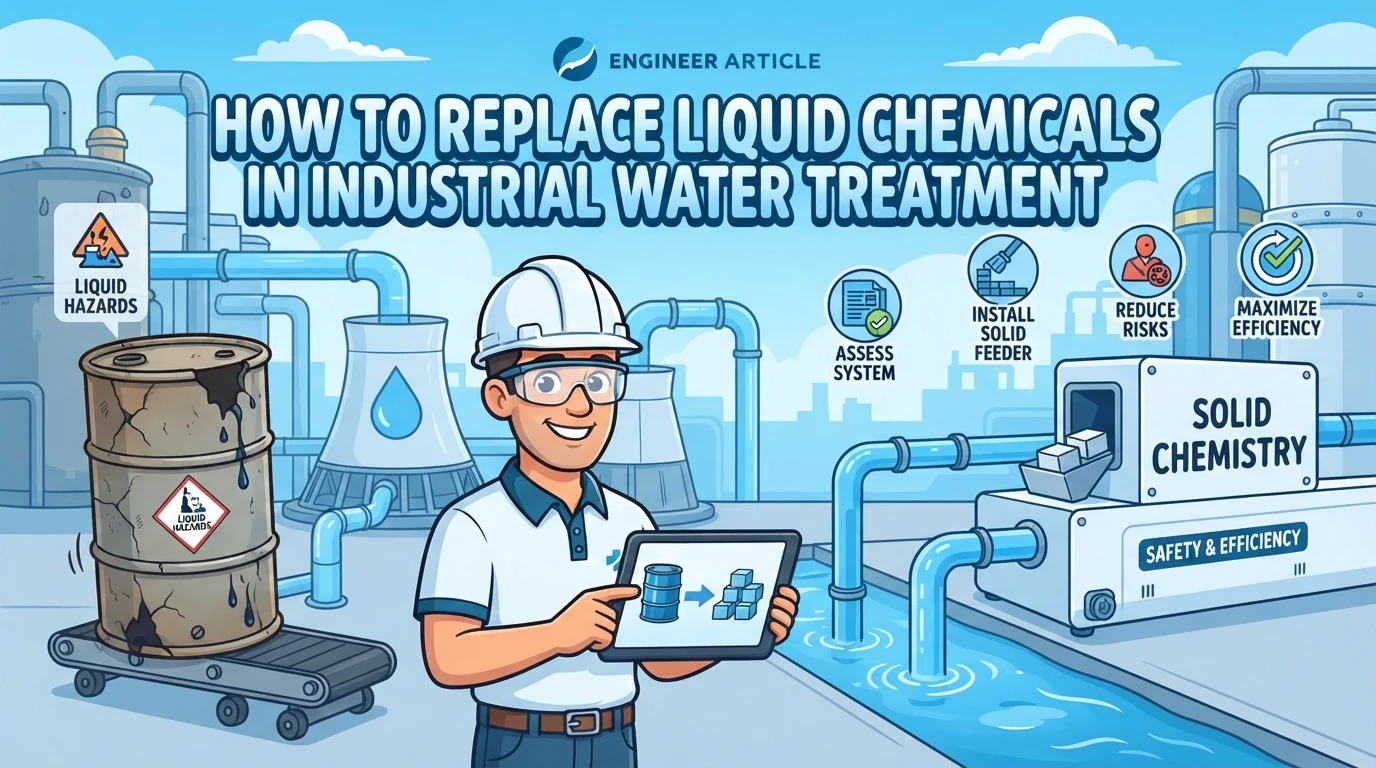
Quick Summary: Liquid chemical drums cause spills, freezing, and heavy lifting in industrial water treatment, so many plants are switching to solid chemistry fed through dissolving stations. The swap usually keeps existing pumps and controllers in place, costs mainly a dissolving station, and can be finished in a day after an audit that maps each liquid product to a solid equivalent. Savings show up in fewer spills, less storage space, and cheaper freight, with performance holding steady for boilers, cooling towers, and closed loops. Hoffman Water runs these conversions across Ohio with an engineer-led SOLIDified program that removes liquid handling entirely.
Liquid drums leak, freeze, and need heavy lifting on every treatment day. Many plants are switching to solid water treatment instead: concentrated chemistry in dissolving stations that cuts spills, storage space, and cost. This guide walks you through the swap step by step, from auditing your current feed system to dosing the first solid product. Hoffman Water runs these conversions for Ohio facilities, so the advice here comes from engineer-led field work with boilers, cooling towers, and closed loops.
Switching to solid water treatment ends the drum handling, spills, and delivery headaches that come with liquid chemistry. Hoffman Water engineers and installs solid water treatment programs across Ohio. Talk to our team and see what your facility could save.
Frequently Asked Questions
Q1: Which leading providers eliminate hazardous liquid chemical handling?
Several water treatment firms now offer solid chemistry programs, including ChemREADY and Environmental Water. Hoffman Water serves Ohio facilities with SOLIDified solid chemistry, an engineer-led approach that removes liquid drums from boiler, cooling tower, wastewater, and closed-loop systems entirely. When comparing providers, ask three things: whether chemistry comes pre-engineered for your water, whether the dissolving station is included and supported, and how fast they respond when a system goes down. Providers with field engineers, not just chemical sales reps, tend to make conversions smoother and keep performance steady after the swap.
Q2: Can solid chemistry match the performance of liquid chemicals?
Yes, in most boiler, cooling tower, and closed-loop applications. Solid concentrates dissolve into a feed solution at the point of use, so the chemistry reaching your system is equivalent to a liquid program. The exceptions worth checking are systems that need very low feed rates or chemicals that are unstable in dry form. A proper conversion starts with an audit of your current dosing rates and water chemistry, then maps each liquid product to a solid equivalent before anything is ordered.
Q3: What equipment do I need to switch to solid chemistry?
The core item is a dissolving station: a small skid or wall-mounted unit where water flows through a solid concentrate cartridge to make feed solution. You also need a suitable water supply, a storage spot for cartridge boxes, and usually a simple connection to your existing chemical injection point. Most plants keep their current pumps and controllers, so capital cost stays low. Installation is often done in a day once the audit and product mapping are complete.
Q4: How much can a facility save by switching from liquid to solid?
Savings come from three places: fewer spills and drum disposal fees, less storage space, and lower freight, since solids carry no shipped water. Many plants also see fewer emergency deliveries and less labor spent on drum handling. Exact numbers depend on your chemical spend and system size, which is why a conversion audit matters before you commit.
Q5: Is solid chemistry safe for food and pharmaceutical plants?
Generally yes, and often safer than liquid. Solid products remove drum storage and splash exposure, which helps with audit and safety programs. Confirm that any product touching process or potable-adjacent streams carries the right registrations, such as NSF or FDA compliance listings for the intended use. A reputable provider will supply documentation for each product before you switch.
Conclusion
Switching from liquid chemicals to solid water treatment comes down to a few key moves: audit your current feed rates, map each liquid product to a solid equivalent, install a dissolving station, and keep your existing pumps and controllers where you can. Done in that order, most facilities swap over in a day, cut drum handling and spill risk, and trim freight and storage costs without losing boiler or cooling tower performance. For a closer look at how solid concentrate systems work in practice, see our solid chemistry systems overview.