 Hoffman Water
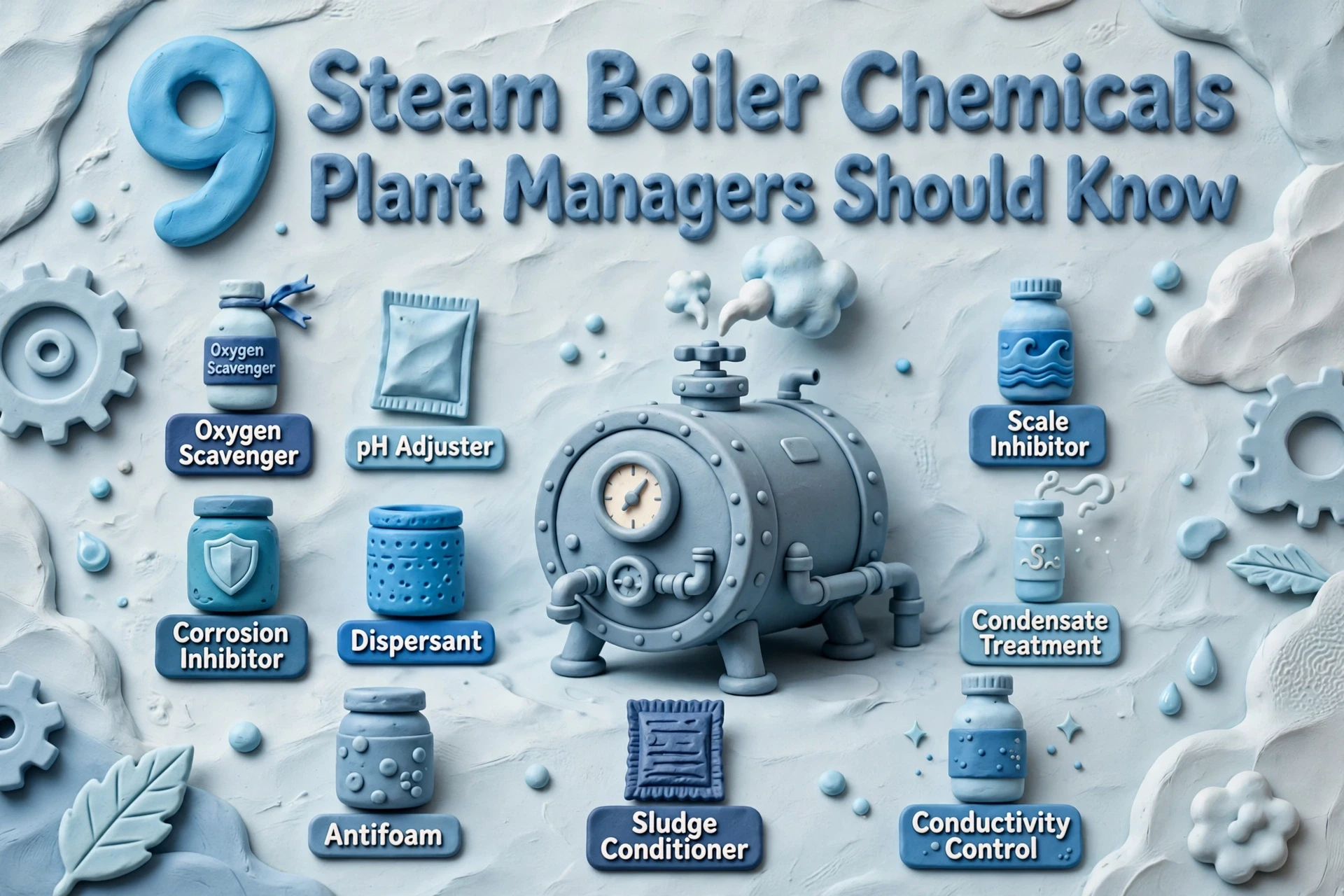
Quick Summary: Steam boiler chemicals work only when matched to the boiler’s pressure, feedwater quality, and operating program, not copied from one plant to another. Hoffman Water’s SOLIDified solid blocks combine oxygen scavenging, scale control, alkalinity, and dispersants while reducing liquid drum handling and spill risk, while oxygen scavengers, phosphate, and polymer dispersants remain essential for preventing pitting, hard scale, and sludge deposits. Plants should test feedwater, set target residuals, monitor programs daily or monthly, and select delivery formats that fit their site.
A boiler can have a clean softener, a working deaerator, and tight blowdown control, yet still lose efficiency within a year if its steam boiler chemicals are wrong for the pressure and feedwater. Many plants inherit drums of scavenger, polymer, and caustic with no clear purpose, then copy the program boiler to boiler. The nine steam boiler chemicals below are ranked by how much each one protects performance, corrosion control, and uptime.
Boiler Chemistry At a Glance
| Chemical or Program | Best for | Primary function | Delivery format |
|---|---|---|---|
| Solid Chemistry Boiler Programs (Hoffman Water SOLIDified) | Plants avoiding liquid drums, spill risk, and manual handling | Full program: oxygen control, scale control, alkalinity, dispersant | Solid blocks in automatic feeders |
| Oxygen Scavengers (sulfite, DEHA, carbohydrazide) | All steam systems, especially feedwater economizers and condensate sections | Removes dissolved oxygen to stop pitting corrosion | Liquid, solid block, or powder |
| Phosphate Scale Control | Low to medium pressure industrial boilers with controlled makeup | Prevents hard scale by converting hardness to removable sludge | Liquid, powder, or solid block |
| Polymer Dispersants | Any boiler using phosphate or experiencing sludge buildup | Disperses precipitates so blowdown can remove them | Liquid, powder, or solid block |
What To Know About Steam Boiler Chemicals
Steam boiler chemistry breaks down into a few functional groups: oxygen scavenging, scale inhibition, dispersant conditioning, alkalinity control, condensate protection, carryover control, and disinfection. Each one targets a specific failure mode, from pitted tubes to scale-baked heat surfaces.
The groups only work together. An oxygen scavenger without alkalinity control leaves pH exposed, and a phosphate program without a dispersant bakes sludge onto your tubes.
Knowing what each chemistry actually fixes is the difference between a program that extends boiler life and one that just keeps you buying drums.
1. Solid Chemistry Boiler Programs (Hoffman Water SOLIDified)
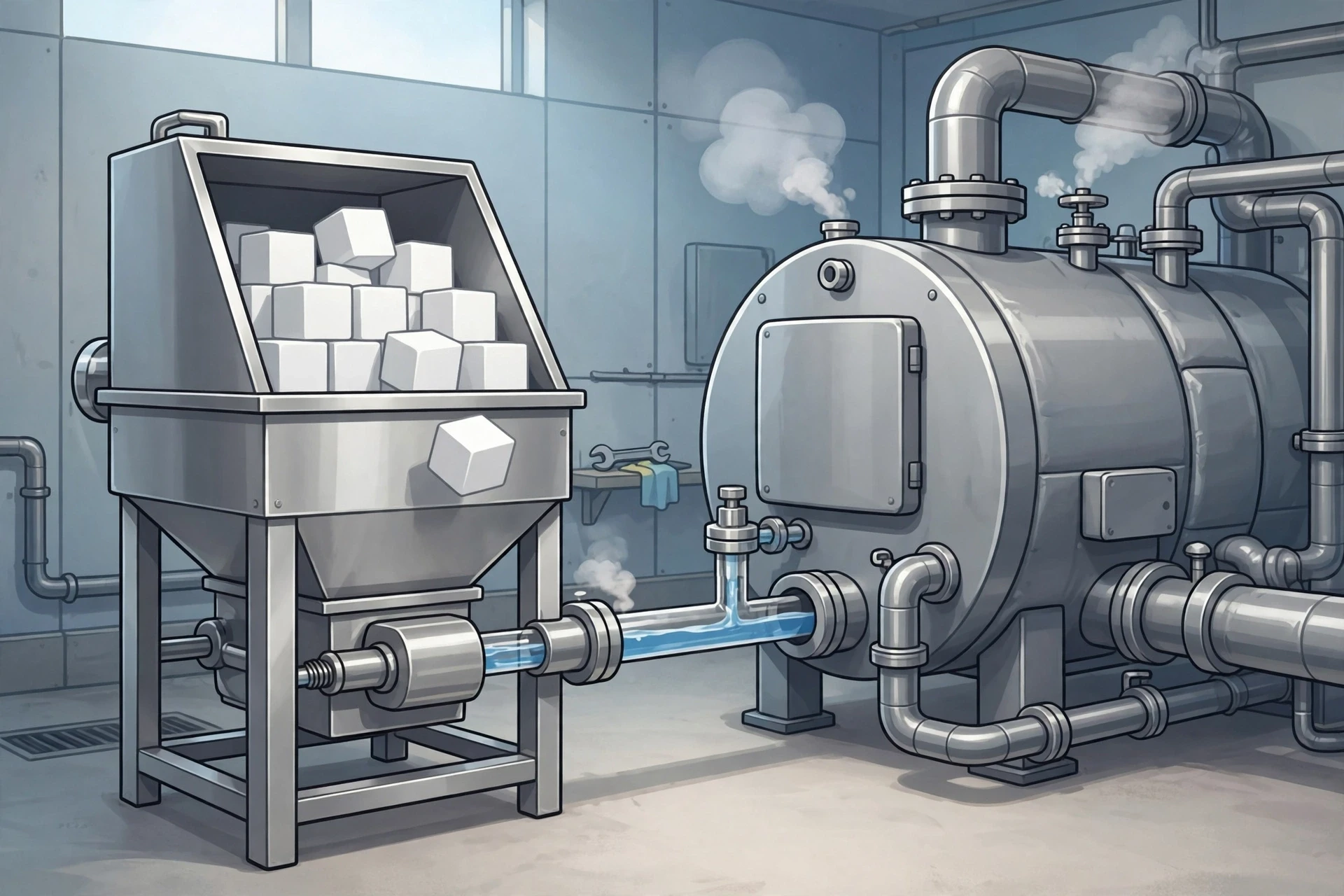
Solid chemistry packs oxygen scavenging, scale control, alkalinity, and dispersant actives into a solid block that dissolves in the feedwater stream. Hoffman Water runs this approach as SOLIDified, an alternative to liquid boiler chemicals fed through AP Tech feeders instead of bulk drums, so dosing stays consistent and drum handling disappears. It's a strong first entry among today's steam boiler chemicals options.
Highlights
- Consistent dosing without liquid drums to store, handle, or spill
- Feeder-based delivery suits plants where drum logistics and secondary containment are a problem
- Supports boiler, cooling tower, and closed-loop systems under one program
- Lower environmental and worker exposure burden than liquid bulk chemistry
Specs
- Best for: Plants avoiding liquid drums, spill risk, and manual handling
- Primary function: Full program: oxygen control, scale control, alkalinity, dispersant
- Delivery format: Solid blocks in automatic feeders
Pros
- No liquid drum storage, handling, or spill exposure
- More uniform dosing than hand-dosed liquids
- Suits sites with tight chemical storage footprints
Cons
- Requires feeder installation and a dosing verification routine
- Not every formulation suits every pressure or feedwater profile
It ranks first because it answers the fastest-growing question in solid chemistry boiler treatment: a whole-program replacement for liquid drums.
Last updated: October 27, 2026
2. Oxygen Scavengers (sulfite, DEHA, carbohydrazide)
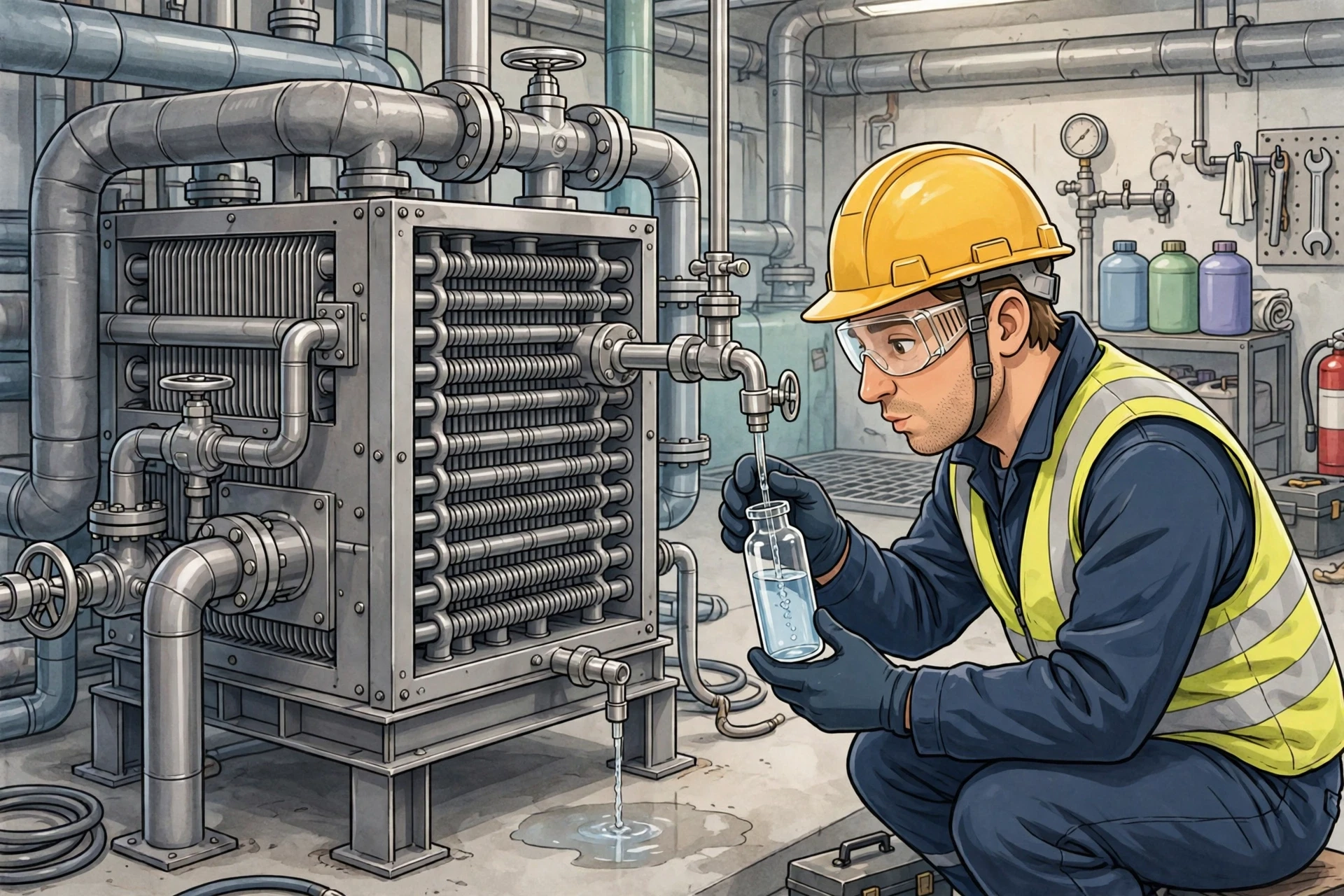
Dissolved oxygen turns aggressive at boiler temperatures and drives most pitting failures in economizers and condensate lines, so this chemistry is the first line of defense in your steam boiler chemicals program. Sodium sulfite is the most common oxygen scavenger, while DEHA and carbohydrazide cut dissolved solids at higher pressures.
Highlights
- Common actives: sulfite, DEHA, carbohydrazide, erythorbate
- Verify residuals daily; underfeeding leaves pitting active
- Overfeeding sulfite depresses pH and hurts condensate
- Works with a healthy deaerator and feedwater tank
Specs
- Best for: All steam systems, especially feedwater economizers and condensate sections
- Primary function: Removes dissolved oxygen to stop pitting corrosion
- Delivery format: Liquid, solid block, or powder
Pros
- Non-negotiable for corrosion control
- Multiple chemistries for pressure and purity needs
- Easy to verify with residual testing
Cons
- Demands tight residual control
- Sulfite adds dissolved solids and raises condensate conductivity
Nothing else on this list causes more preventable damage.
Last updated: October 27, 2026
3. Phosphate Scale Control
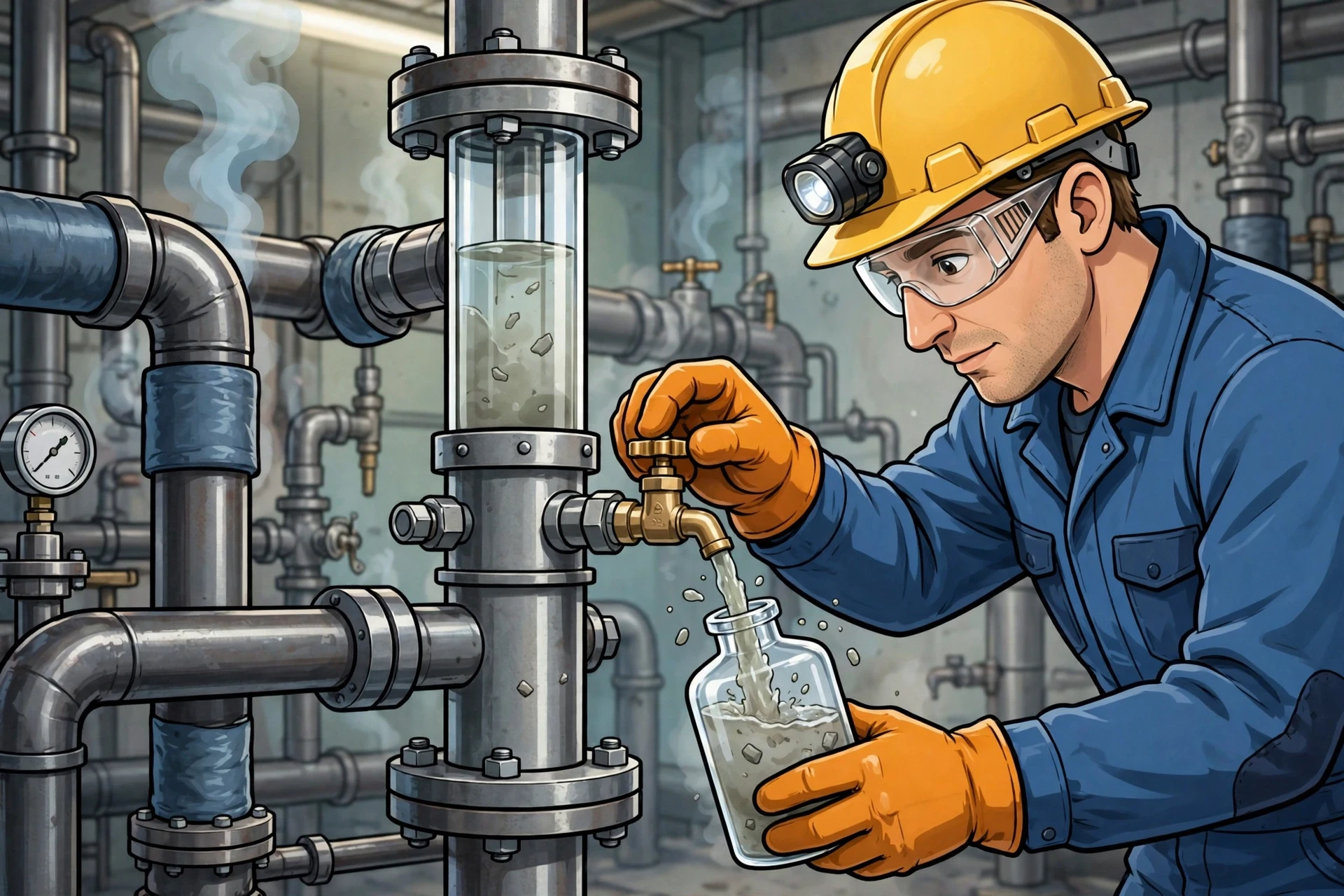
Phosphate is the core internal scale treatment for most industrial firetube and watertube boilers. It reacts with calcium to form a soft, non-adherent sludge that blowdown removes, instead of hard scale that insulates heat transfer surfaces and drives up fuel use.
Highlights
- Phosphate and polymer-phosphate blends are the standard formats, and the blend conditions precipitate as it forms
- Prevents the insulating scale layer that raises fuel consumption
- Phosphate hideout is a real risk at higher operating pressures
- Effective blowdown discipline keeps sludge out of the drum
Specs
- Best for: Low to medium pressure industrial boilers with controlled makeup
- Primary function: Prevents hard scale by converting hardness to removable sludge
- Delivery format: Liquid, powder, or solid block
Pros
- Well understood with decades of operating data
- Directly protects heat transfer surfaces and efficiency
- Blends well with polymer dispersants
Cons
- Hideout risk at higher pressures requires monitoring
- Overfeed drives free phosphate high and can promote carryover
TSP and its alkalinity react with calcium, magnesium, and silica to form soft sludges that blowdown can carry out of the boiler, which is why scale prevention remains the benchmark most plant programs follow. Phosphate ranks here because scale is the single biggest driver of lost efficiency and fuel penalty in a steam boiler, and regular testing keeps the program in range. See how to prevent scale in industrial boiler water systems before deposits start costing fuel.
Last updated: October 27, 2026
4. Polymer Dispersants
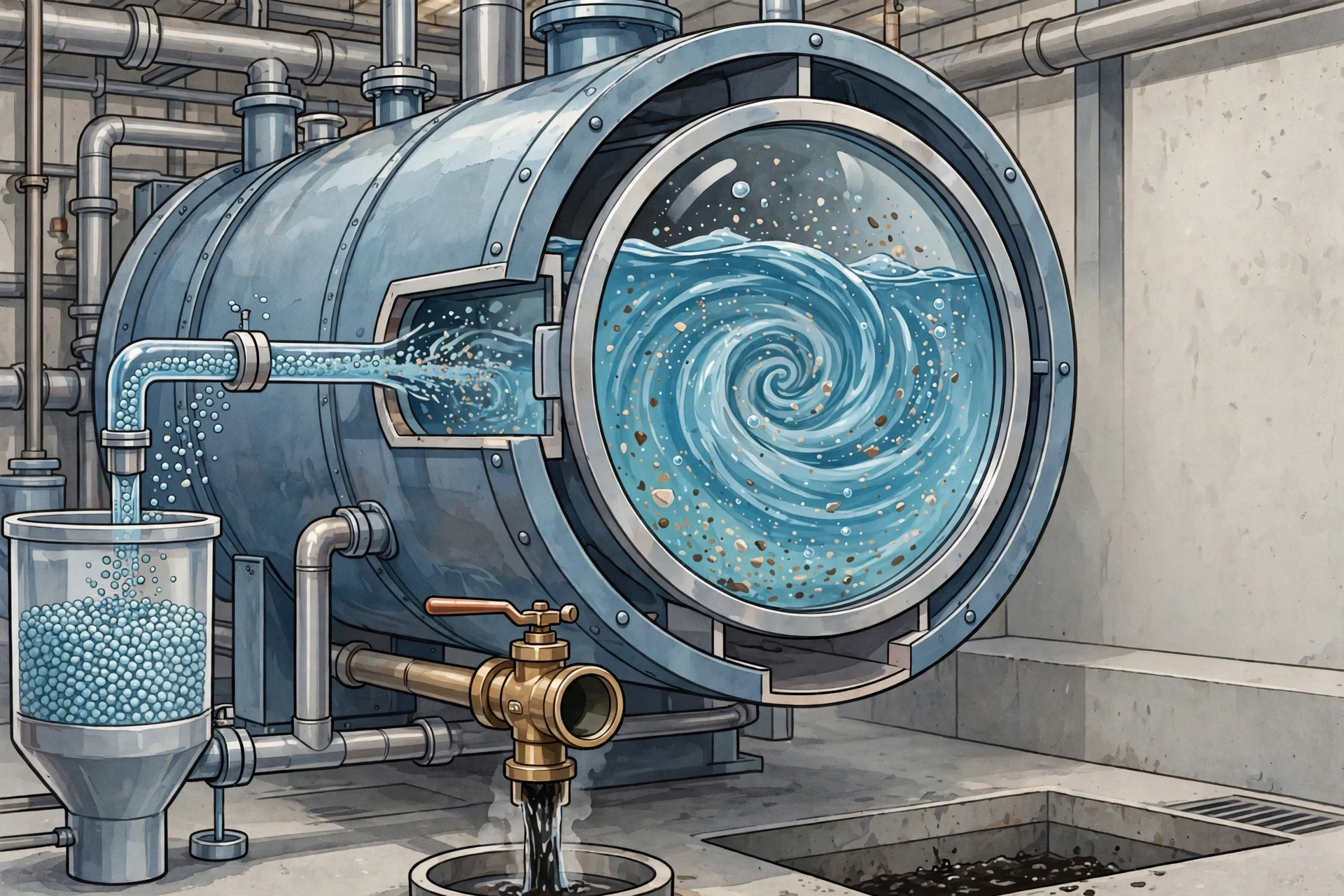
Polymer dispersants keep precipitated sludge soft, mobile, and removable by blowdown. Synthetic polymers, sludge conditioners, and tannins hold hardness particles small and non-adherent, so they stay suspended instead of fusing onto tubes. They also handle iron oxides and organics migrating in from the makeup water system. Many plants run this as part of a solid chemistry feed program to cut handling hazards.
Highlights
- Common actives include acrylic polymers, tannin-based conditioners, and lignins
- Prevents sludge from turning into hard, tube-bound deposits
- Pairs with phosphate to control the character of the sludge itself
- Reduces the blowdown rate needed to keep the drum clean
Specs
- Best for: Any boiler using phosphate or experiencing sludge buildup
- Primary function: Disperses precipitates so blowdown can remove them
- Delivery format: Liquid, powder, or solid block
Pros
- Lowers blowdown rate and chemical cost
- Protects against iron oxide and organic fouling
- Reduces deposit-related tube failures
Cons
- Wrong polymer for the chemistry can cause foaming or carryover
- Hard to judge by appearance; requires program-side analysis
It ranks here because it decides whether the rest of the program works: without it, phosphate and hardness treatments just build the next tube deposit.
Last updated: October 27, 2026
Honourable Mentions
The first four chemistries carry most of the load, but these five round out a complete program. Each one earns its place even though it works downstream of the boiler itself.
- Alkalinity Builders - Caustic, potassium hydroxide, and magnesium hydroxide keep boiler water pH in range and buffer acidic condensate
- Condensate Filming and Neutralizing Amines - Volatile amines protect condensate return piping from CO2 corrosion and iron pickup
- Antifoam and Defoamer Agents - Polyalkylene glycol and silicone defoamers prevent carryover, priming, and contaminated steam
- Biocides for Steam and Condensate Systems - Oxidizing and non-oxidizing biocides control Legionella and biofilm in warm water systems
- Chelants and Sequestrants - Organic chelants keep trace hardness soluble where phosphate programs are not suitable
How To Choose The Right Steam Boiler Chemistry
Choosing steam boiler chemicals comes down to five steps:
- Test your feedwater first: hardness, alkalinity, dissolved oxygen, conductivity, and organics.
- Match treatment to pressure. Low pressure tolerates phosphate and sulfite; higher pressure needs tighter control.
- Pick a delivery format that fits your site. No drum storage or containment? Solid chemistry in feeders solves it.
- Balance the whole program, not one chemical.
- Set a test, a target residual, and a review schedule for each.
For Ohio plants weighing these criteria, Hoffman Water covers all five: engineer-led feedwater analysis, solid chemistry feeders that cut drum handling, and 24/7 response when residuals drift.
Chemicals only work when they match your feedwater. Get an engineer-led boiler water assessment from Hoffman Water and find the right program for your plant.
Frequently Asked Questions
Q1: What are popular alternatives to liquid boiler treatment chemicals?
Solid chemistry blocks fed through automatic feeders replace liquid drums. Alternatives include solid oxygen scavengers, phosphate blocks, polymer dispersant blocks, and combination programs covering oxygen control, alkalinity, and scale.
Q2: How often should I test boiler chemical residuals?
Test oxygen scavenger and phosphate residuals daily. Review the full program monthly.
Q3: Do solid chemistry programs work in high-pressure boilers?
Yes, but formulation matters. Match the block to your pressure and feedwater profile.