 Hoffman Water
Quick Summary: Liquid boiler treatment forces operators to pour and pump hazardous chemicals right next to live steam headers, creating splash, inhalation, and ergonomic risks that OSHA specifically regulates. Solid boiler chemistry removes those transfer steps entirely by replacing heavy drums with small dissolving cartridges or pouches, which cuts exposure, frees up storage space, and simplifies training. The switch still requires matching the solid product to your boiler pressure and feedwater profile and budgeting a two to four week adjustment period. Hoffman Water's SOLIDified program is cited as an engineer-led option that delivers the same treated water quality with far less chemical handling.
A 500-pound drum of liquid boiler treatment rolling past a 300 psi steam header is a hazard most Ohio plants overlook. Every pour, pump and splash adds risk. Solid boiler treatment cuts that exposure sharply: fewer drums, no concentrated liquid handling and simpler training. This guide shows how solid boiler treatment works, where it reduces hazards, and what to check before you switch.
Why Liquid Boiler Chemicals Create Handling Risk
Liquid programs concentrate every hazard into the transfer step. Pumping or pouring caustic and sulfite solutions near a live boiler puts splashes, drips, and vapors right where operators work, which is why OSHA sets enforceable exposure limits for these substances.
Splash, Spill, and Inhalation Exposure Near the Boiler
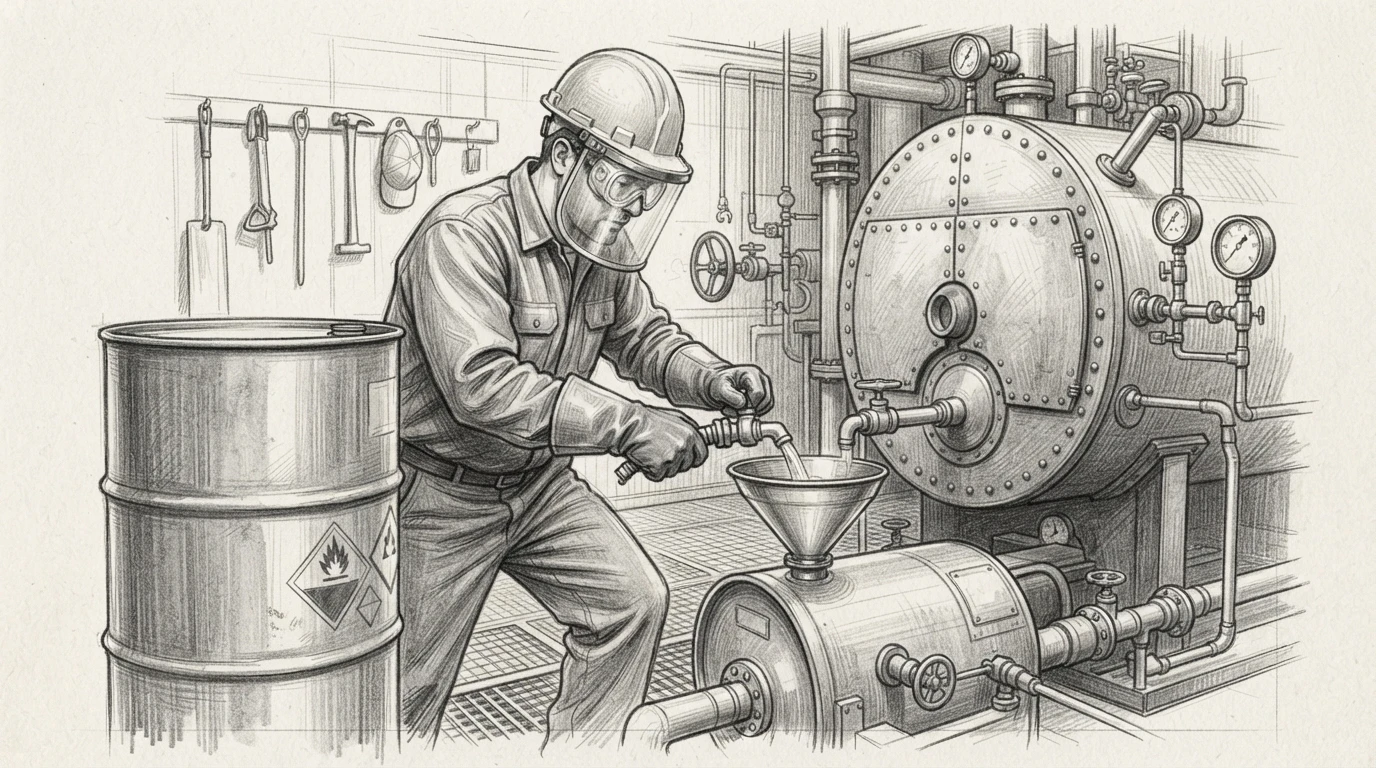
Most exposure happens during drum-to-day-tank transfers. A loose fitting, an overfilled tote, or a dropped pail can splash faces and arms, and breathing sulfite or amine mist irritates the lungs. That is the main reason solid chemistry programs like Hoffman Water's SOLIDified system remove the pour step entirely. Until you switch, splash goggles, face shields, and compatible gloves are mandatory.
Ergonomic and Storage Hazards of Drum Programs
A 500-pound drum does not move itself. Operators tip, roll, and wrestle drums into position, straining backs and risking crushed feet. Drums also need labeled, separated, secondary-contained storage to meet OSHA chemical storage requirements, space many older boiler rooms lack.
How Solid Boiler Treatment Cuts Those Risks
Solid chemistry removes the problem at its source: the drum. Concentrated chemistry arrives in small, soluble water-soluble pouches or cartridges instead of heavy liquid containers, so most of the handling steps that create exposure disappear.
Eliminating Drum Handling and Splash Events
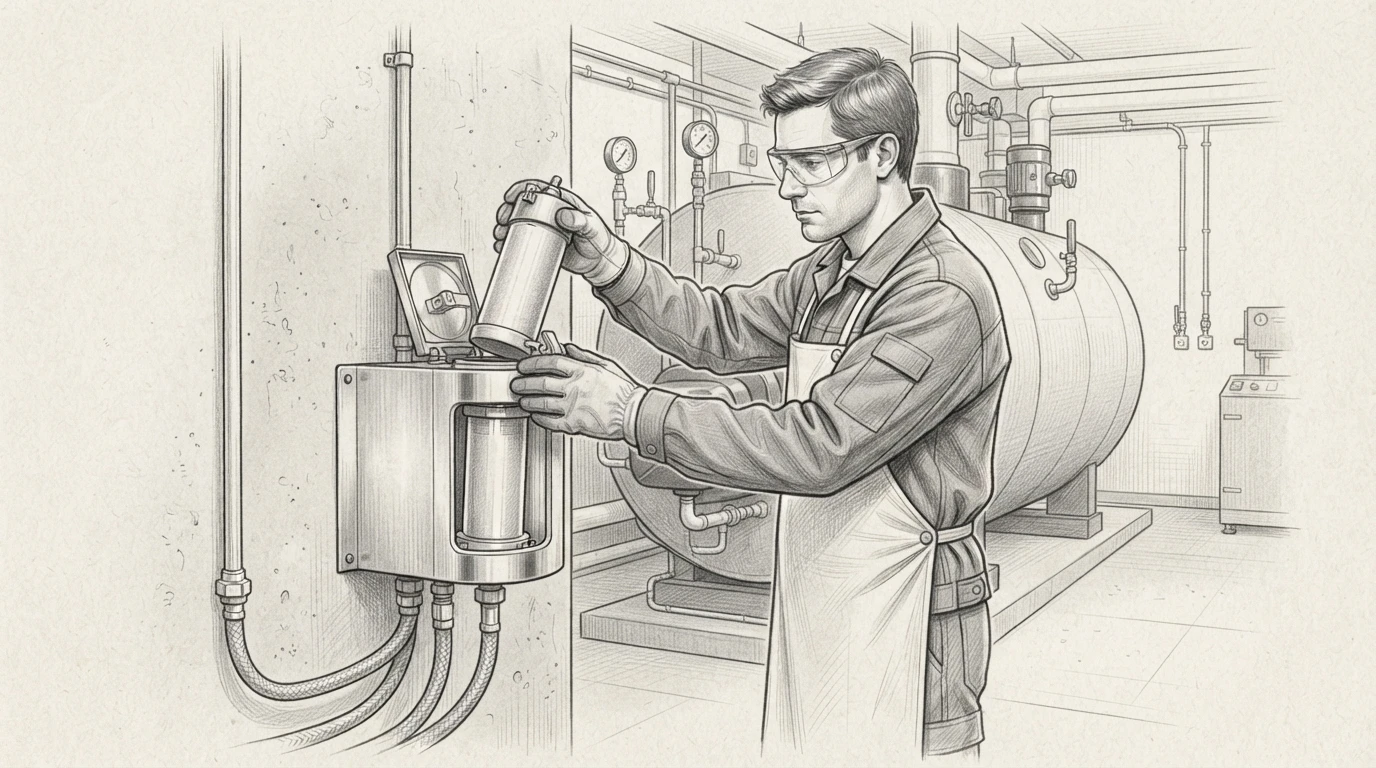
With solids, nobody tips, pumps, or siphons liquid concentrate. OSHA's drum handling rules under hazardous waste operations standard 1910.120 exist largely because drums create spill, crush, and exposure hazards during transfer. A solid chemistry program ends those transfer tasks entirely. Operators load a dissolving cartridge into the feed system, connect the water line, and walk away. There is no splash, no diluted puddles near the boiler, and no need for full face shields during makeup. The tasks that cause back strains and chemical burns simply stop happening, which means your safety data improves without adding another training module.
Removing Hazardous-Storage and Disposal Burden
Liquid chemistry brings storage obligations: bunded containment, corrosion-resistant shelving, spill kits, and disposal of empty or partially used containers. Solid chemicals store as compact, low-hazard products in a small footprint, and pouches leave minimal residue, so disposal risk drops sharply. Facilities often free up floor space near the boiler room as a bonus. Programs like SOLIDified solid chemistry pair that storage advantage with engineer-led dosing design, so the same treated water quality comes with far less hazmat housekeeping.
Choosing the Best Solid Chemistry Alternative for Your Boiler System
Match the Solid Program to Boiler Chemistry Demands
Not every solid product fits every boiler. Check your pressure rating, makeup water hardness, and condensate return before switching. Oxygen scavengers, scale inhibitors, and amine blends each come in solid formats, but dosing rates differ from liquid programs. Review the boiler treatment options that match your water analysis, then trial one loop before a full changeover.
Validate the Handling-Risk Reduction on Site
Confirm the risk actually drops. Weigh the new cartridges, measure where they store, and walk the route from dock to day tank. No more 500-pound drums near the steam header means fewer lift injuries and spills. Document the change so your safety committee sees the gain.
Common Pitfalls When Switching to Solid Boiler Treatment
Most switch problems come from a handful of predictable mistakes:
- Skipping the survey. Solid chemistry must be sized to your actual feedwater and load, not copied from the old liquid program.
- Poor dissolving-tank placement. Units need water access, drainage, and room to service.
- No blend adjustment period. Expect two to four weeks of testing while chemistry stabilizes.
- Training gaps. Operators need a short walkthrough on refill checks, not a manual.
Tired of wrestling 500-pound drums near your steam header? Ask Hoffman Water about SOLIDified solid chemistry for your boiler. Get an engineer-led review at Hoffman Water today.
Frequently Asked Questions
Q1: What are the best solid chemistry alternatives for boiler systems?
Solid oxygen scavengers, scale inhibitors, and amine blends in dissolving pouches or cartridges. Match the product to your pressure rating, feedwater hardness, and condensate return, and trial one loop first.
Q2: How long does switching to solid chemistry take?
Plan a two to four week blend adjustment with testing while chemistry stabilizes. Most facilities transition one loop at a time without downtime.
Q3: Do solids treat as effectively as liquid chemicals?
Yes, when dosed to your water analysis. Dosing rates differ from liquid programs, so size the system to actual feedwater and load rather than copying old numbers.
Q4: What training do operators need?
A short walkthrough on cartridge loading, refill checks, and makeup verification. Most operators handle solids with far less PPE training than liquid drums require.
Conclusion
Solid boiler treatment removes handling risk at its source: no drum transfers, no splash events, and far less hazmat storage. Match the chemistry to your water analysis, trial one loop, and train operators briefly. Engineer-led programs like Hoffman Water's SOLIDified make the switch straightforward.