 Hoffman Water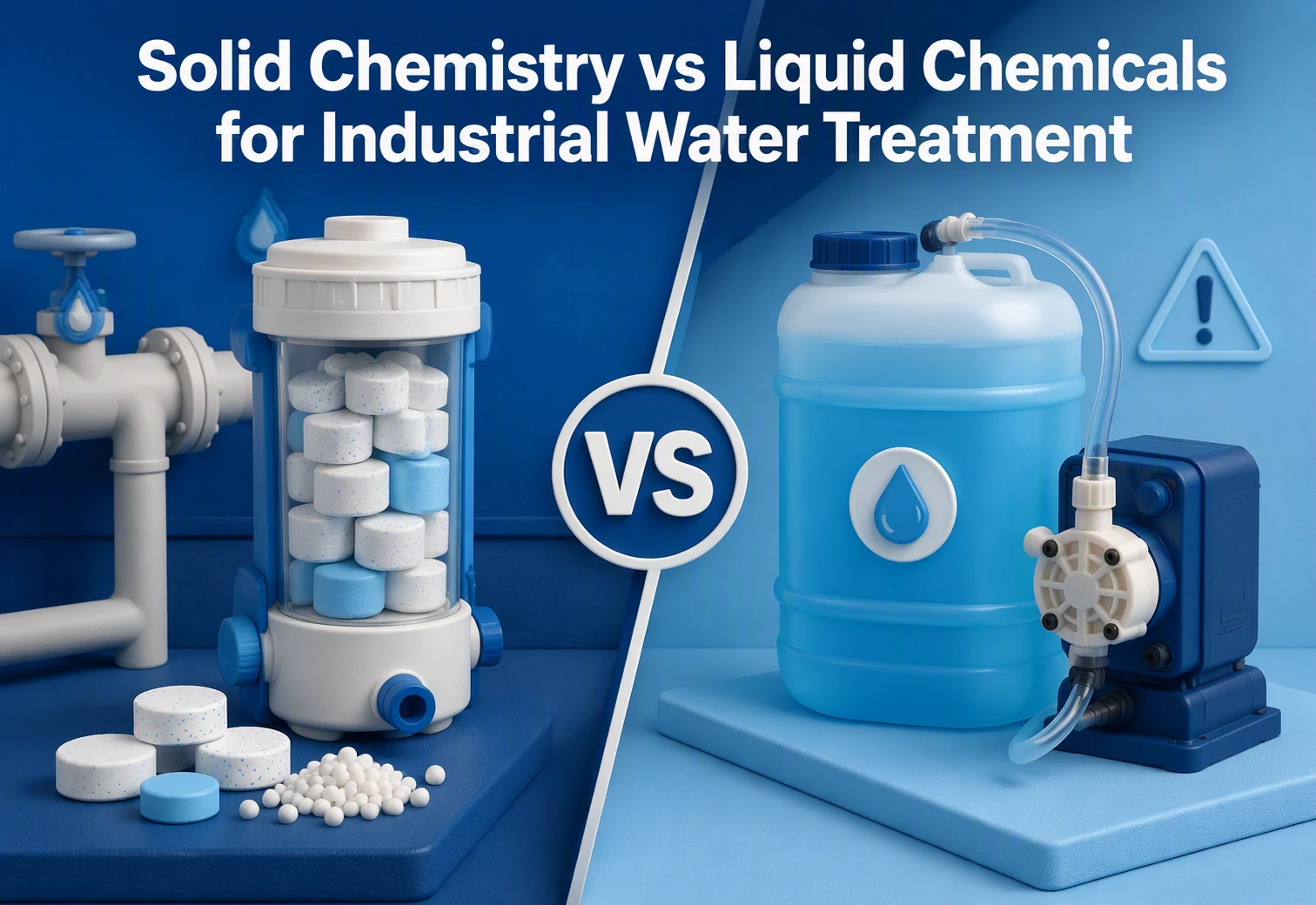
Quick Summary: Solid chemistry can replace liquid water treatment chemicals when space, drum handling, or spill risk are concerns, offering comparable performance if the feeder and dosing match the system. Liquids still win for rapid dose changes, specialty formulations, or existing bulk infrastructure. An engineer must verify water demand, feed rates, and storage before converting, since solids need a dedicated dissolver and dry storage.
Moving liquid drums adds weight, spill risk, and storage strain. Solid chemistry is often the best liquid chemical alternative for tight sites and high handling risk. Yet liquids may fit unique feed needs. A sound liquid chemical alternative must control scale, corrosion, deposits, and microbes. Engineer-led assessment confirms whether solid dosing can match the system.
Solid Chemistry vs Liquid Chemicals: At a Glance
| Solid chemistry water treatment | Liquid treatment chemicals | |
|---|---|---|
| Treatment performance | Can provide comparable treatment when formulation and dose fit the system | Established option with broad formulation availability |
| Feed and control | On-demand dissolution with metering and monitoring | Direct metering from liquid storage |
| Storage and handling | Compact concentrates; less weight and fewer drums | Higher volume, weight, containment, and disposal burden |
| Spill and exposure risk | Lower bulk liquid spill and splash exposure | Greater risk from leaks, splashes, and drum handling |
| Conversion requirements | Feeder, water connection, compatible pump, controls, and commissioning | Often compatible with existing liquid feed infrastructure |
| Best fit | Sites with access, space, handling, or drum-disposal constraints | High-volume or formulation-specific programs with suitable storage |
How Solid chemistry water treatment and Liquid treatment chemicals Compare
Solid chemistry water treatment
Solid chemistry dissolves concentrated product on site, then feeds it through a dedicated system. It suits plants seeking a liquid chemical alternative where space, drum handling, or access creates friction.
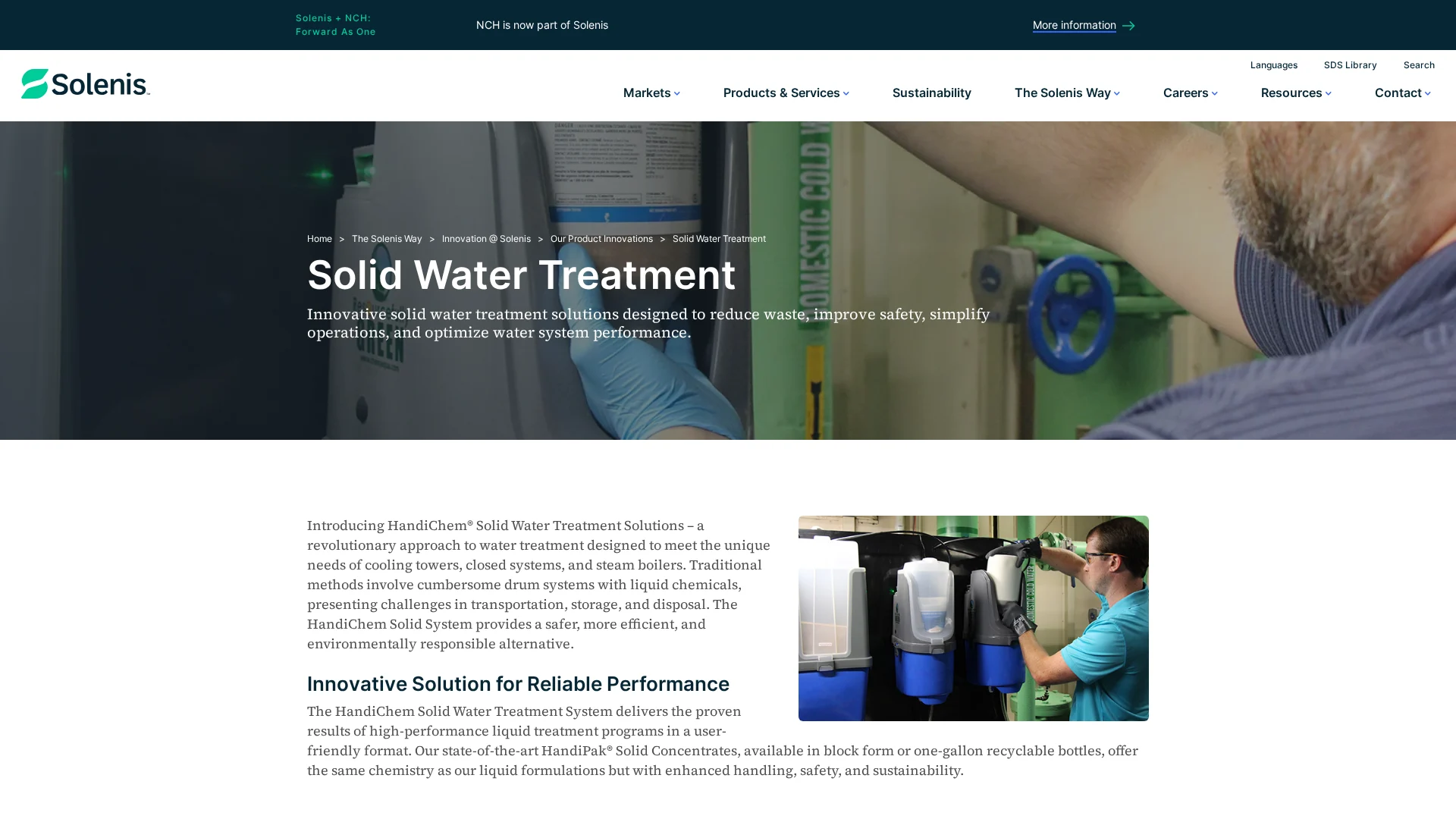
Liquid treatment chemicals
Liquid programs store ready-to-feed chemistry in drums, totes, or bulk tanks. They fit sites with existing feed gear, high demand, or a need for specific formulations.
Treatment Performance and Dosing Control
Why Solid Chemistry Can Replace a Liquid Program
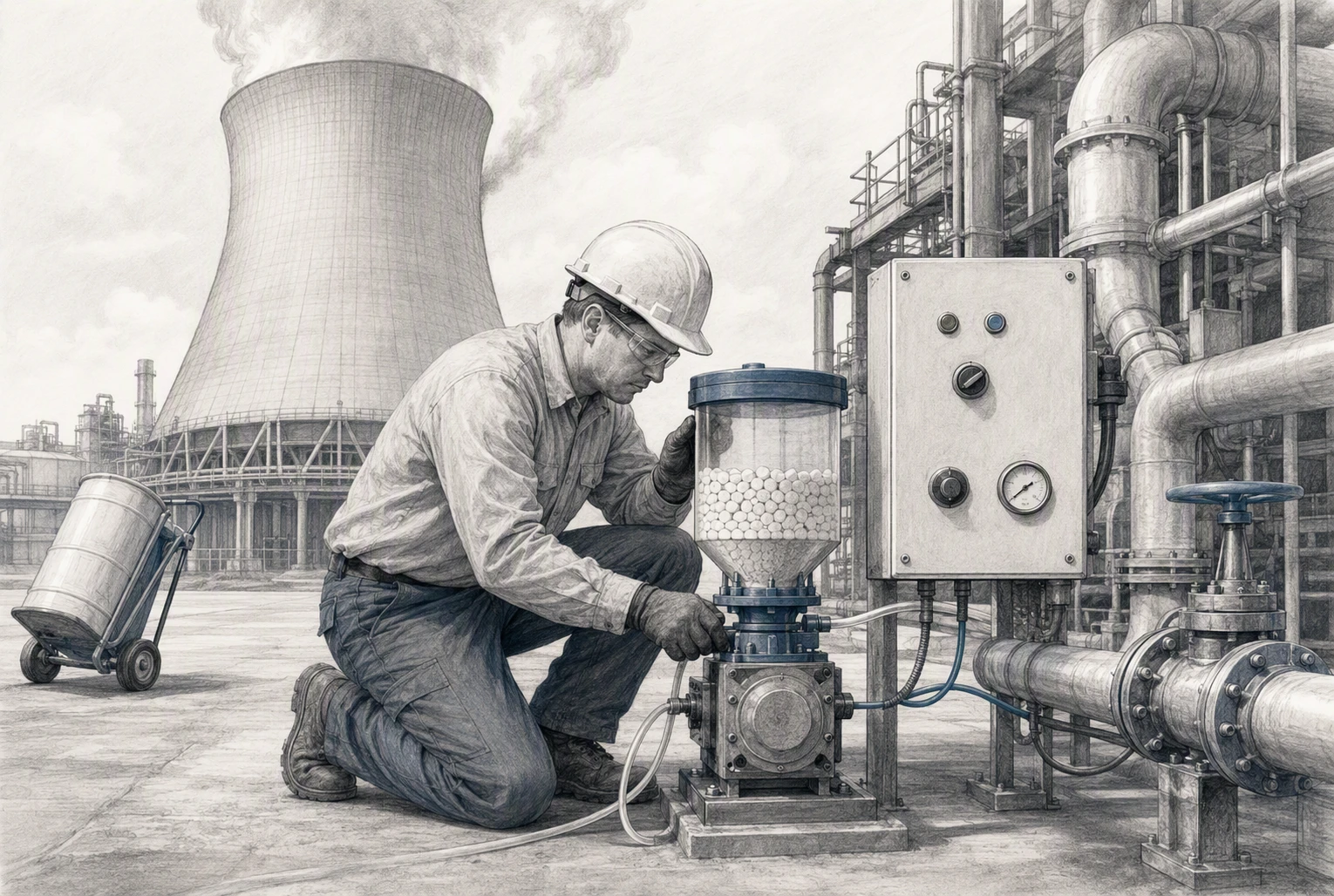
Solid chemistry can match liquid treatment when the feeder dissolves product at a controlled rate and sends it into a well-mixed point. The goal stays the same: protect metal, control scale, and manage microbes.
The EPA notes that rising dissolved solids can cause scale and corrosion, so dosing must track real system conditions.
| Check | Why it matters |
|---|---|
| Feed rate | Holds the target treatment level |
| Conductivity | Guides blowdown control |
| Water tests | Confirms chemistry performance |
Tip: Test the incoming water, load changes, and feed location before conversion. A solid program is not a drop-in replacement.
- Confirm product fit.
- Size the feeder.
- Verify results with routine tests.
Also Read: 5 Boiler Treatment Systems for Manufacturing Facilities
Safety, Storage, and Total Operating Burden
Where Solids Create the Largest Practical Advantage
Solid chemistry can cut routine liquid handling, drum leaks, and bulk-tank checks. That matters most in tight chemical rooms or sites with limited staff.
| Task | Liquid program | Solid program |
|---|---|---|
| Delivery | Move drums or totes | Store sealed cartridges |
| Spill risk | Leaks during transfer | Lower until dissolved |
| Daily work | Check pumps and levels | Load product and verify feed |
OSHA requires hazard labels, accessible SDSs, and worker training for hazardous chemicals. Review each product's SDS storage and handling details before conversion.
Solids still need dry storage, correct PPE, and a feed system sized for peak demand.
- Confirm water use and feed rate.
- Check storage humidity and access.
- Plan backup product for outages.
Also Read: 7 Solid Chemistry Systems for Industrial Water Treatment
When Liquid Chemicals Still Make More Sense
Liquid chemicals fit sites that need fast dose changes, unusual blends, or products not offered in solid form. They also suit plants with working bulk tanks, metering pumps, and trained staff.

| Situation | Why liquid may fit |
|---|---|
| Rapid load swings | Pumps can adjust dose quickly |
| Specialty biocides | Product label may require liquid feed |
| Existing bulk system | Avoids near-term retrofit cost |
Confirm the product label and feed range. Some liquid biocides are approved for specific industrial water uses, as shown on this EPA label.
Also Read: Hoffman Water SOLIDified Chemistry Review for Industrial Facilities
Which Should You Choose: Solid or Liquid Chemistry?
Choose solid chemistry when spills, drum handling, and storage space drive risk or cost. It can simplify daily work, but only if your feed unit can dissolve and dose it at the required rate.
Choose liquid chemicals when your process needs a product not available in solid form, very high feed rates, or existing bulk storage already works well.
| Site condition | Better fit |
|---|---|
| Frequent drum changeouts | Solid chemistry |
| High-volume, continuous feed | Liquid chemistry |
| Tight space and spill concerns | Solid chemistry |
Have an engineer confirm water demand, feed points, materials, and controls first. EPA guidance also stresses current safety data, procedures, training, and maintenance for chemical processes.
Ready to assess solid chemistry at your plant? Hoffman Water engineers conversions that reduce liquid handling risk without compromising treatment control.
Frequently Asked Questions
Q1: How does solid chemistry compare with liquid treatment chemicals?
Solid products reduce spill and exposure risks, while liquids may suit high-volume feed systems. Both can protect equipment if dosage, feed hardware, and water testing match site needs.
Q2: Can existing feed equipment handle solid chemistry?
Usually not without changes. Sites often need a dissolver, feeder, storage setup, and revised controls.
Q3: Is solid chemistry right for every plant?
No. An engineer should review water use, chemical demand, space, staffing, and process limits first.
Conclusion
Solid chemistry can cut handling and storage burdens, but it must fit your feed system, water goals, and safety plan. EPA guidance supports matching chemical and container compatibility to site conditions.