 Hoffman Water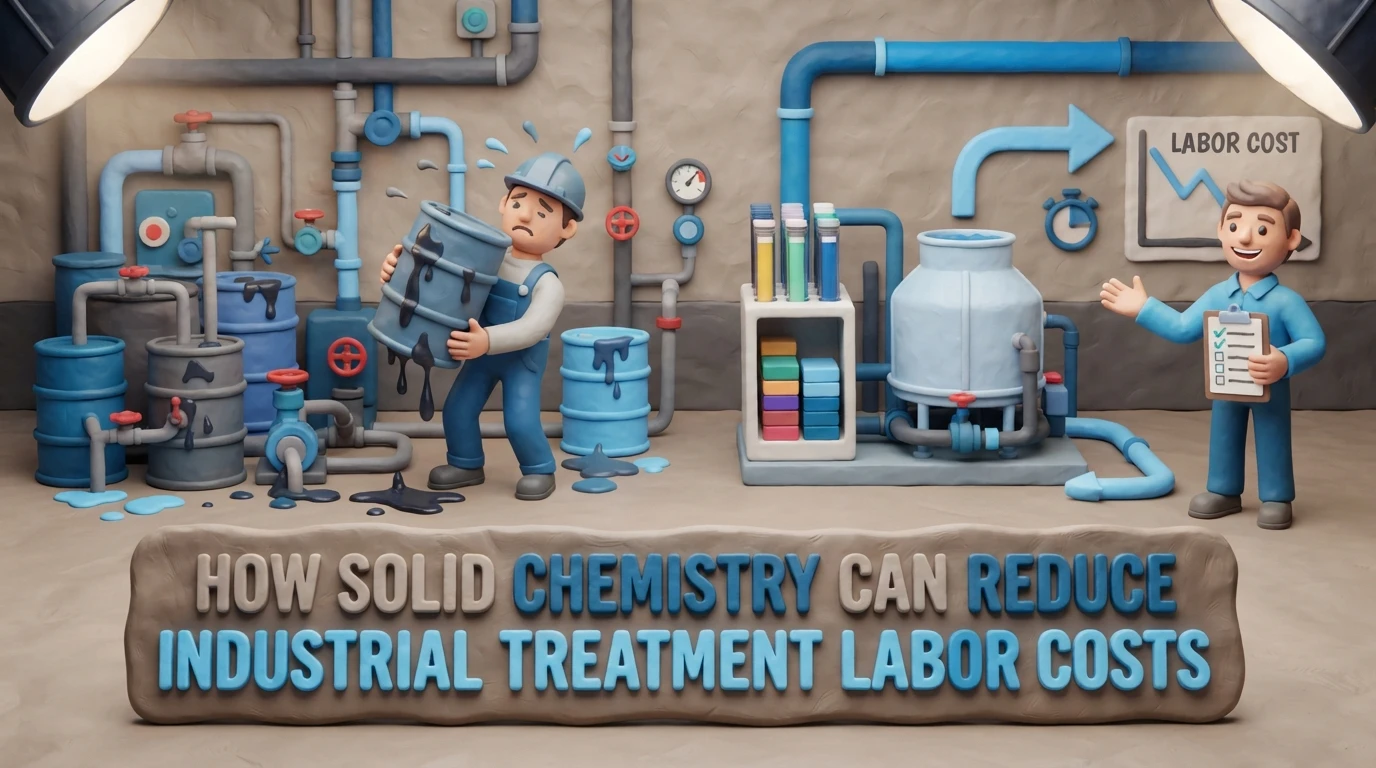
Quick Summary: Liquid water treatment programs burn paid operator hours on drum hauling, hand-mixing, and spill cleanup, with a typical Ohio plant losing half a shift per operator every week and over $30,000 per year across boilers, cooling towers, and closed loops. Solid chemistry ships in light, stackable cases that dissolve at fixed strength, killing most of that drum handling, mix-time, and hazardous disposal work. Programs like Hoffman Water's SOLIDified system turn those hidden labor costs into reclaimed hours that operators can spend on maintenance and housekeeping instead.
On a typical Ohio plant, two operators burn half a shift each week rolling 500-lb liquid drums, hand-mixing batches, and staging empties for hazardous pickup. That labor never appears on the chemical invoice. Solid chemical water treatment moves those hours off your payroll. This guide shows where liquid programs hide labor cost, how solid chemical water treatment cuts it, and how engineer-led programs like Hoffman Water's SOLIDified approach reclaim operator time.
Where the Labor Hours Actually Hide in a Liquid Program
Liquid programs hide labor in small, repeated tasks. Individually they look trivial. Added up, they cost real operator hours every week.
Receiving, Moving, and Mixing Liquid Drums
Start with the drums themselves. A 500-lb liquid drum needs a forklift or drum dolly to move, and someone has to sign for it, stage it, and roll it to the point of use. Then comes batching: measuring product, mixing to the right strength, and checking the result. Half a shift per operator, per week, goes to this work at a typical Ohio plant. That is paid time spent on logistics, not on keeping water in spec. Programs built around solid chemical water treatment replace most of those steps, because the product dissolves in place and ships in small cartons instead of drums that demand heavy handling.
Dosing Drift, Spill Kits, and Drum Disposal
The clock keeps running after the drum is empty. Liquid feed rates drift, so operators recheck and adjust pumps. Spills need cleanup, spill kits need restocking, and empties need staging for hazardous pickup. Each task is five minutes here, twenty minutes there. Across a month, it becomes a labor line item you can actually budget against, and mostly eliminate.
How a Solid Program Reclaims Those Hours
From Drum Lifts to a Stackable Solid Case
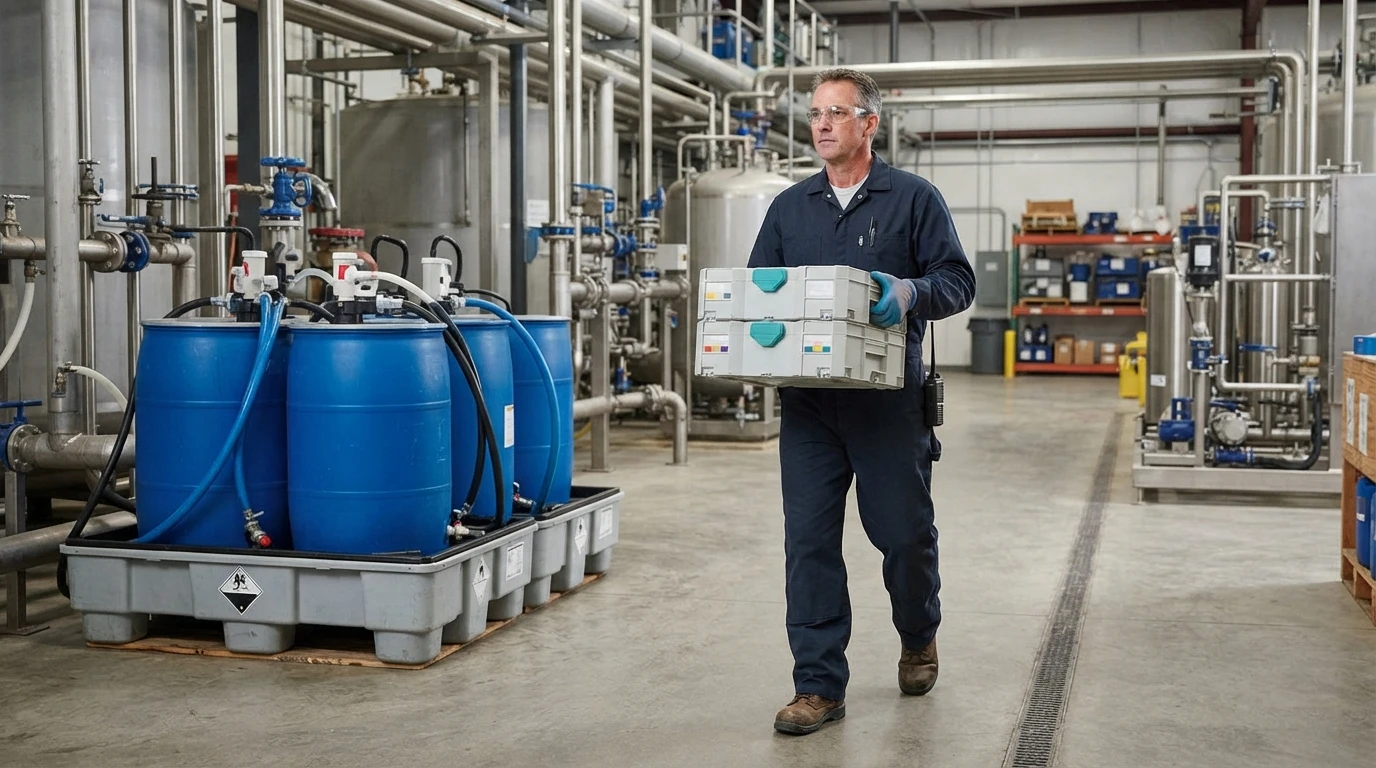
Solid chemistry ships product in concentrated water-soluble film packs, not 500-lb liquid drums. One case weighs a fraction of a drum, so an operator can carry it with one hand instead of calling a forklift. Cases stack on a pallet, which means fewer deliveries and fewer receiving signatures. There are no empties to rinse and stage for hazardous pickup, either, since nothing spills or leaves residue. That swap alone cuts most of the lifting, mixing, and drum-staging hours out of a typical week. Programs like Hoffman Water's SOLIDified system were built around exactly this handling problem. You can see how solid chemistry compares with liquid chemicals task by task.
Steady Dosing Without a Hand-Mixed Bucket
Hand-mixing also invites error. Operators guess at concentration, and every new batch can land slightly off. A solid feed system dissolves each pack at a fixed strength, so dosing stays consistent around the clock. Fill the dissolving tank, set the feed rate, and walk away. Your operators check a tank level instead of weighing and blending chemicals, and the check takes minutes, not half a shift. Consistent dosing also means fewer corrective treatments, which is where unplanned hours really pile up. The reclaimed time goes back to maintenance, housekeeping, or whatever backlog your team actually cares about.
Putting a Labor Cost on the Switch
An Example Calculation for a Single Boiler
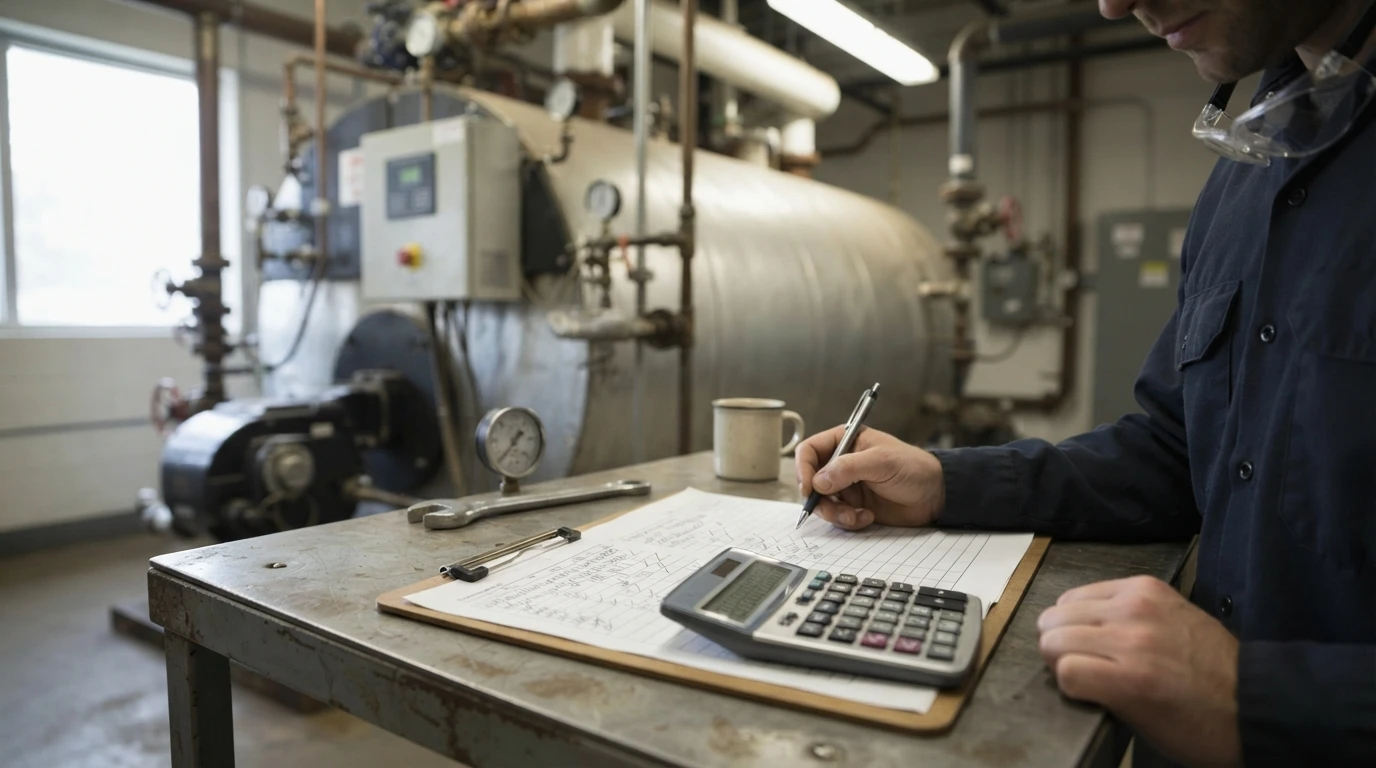
Say one operator spends six hours a week on liquid chemical tasks: moving drums, mixing, and cleanup. At a $35 loaded hourly rate, that is $210 weekly, or roughly $10,900 a year for one system. Multiply across a plant's boiler, cooling tower, and closed loops, and the drum-handling line item can pass $30,000 annually.
Why the Real Number Belongs on Site
Those figures are illustrative. Your true number depends on the loaded wage, shift structure, and how far chemicals travel from storage to point of use. Walk the route yourself and time it. Hoffman Water does this math with clients during system walkthroughs, because a site-specific estimate beats any published benchmark.
Ready to cut those drum-handling hours? Hoffman Water's SOLIDified solid chemistry program frees your operators for the work that matters. Get a labor-saving walkthrough at Hoffman Water.
Frequently Asked Questions
Q1: Can solid chemistry reduce industrial water treatment labor costs?
Yes. Solid packs cut drum handling, mixing, and spill cleanup, often freeing several operator hours weekly and thousands of dollars per year.
Q2: Does solid dosing stay consistent?
Yes. Packets dissolve at fixed strength, so feed rates stay steady.
Q3: How do I estimate my savings?
Time your chemical-handling tasks, multiply by loaded hourly wage, then compare.
Conclusion
Solid chemistry turns a hidden labor cost into visible savings. One case replaces a 500-lb drum, fixed-strength dosing replaces hand mixing, and hazardous disposal disappears. Count your drum-handling hours, apply your loaded wage, and the savings across boiler, cooling tower, and closed-loop systems often exceed $30,000 a year.