 Hoffman Water
Quick Summary: The Toledo glycidyl methacrylate leak shows why clean air readings do not rule out contamination in plant water systems, drains, cooling towers, boilers, wastewater, or paint detack tanks. Nearby plants should sample incoming water first, then cooling tower basins, blowdown, boiler feedwater, condensate, discharge points, and detackification tanks, comparing each result with pre-incident baselines before changing treatment or resuming discharge. Documenting findings and retesting before normal operations resume can prevent treatment problems, permit violations, and regulatory scrutiny, with Hoffman Water offering engineer-led emergency support.
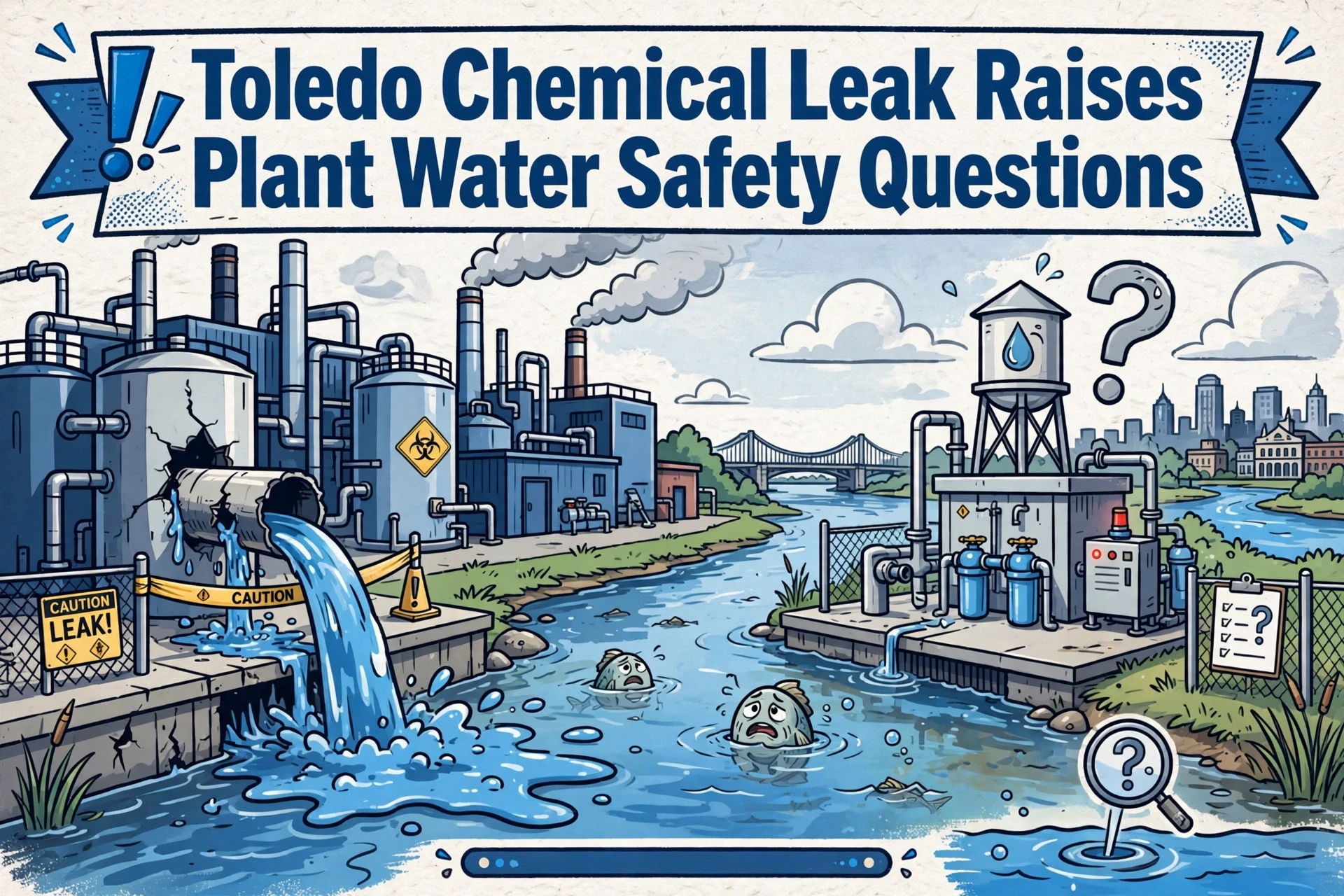
For roughly 45 hours in late October 2026, a leaking tank of glycidyl methacrylate at a north Toledo terminal forced evacuations and a shelter-in-place order. Even with tap water declared safe, plants in the corridor faced harder questions: was cooling tower makeup still acceptable, did vapor reach storm drains or a closed loop? This guide covers the verified timeline, emergency water support, and industrial chemical spill response checks for your water systems.
What Happened at 1266 Progress Avenue
How the response unfolded hour by hour
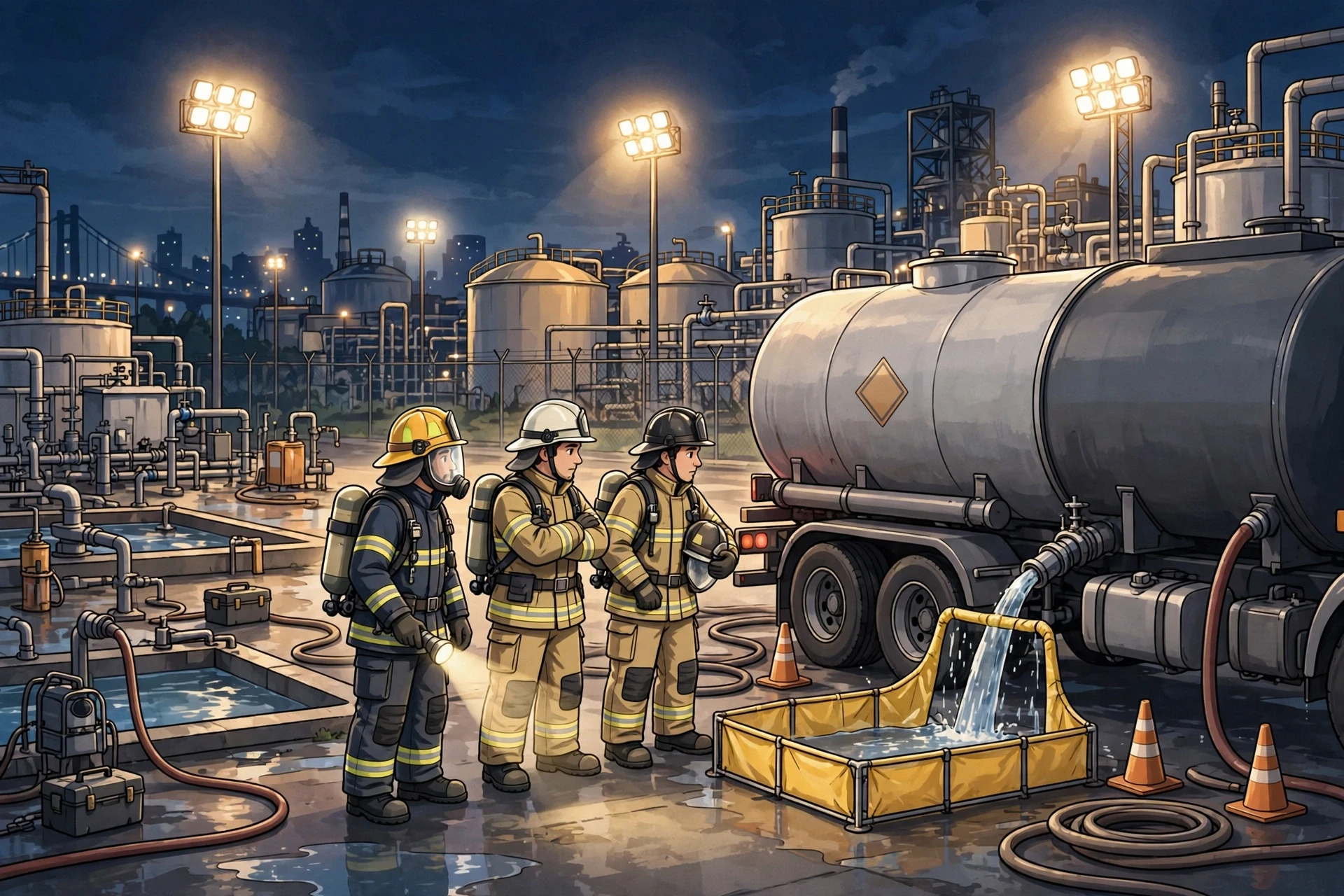
At 9:30 p.m. on Tuesday, Oct. 20, a 911 call alerted Toledo Fire & Rescue to an active release of an unknown material from a tanker at the MC Tank Terminal. Crews ordered everyone within a one-mile radius to evacuate by 10:48 p.m., citing an explosion risk. Early Wednesday, plume modeling pushed a shelter-in-place order out to three miles. As air quality improved, the zone shrank to a half mile, then a quarter mile, and the evacuation ended Oct. 23. The city posted a full hour-by-hour response timeline. Events like this test every plant's emergency water treatment readiness.
What the monitoring data showed
US EPA led air monitoring with the TAGA mobile lab. On Oct. 24 it detected an extremely low level of glycidyl methacrylate, below reporting and screening levels, with no further detections along its route. This is what a coordinated industrial chemical spill response should produce: verified data, shared openly, before agencies clear the site.
Why Plants Need Emergency Water Support After a Chemical Spill
Plants near a spill need water support for three reasons:
- Air data does not cover drains. Runoff and process water can carry chemicals the air team never samples.
- Traces still shift water chemistry. Small doses change corrosion, fouling, and treatment dosing.
- Discharge rules still apply. Your permit limits hold even during a cleanup.
Air monitoring data cannot tell you what is in your drains
The EPA's response team sampled air with its TAGA lab, not plant drain lines or cooling tower basins. Air results say nothing about what washed into sewers, stormwater, or a plant's own intake. Emergency water support fills that gap: drain sampling, basin inspection, and a plan before you restart.
Trace chemical levels still change how a water system behaves
Even parts-per-billion traces of a solvent-like chemical can upset a boiler water treatment system, foam a cooling tower, or inhibit paint detackification chemistry. Treatment programs assume a known water profile. A spill breaks that assumption, so retest feedwater, condensate, and blowdown before resuming normal dosing.
What Plant Operators Should Verify in the First 30 Days
The Toledo release raises a fair question for any Ohio plant nearby: what should you sample after a chemical release near your site? Work through this order:
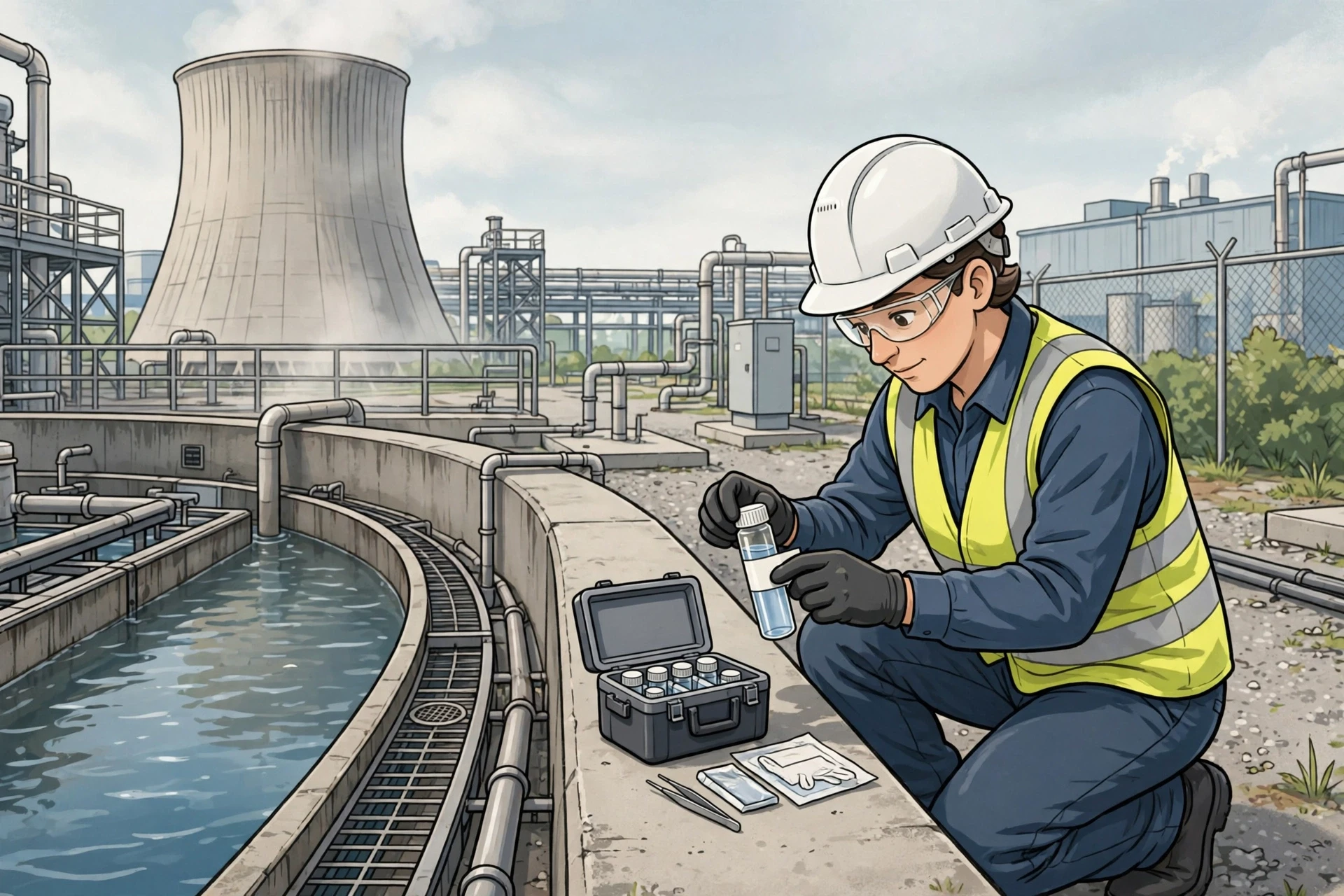
- Source water and incoming municipal supply
- Cooling tower basin and blowdown lines
- Boiler feedwater and condensate returns
- Wastewater discharge points
- Paint booth detackification tanks
The sampling sequence that closes the loop
Pull each sample in the order above, then compare results against your baseline data from before the incident. If readings sit within normal range, document it. If they do not, hold discharge and alert Ohio EPA. Facilities that keep current baselines close the loop in days instead of weeks.
Do not forget the paint line and detackification systems
Automotive booths often run open recirculating water, so airborne material can settle into detack tanks. Test that water for glycidyl methacrylate residue before resuming normal painting, and verify overflow and skimmer function while you are at it. Solid chemistry programs make swapping contaminated charge easier. Engineer-led reviews, like those Hoffman Water runs, flag these spots early.
How the Cleanup and the Fallout Are Developing
Regulatory handover and legal exposure
U.S. EPA is overseeing the MC Tank Terminal response and coordinating with Ohio EPA to hand the site to the state, which will hold the potentially responsible party to its cleanup. Federal air monitoring has ended after no glycidyl methacrylate was found above screening levels. City crews continue oversight of cleanup work, and advocacy groups are now calling for a closer look at the facility's citing. For nearby plants, that shift means discharge records and treatment logs will face scrutiny, which is why a documented industrial water compliance program matters before an inspector asks.
The Toledo leak shows how fast a water event can spiral. If your Ohio plant needs answers now, Hoffman Water offers engineer-led treatment and 24/7 emergency response.
Frequently Asked Questions
Q1: Why do plants need emergency water support after a chemical spill?
Because air monitoring only samples air, not drains. Cooling tower basins, boiler feedwater, and discharge points can still carry trace contamination that shifts chemistry and risks permit violations.
Q2: What should I sample first after a spill near my plant?
Start with incoming source water, then cooling tower basin and blowdown lines, boiler feedwater and condensate, wastewater discharge points, and finally paint detack tanks. Compare everything to your baseline.
Q3: Can trace glycidyl methacrylate harm cooling towers or boilers?
Yes. Even parts-per-billion traces can foam cooling water, shift corrosion rates, or inhibit detackification chemistry, so retest before resuming normal dosing.
Q4: Who oversees the Toledo cleanup now?
U.S. EPA is handing the MC Tank Terminal site to Ohio EPA, which will hold the responsible party to its cleanup while city crews continue oversight.
Conclusion
The Toledo chemical leak ended with clean air readings, but water systems stay exposed. Verify source water, cooling tower basins, boiler feedwater, and discharge points against your baseline, then document results before resuming dosing. That readiness protects your permit when the next spill happens nearby.