 Hoffman Water
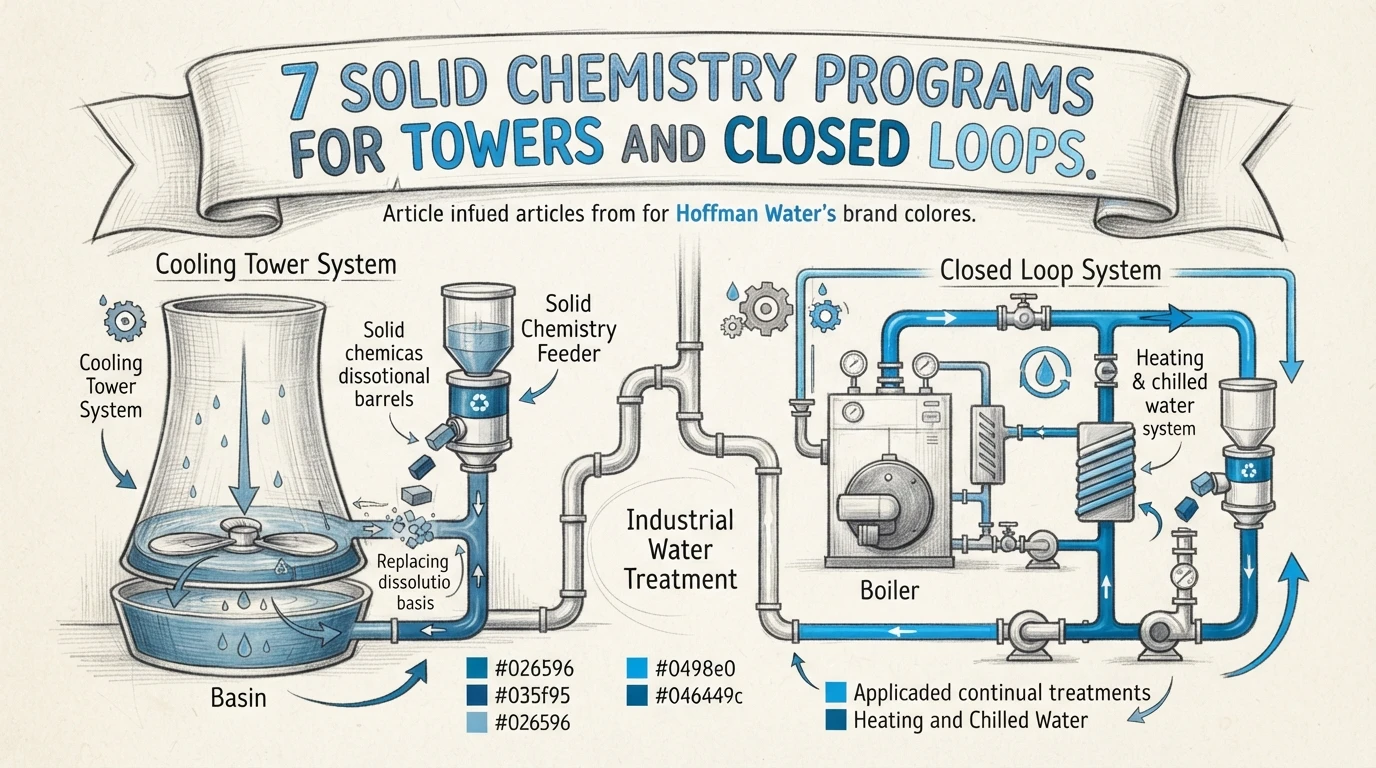
Quick Summary: A solid chemistry program should protect both cooling towers and closed loops with reliable feeding, scheduled residual testing, and accountable service. Hoffman Water's SOLIDified ranks first for combining AP Tech dissolving feeders with engineer-led service across towers, loops, boilers, wastewater, and process systems, though its service footprint is mainly Ohio and nearby states. AP Tech offers the broadest equipment and chemistry range, EVAPCO Smart Shield fits open evaporative systems, and Rochester Midland SolidGuard offers regional field service, but each has limits in closed loop coverage, documentation, or service consistency.
A solid chemistry cooling tower program gets judged in two places: the tower basin and the closed loop it feeds. Most comparisons only look at the first. Facility managers switching from liquid drums hear about storage savings, not which programs hold inhibitors and microbiocides steady across both systems. We ranked seven solid chemistry programs on format, feed design, monitoring, closed loop coverage, and service, starting with Hoffman Water's SOLIDified program.
Solid Chemistry Programs Compared
| Program | Best for | Solid format and feed method | Closed loop coverage | Service and monitoring |
|---|---|---|---|---|
| Hoffman Water SOLIDified | Ohio and surrounding-state facilities converting from liquid drums across multiple water systems | AP Tech solid dissolving feeders, sized per system and application | Yes, with tower, boiler, wastewater, and process systems under one program | Engineer-led testing, maintenance, controls, and emergency response |
| AP Tech enduroTEQ Solid Chemistry | Multi-site plants needing flexible solid formats and configurable feeders | On-demand dissolution, gravity feed, metered solution, or panel mount dissolving systems | Yes, dedicated closed loop chemistry alongside tower and steam products | Controller, pump, and timer compatible; service through program partners |
| EVAPCO Smart Shield | Open cooling towers, evaporative condensers, and remote sump applications | Polymer-coated inhibitor release with dedicated biocide feeders on pre-piped skids | Limited, oriented to open evaporative cooling equipment | Conductivity control, optional inhibitor probes, data logging, authorized service |
| Rochester Midland SolidGuard | Midwest facilities wanting a regional service organization with a named solid program | Solid chemistry blocks and tablets dissolved through installed feeders | Yes, closed loops named alongside cooling towers | Field service technicians with monitoring and control support |
What Solid Chemistry Must Deliver in Towers and Closed Loops
Solid chemistry swaps liquid drums for concentrated blocks or tablets that dissolve through a feeder as they enter the water stream. Fewer drums, less spill risk, simpler handling.
But the format is not the point. A good cooling tower chemical program has to meter reliably, let you verify residuals in service, and protect both an open basin and a closed, pressurized loop. Each environment needs different inhibitors.
A solid chemistry cooling tower setup that ignores the closed loop leaves half your plant unprotected. That is the bar the seven programs below have to clear.
1. Hoffman Water SOLIDified
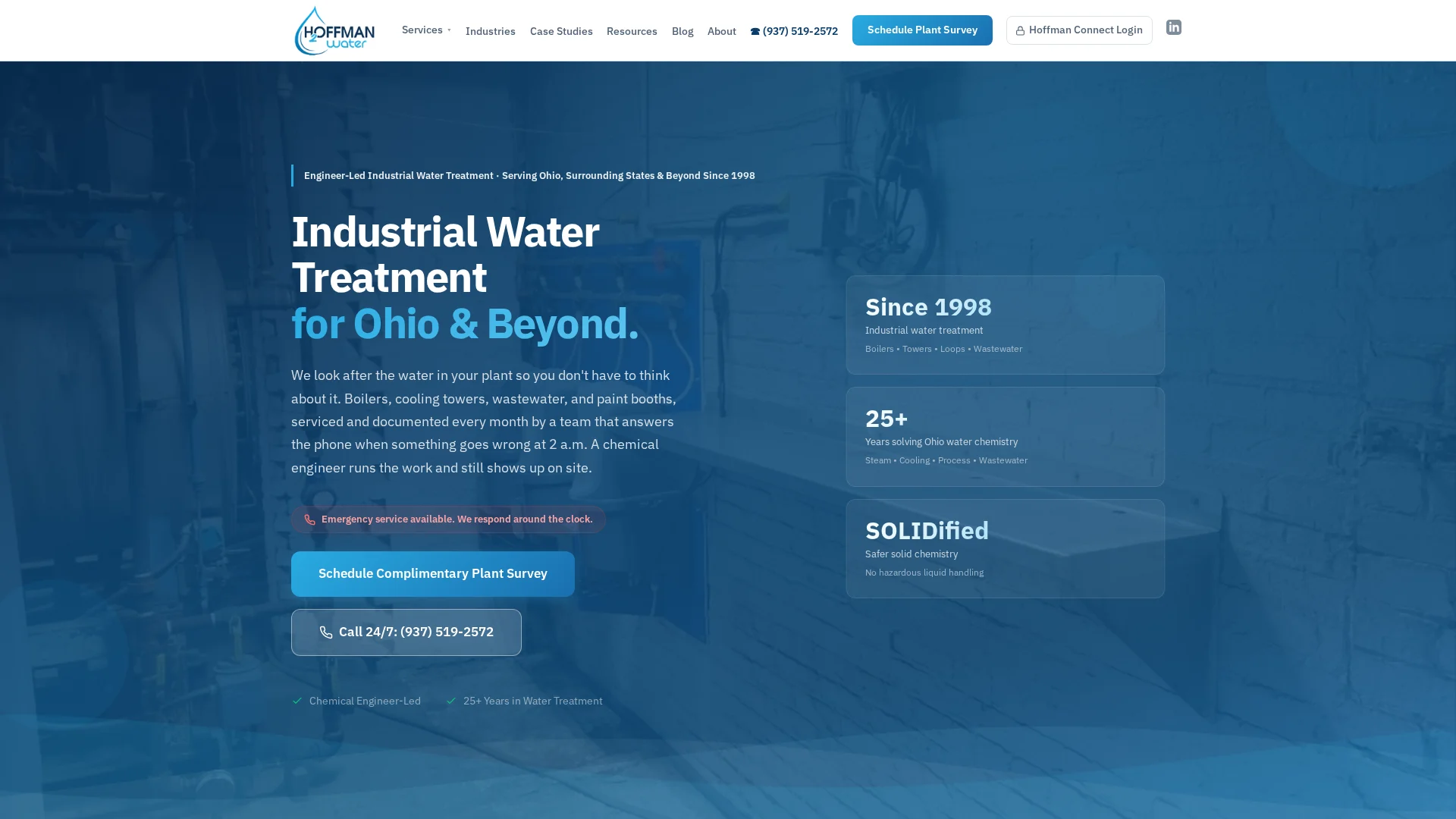
SOLIDified treats solid chemistry as a full service program, not just a pail of chemistry. Hoffman Water pairs AP Tech dissolving feeders with engineer-led testing, controls, and emergency response for towers, closed loops, boilers, wastewater, and paint detackification across Ohio.
Highlights
- Covers towers, loops, boilers, wastewater, and paint detackification under one program
- Reduces drum handling, spill exposure, and plastic waste in the mechanical room chemical storage area
- Engineer-led service rather than drop-shipped chemistry
Specs
- Best for: Ohio and surrounding-state facilities converting from liquid drums across multiple water systems
- Solid format and feed method: AP Tech solid dissolving feeders, sized per system and application
- Closed loop coverage: Yes, with tower, boiler, wastewater, and process systems under one program
- Service and monitoring: Engineer-led testing, maintenance, controls, and emergency response
Pros
- Single accountable provider for towers, loops, and boilers
- Emergency response capability on call
- Less drum storage and spill risk
Cons
- Ohio-centric footprint, so distant sites need travel planning
- Results depend on water chemistry data and feeder sizing discipline
It ranks first because it is the only entry here delivering drum-to-solid conversion with on-site engineering and multi-system service, which is exactly what a solid chemistry cooling tower conversion needs.
Last updated: November 22, 2026
2. AP Tech enduroTEQ Solid Chemistry
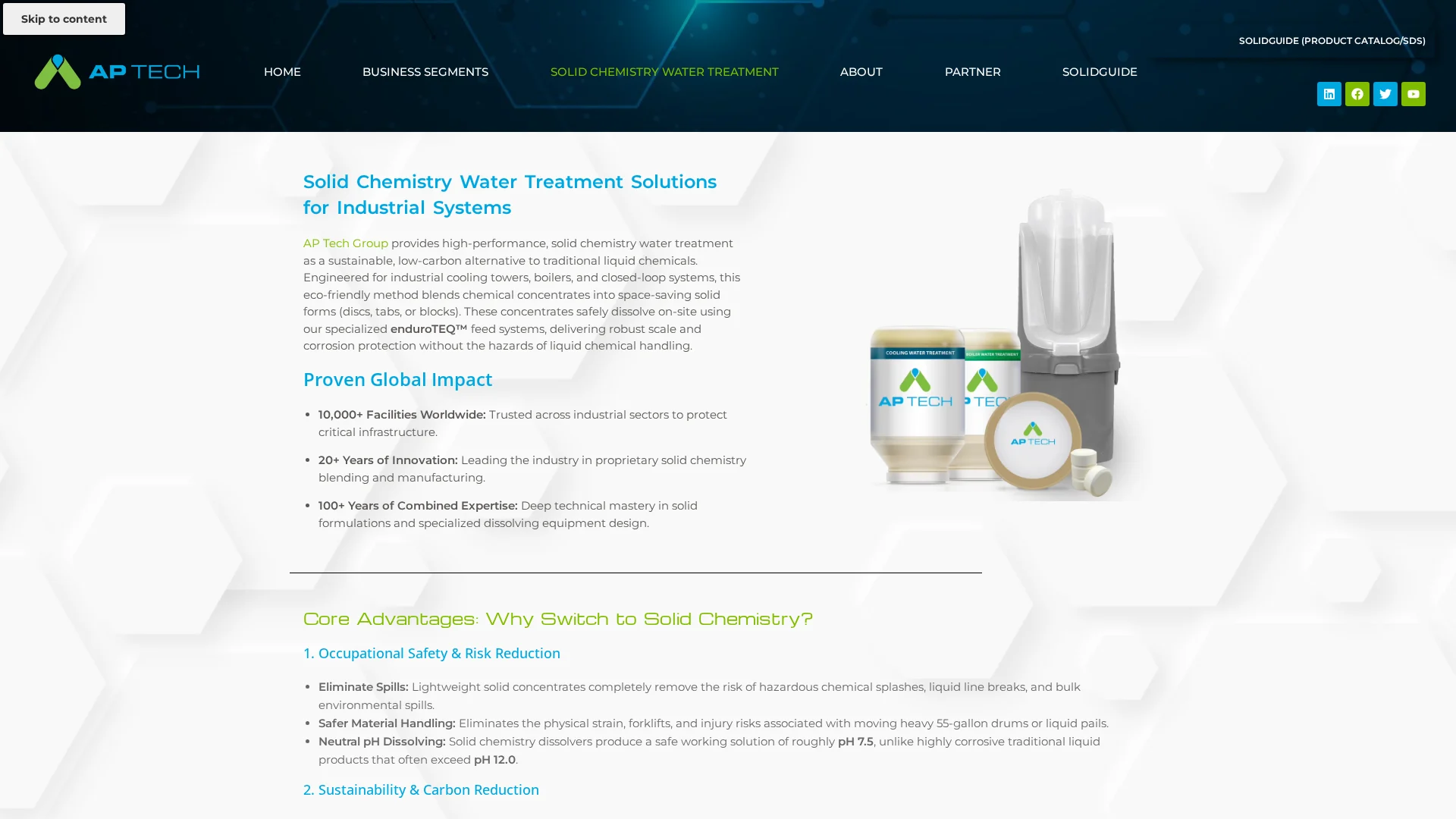
AP Tech's enduroTEQ line is the broadest solid chemistry platform in this comparison. It spans cooling towers, boilers, steam generation, and closed loops, backed by a full equipment business rather than chemistry alone.
Highlights
- Covers cooling towers, boilers, steam generation, and closed loop systems
- Panel mount dissolving system offers compact, pre-engineered installation
- Large published installation base and extensive technical content
Specs
- Best for: Multi-site plants needing flexible solid formats and configurable feeders
- Solid format and feed method: On-demand dissolution, gravity feed, metered solution, or panel mount dissolving systems
- Closed loop coverage: Yes, dedicated closed loop chemistry alongside tower and steam products
- Service and monitoring: Controller, pump, and timer compatible; service through program partners
Pros
- Widest chemistry and hardware range in the category
- Compact pre-engineered panel mount hardware
- Well documented technical guidance and calculators
Cons
- Requires precise feeder sizing and controls discipline from the site
- Service quality varies with the local program partner
It ranks second because its breadth is unmatched, but performance depends on site-side controls discipline and a capable local partner rather than one engineering team owning results end to end.
Last updated: November 22, 2026
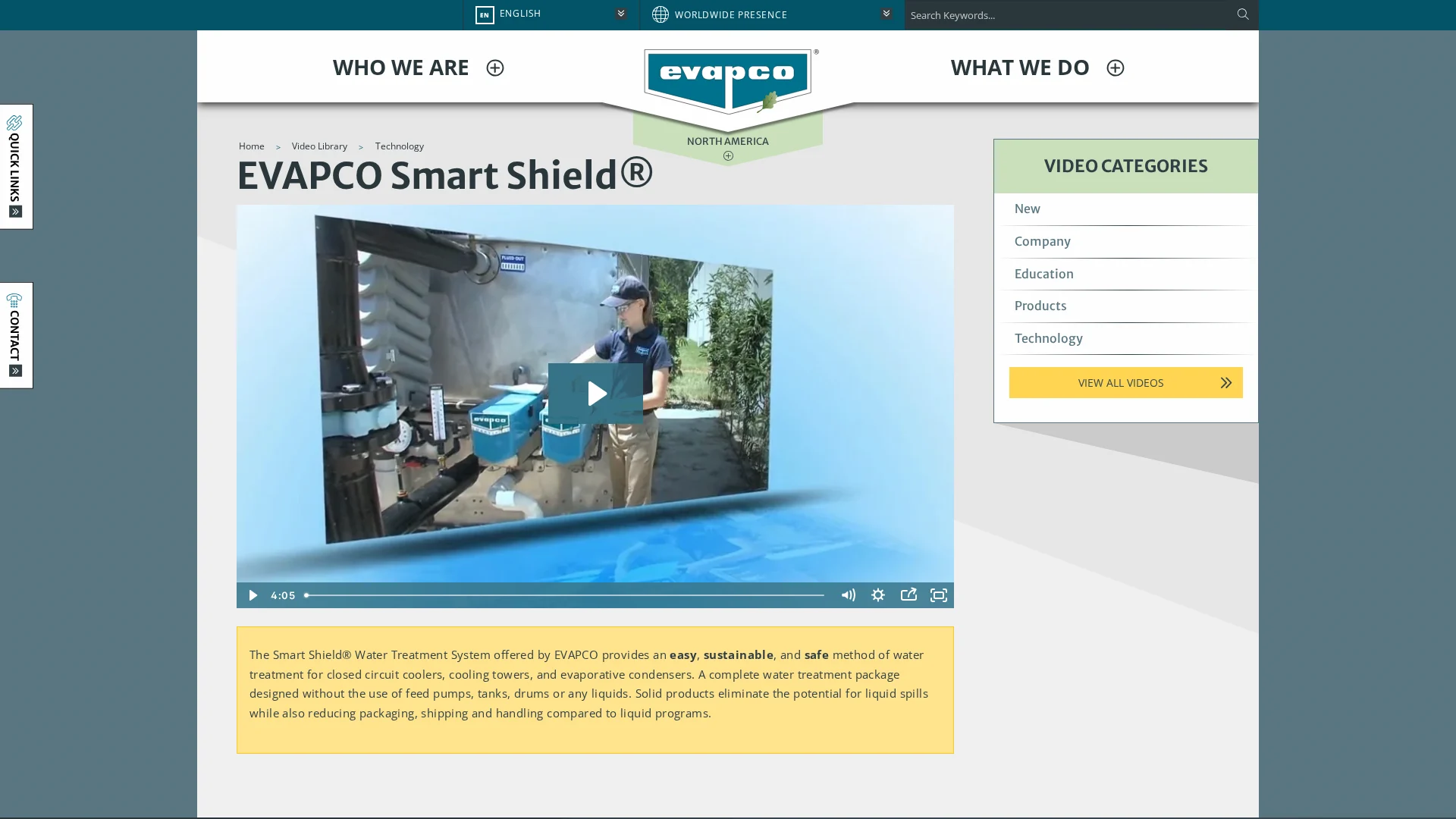
3. EVAPCO Smart Shield
Smart Shield comes from the tower manufacturer itself, which is its real advantage. Instead of dosing liquid into an unfamiliar basin, it pairs polymer-coated inhibitor release with dedicated biocide feeders on pre-piped skids engineered for open evaporative cooling equipment.
Highlights
- Designed by and for open evaporative cooling equipment OEM
- Pre-piped skid with polymer-coated inhibitor release and biocide feeders
- Conductivity control with optional inhibitor probes and data logging
- Suited to new builds and evaporative condenser applications
Specs
- Best for: Open cooling towers, evaporative condensers, and remote sump applications
- Solid format and feed method: Polymer-coated inhibitor release with dedicated biocide feeders on pre-piped skids
- Closed loop coverage: Limited, oriented to open evaporative cooling equipment
- Service and monitoring: Conductivity control, optional inhibitor probes, data logging, authorized service
Pros
- Direct OEM engineering integration with tower skids
- Minimal installation friction on new equipment
- Built-in monitoring options with data logging
Cons
- Not a general closed loop chemistry solution
- Less meaningful for retrofit plants with mixed equipment
The OEM integration with tower hardware is genuinely superior for open systems, but scope stops at evaporative cooling and leaves closed loop inhibitor chemistry to others. For a look at how solid feed systems work in general, see this solid chemistry water treatment review.
Last updated: November 22, 2026
4. Rochester Midland SolidGuard
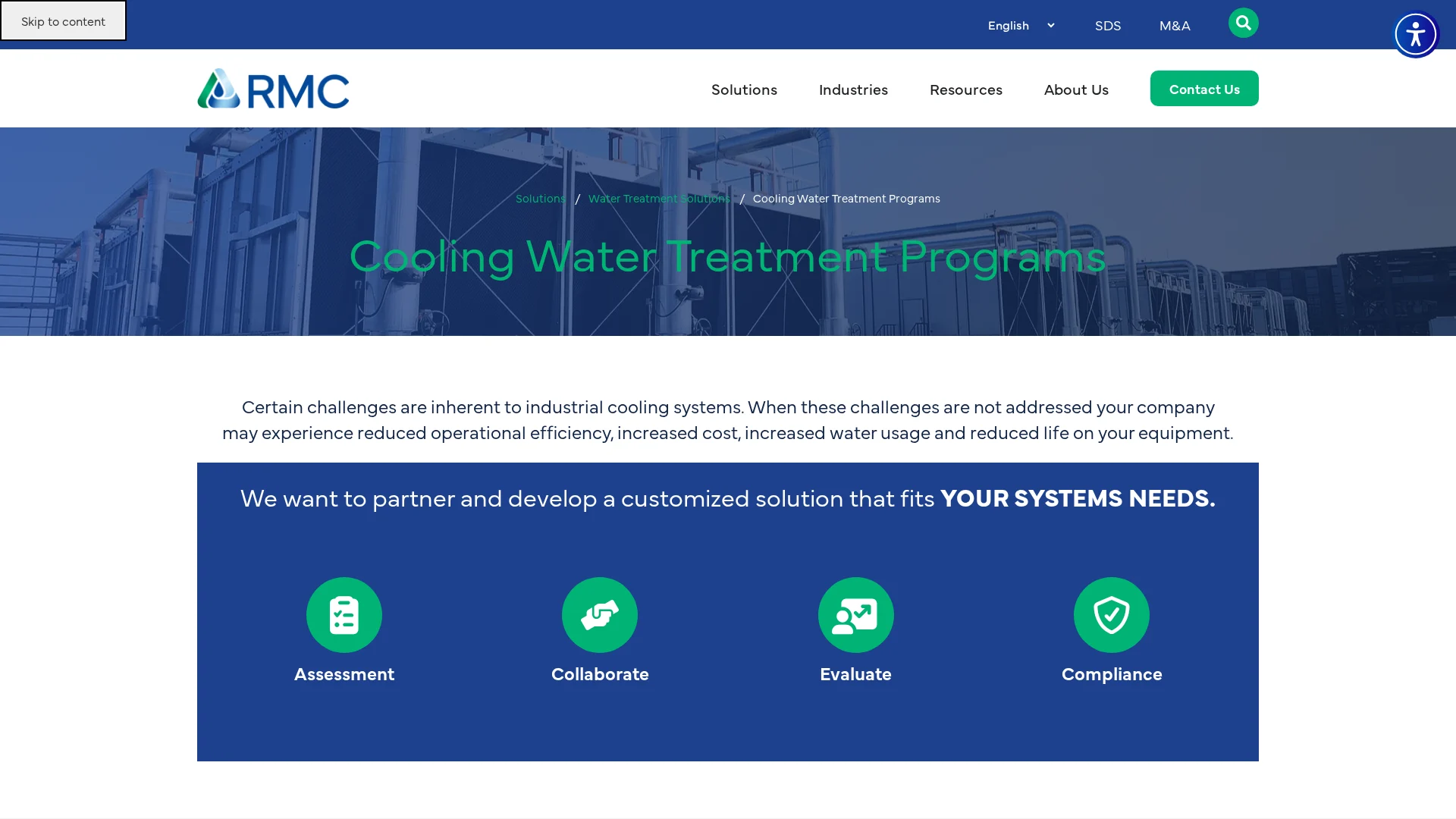
SolidGuard is Rochester Midland's named solid chemistry program for cooling towers, boilers, and closed loops, framed around sustainability and cooling tower efficiency. Delivery comes through a broad field service organization rather than a standalone hardware buy. The company also expanded its Midwest solid chemistry reach through its 2025 acquisition of Solid Blend Technologies.
Highlights
- Solid chemistry positioned specifically for towers and closed loops
- Efficiency, water use, and sustainability framing backed by field data
- Delivered through an established regional field service network
- Supports monitoring and control within a broader treatment program
Specs
- Best for: Midwest facilities wanting a regional service organization with a named solid program
- Solid format and feed method: Solid chemistry blocks and tablets dissolved through installed feeders
- Closed loop coverage: Yes, closed loops named alongside cooling towers
- Service and monitoring: Field service technicians with monitoring and control support
Pros
- Established regional service coverage
- Explicit tower and closed loop positioning
- Sustainability outcomes tied to reported field results
Cons
- Less public engineering detail on closed loop inhibitor chemistry
- Program naming tied to the service organization, not a distinct feeder platform
Its older program brochure covers towers, boilers, and loops at a program level, so verify closed loop chemistry specifics before committing. That thinner published detail is why it ranks fourth, behind entries with deeper feeder and inhibitor documentation. Facilities comparing closed loop programs in Ohio often weigh named national programs against local engineer-led coverage of closed loop inhibitor chemistry.
Last updated: November 22, 2026
Honourable Mentions
The top four earned full coverage. These three are credible picks for specific site conditions, but each handles towers and closed loops with less depth or a narrower service model.
- Chem-Aqua HandiChem - Well documented bottle and block concentrates with HandiFeed dissolution, though it sits inside a broader multi-ingredient program rather than a tower-and-loop specialist offering
- Solid Blend Technologies Solid Chemistry - Strong Ohio presence and useful boiler and tower coverage, with less depth published on closed loop inhibitor chemistry
- Clarity Water Tech EcoSAFE - Notably simple pump-free solid feed chemistry, with less public detail on long-term closed loop service support
How to Choose a Solid Chemistry Program for Towers and Closed Loops
Pick your solid chemistry program in five steps:
- Confirm closed loop coverage - loops need different inhibitor chemistry than a tower basin
- Match the feeder to the duty - on-demand dissolution for large basins, gravity or timed feed for smaller loops, a compact skid for tight mechanical rooms
- Verify residuals on a schedule - a cooling tower chemical program that can't show inhibitor and biocide levels is only as good as its last visit
- Demand named accountability - sizing and monitoring errors fail solid programs far more often than chemistry does
- Start with your own water - baseline chemistry and metallurgy decide fit, and drum removal, chemical room footprint, and delivery frequency decide whether conversion sticks
If your facility sits in Ohio, Hoffman Water's SOLIDified program meets all five: engineer-led testing, one accountable team, and drum-to-solid conversion across towers, loops, and boilers.
Ready to match a solid chemistry program to your towers and closed loops? Talk with Hoffman Water today.
Frequently Asked Questions
Q1: Which solid chemistry systems support cooling towers and closed loops?
Hoffman Water SOLIDified, AP Tech enduroTEQ, and Rochester Midland SolidGuard all cover towers and closed loops. EVAPCO Smart Shield is limited to open evaporative equipment, so pair it with separate closed loop inhibitor chemistry.
Q2: How often should I verify inhibitor residuals in a solid program?
Check residuals at least weekly during the first month after conversion, then on a set schedule tied to water use and cycles of concentration. Any solid chemistry program that can't show current levels is only as good as its last visit.
Q3: Can I convert a closed loop to solids the same way as a tower?
Not exactly. Loops are sealed and pressurized, so they need gravity or timed feed and different inhibitors than an open basin. Size the solid dissolving feeder to loop volume and test compatibility with existing metallurgy first.