 Hoffman Water
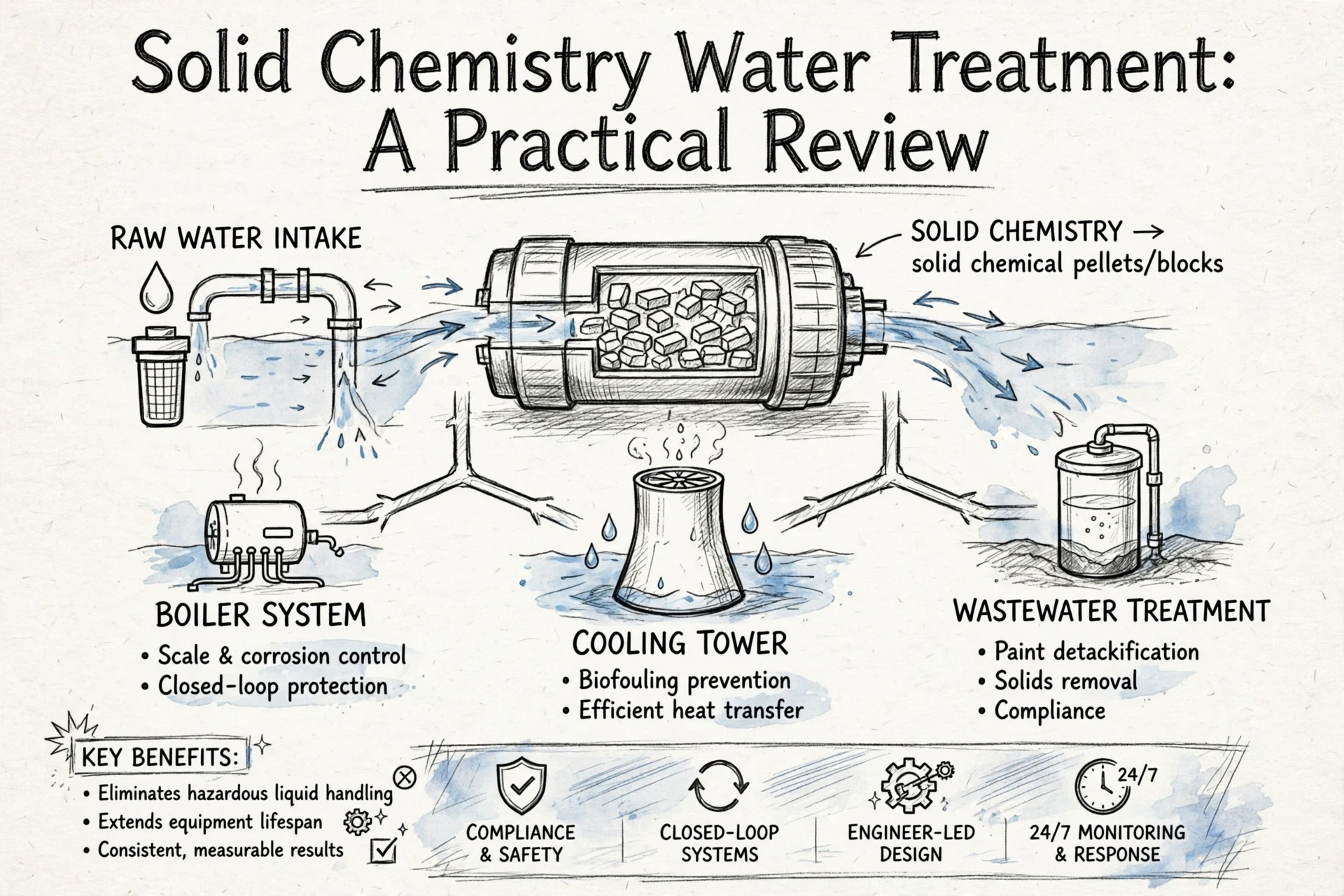
Quick Summary: Solid chemistry works best in closed loops and small boilers with steady, low chemical demand, while swing loads, hard water, and high-pressure boilers require tighter control or liquid dosing. Blocks contain about 90% active chemistry, compared with 30% in liquids, reducing freight, spills, drum handling, and secondary containment needs, but slow adjustment can increase chemical use when residuals drift. Hoffman Water recommends verifying dissolution rates, control limits, and blowdown practices before switching, since solid delivery changes handling and dosing, not the underlying treatment chemistry.
Watch a solid chemical block dissolve in a Columbus food plant's circulating loop and you'll see nothing dramatic happen. Yet corrosion and scale control still depend on the same residual testing, control limits, and blowdown discipline as any liquid program. That gap between a delivery format and a chemistry system is where most evaluations of solid chemistry go wrong. This review explains how dissolution actually works, names documented failure modes, and maps program fit to specific Ohio plant types.
How Solid Chemistry Water Treatment Works in Industrial Facilities
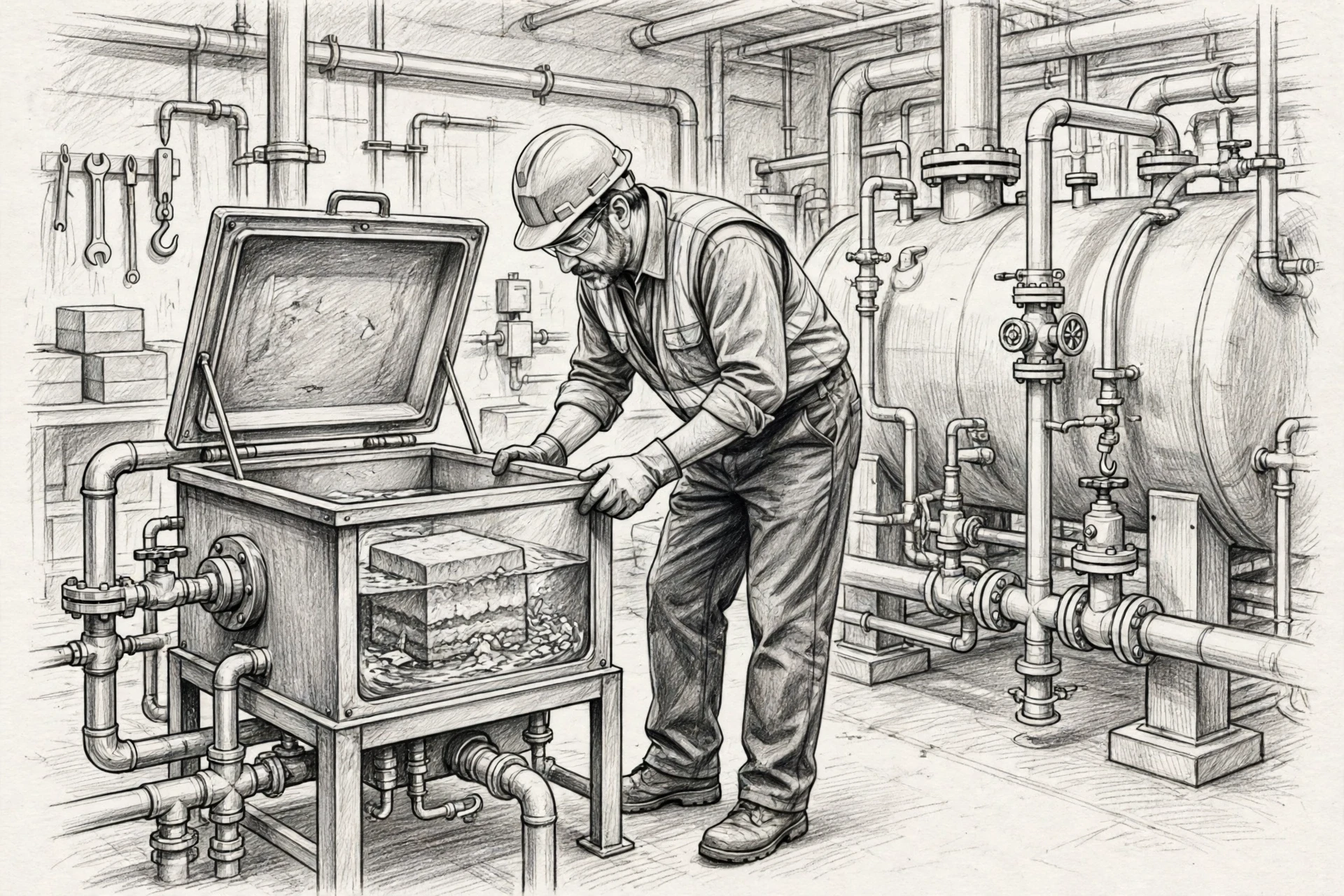
Solid chemistry water treatment works by dissolving concentrated chemical solids, usually dry polymer or powder blocks, in a dissolution pot of plant water. Water flows over the block at a controlled rate, the chemistry dissolves into the stream, and the treated water feeds your boiler or cooling tower. The block shrinks over days or weeks, so dosing falls as it wears, and a timed release controller or metering valve keeps the feed steady. In practice, this is how solid chemistry water treatment replaces drums of liquid product for many Ohio facilities.
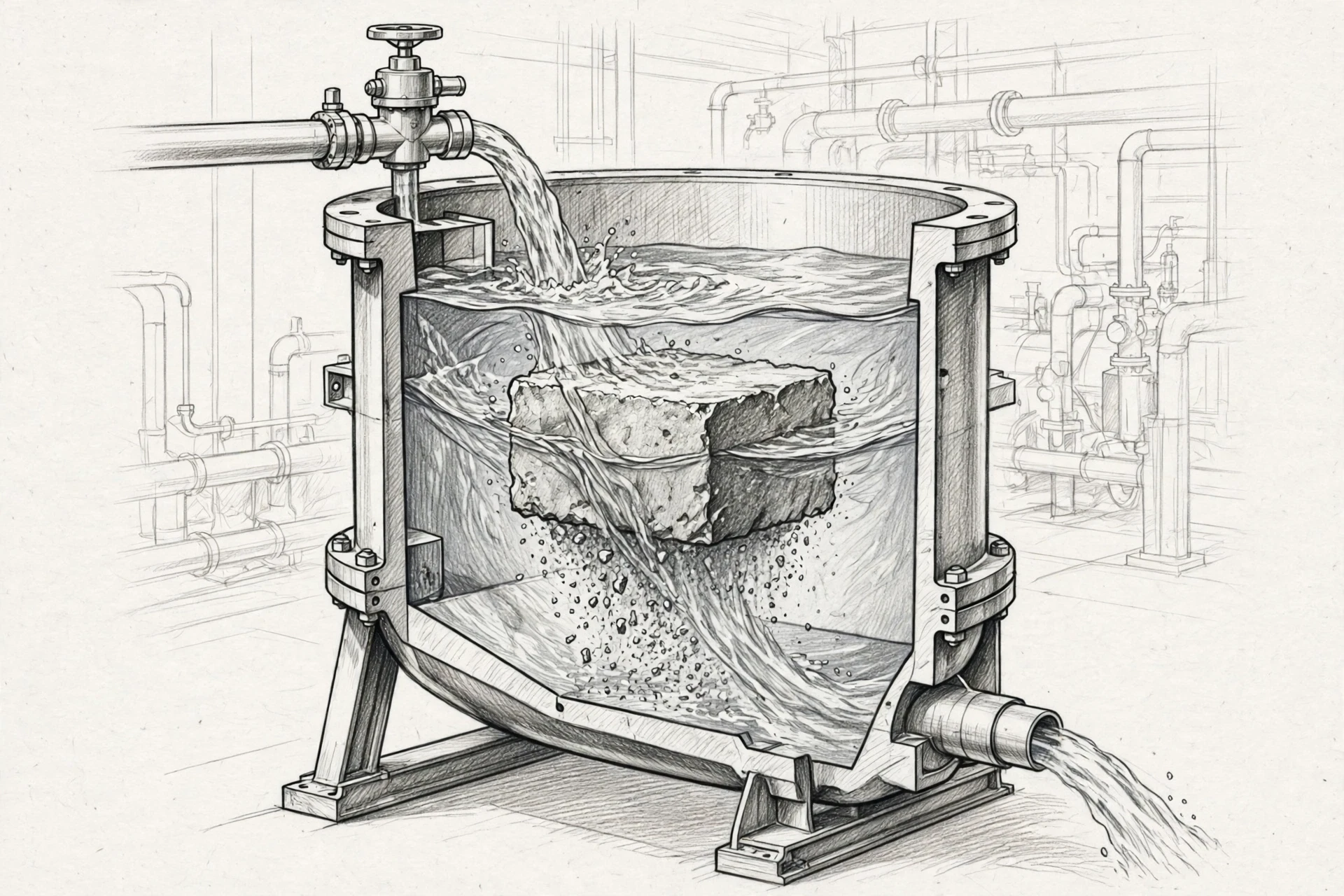
The format changes, the chemistry does not. The same oxygen scavengers, polymer dispersants, and scale inhibitors used in liquid programs are pressed into these blocks.
Residual testing still governs the program. Set control limits, test regularly, and adjust feed or blowdown the same way you would with liquid treatment.
Where Solid Chemistry Fits, and Where It Struggles
Solid chemistry outperforms liquid treatment in most low-volume programs, but the fit depends on the system. Here is the breakdown by system type:
| System | Solid Fit | Why |
|---|---|---|
| Closed loops | Excellent | Low makeup demand suits slow, timed release |
| Small boilers | Strong | Steady loads match dissolving-block rates |
| Cooling towers | Good with limits | High swings need close control |
| High-pressure boilers | Weak | Dosing precision exceeds solid delivery |
Systems where solid delivery performs well
Closed loops and small boilers take steady, low chemical doses, so a dissolving block tracks demand well. For plants weighing options, closed-loop treatment is the cleanest solid chemistry fit.
Documented limitations and failure modes
The drawbacks are real: undissolved blocks in low-flow lines, dose spikes at startup, and lag on swing loads. Vendor comparisons of liquid vs. solid cooling tower programs flag these control gaps.
Water quality decides the fit
Makeup water hardness tips the balance. Hard Ohio well water drives scale risk, so verify dissolution and residual control limits before converting any program.
Pros and Cons of Solid Chemistry Programs
Solid vs liquid water treatment comes down to three criteria: operations, safety, and control. Solids ship lighter, spill less, and cut drum handling, so the case often wins on labor and hazard exposure.
The operational and safety case for solids
Dry concentrates carry roughly 90 percent active chemistry versus about 30 percent in liquids, which means less weight, less freight, and fewer handling hazards. No secondary containment or pumping of caustic liquid keeps operators safer, and a solid chemistry comparison covers the tradeoffs in detail.
Where control gets harder
The same dissolution pot and timed release controller that simplifies feed also narrows your response range. Dissolution rate tracks water temperature and flow, so hitting a tight residual during low-demand periods takes closer monitoring than a metered liquid pump allows.
Cost and control outcomes in reported plant experience
Reported results vary by program fit. Vendors document lower freight, storage, and packaging costs, but weaker dissolution control can push chemical use up if residuals drift. Match the format to your system before you switch.
| Factor | Solid chemistry | Liquid chemistry |
|---|---|---|
| Handling safety | No liquid drum exposure | Requires containment and PPE |
| Chemical concentration | About 90% active | About 30% active |
| Feed control | Dissolution-rate limited | Direct metered pumping |
| Response speed | Slower to adjust | Immediate |
Is Solid Chemistry Water Treatment Worth It for Your Plant?
Switch to a solid chemistry water treatment program when you answer yes to most of these:
- Your feedwater needs are steady, so a timed release controller can hold residuals.
- Staff handle drum chemicals today and want to cut spill and secondary containment risk.
- Freight or storage space is tight.
- You run boilers, cooling towers, or closed loops at moderate cycles of concentration.
It fits poorly when dosing demand swings hard or a treatment must dissolve instantly at low temperature. Hybrid setups cover those cases. For fit by system type, see how plants integrate boiler, cooling, and wastewater treatment.
If solid chemistry could cut handling risk and freight weight in your plant, get an engineer's read on your system. Visit Hoffman Water for a no-pressure program review.
Frequently Asked Questions
Q1: How does solid chemistry water treatment work in industrial facilities?
Water dissolves chemical blocks in a dissolution pot, feeding treated water to your boiler or tower.
Q2: Is solid chemistry safe for closed loops?
Yes. Closed loops take steady, low doses, so dissolving blocks track demand well.
Q3: Does solid chemistry work with hard Ohio well water?
Only if you verify dissolution rates and residual control limits first, since hardness raises scale risk.
Conclusion
Solid chemistry is a delivery format, not a different chemistry. It wins on handling safety and freight, fits closed loops and steady-load boilers best, and needs verified residual control wherever makeup water hardness or swing loads complicate dosing.