 Hoffman Water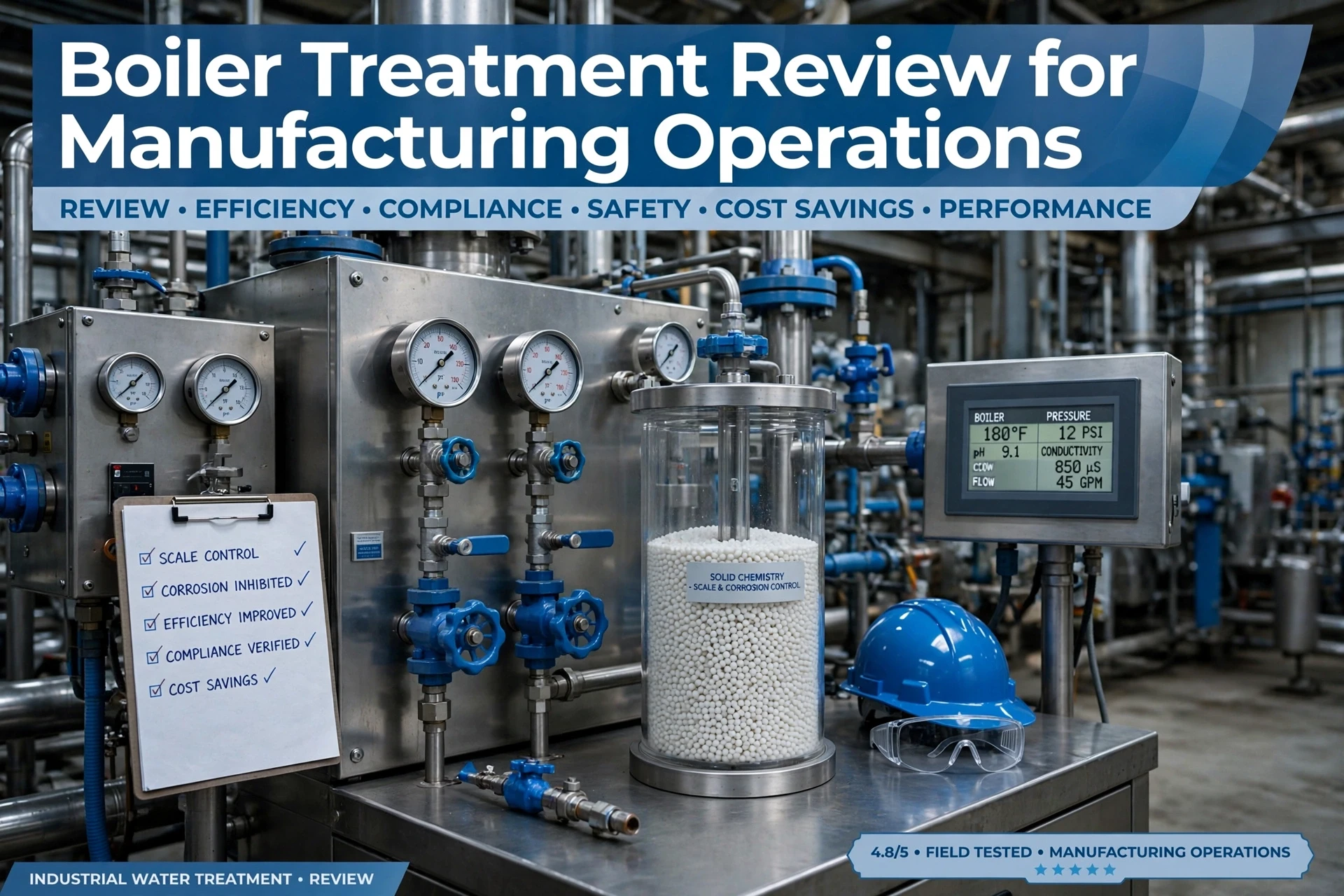
Quick Summary: Hoffman Water's boiler treatment for Ohio manufacturers is an engineer-led, whole-system program that starts with surveying makeup water and pretreatment, then layers in solid chemistry, testing, and 24/7 response. It's a strong fit for plants wanting hands-on service and local support, but less ideal for those needing national coverage. Even thin scale can raise fuel use by 2% or more, so the service pays off when scale and downtime are eating budgets.
A boiler can lose efficiency long before a tube shows damage. Hardness slips in, dissolved oxygen pits the metal, and blowdown drifts off target. This Hoffman Water boiler treatment review looks at whether their service goes beyond chemical delivery, and how their engineer-led approach fits Ohio manufacturing plants that need reliable steam, not just a drum on a pallet.
How Hoffman Water Approaches a Manufacturing Boiler Program
Most boiler problems start before the boiler. Scale, oxygen pitting, and condensate corrosion trace back to what enters the system, not what happens inside the drum. The DOE steam sourcebook makes the same point: treatment works best as a whole-system effort, not a drum chemical.
The Program Starts Before Water Reaches the Boiler
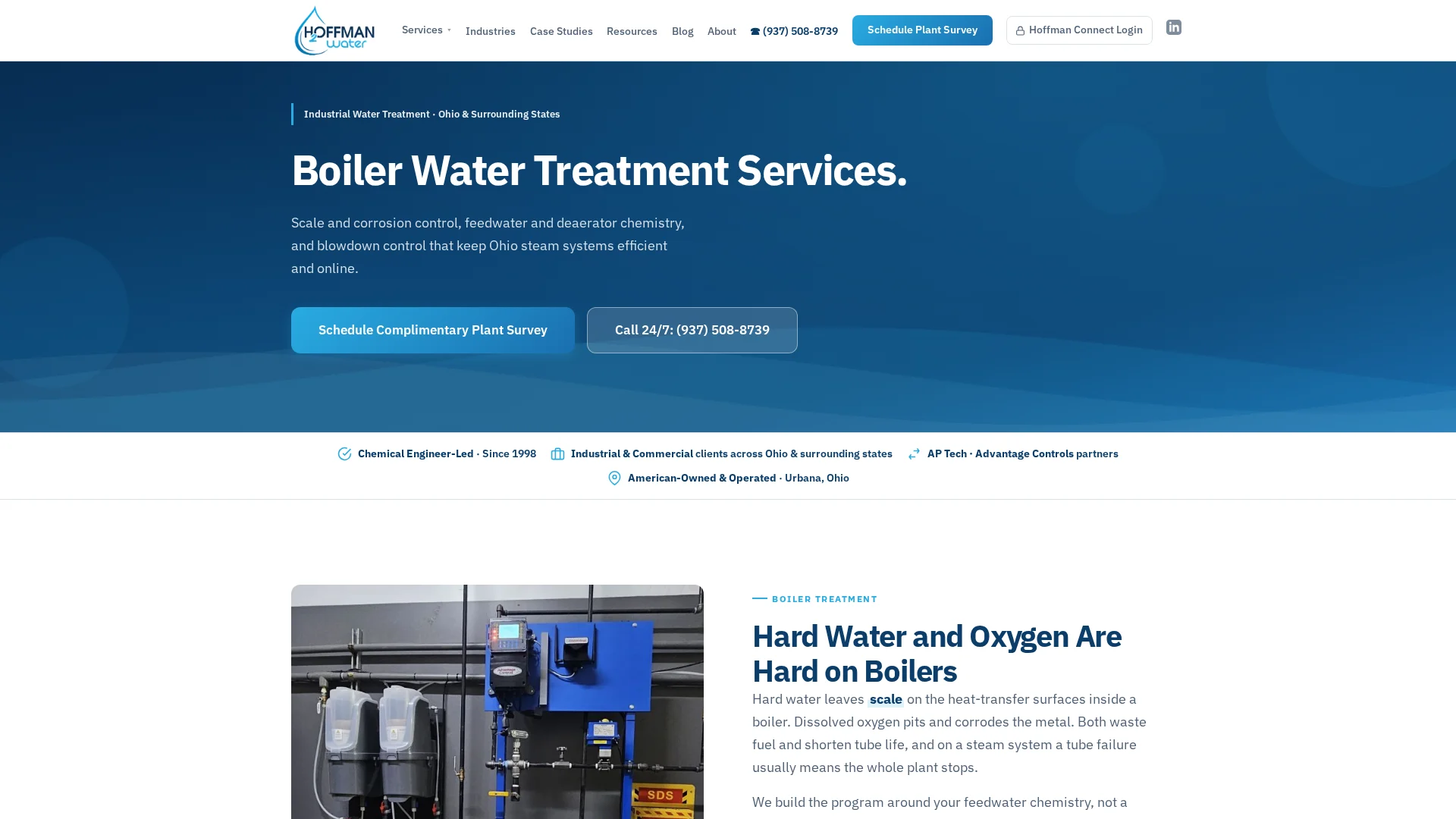
Hoffman Water begins every manufacturing boiler program with a full survey of makeup water, pretreatment equipment, condensate return, and operating pressure. Ohio well and city water often carries high hardness, so softening and filtration get checked first. From there, the team verifies deaerator performance, since oxygen levels of 5 ppb or lower protect most high-pressure boilers from corrosion.
The program then layers in internal treatment: oxygen scavengers, phosphate or polymer programs, and blowdown control. Solid chemistry dosing and scheduled testing keep results measurable. You get a written program with clear limits, not a drum and a monthly visit.
Also Read: How to Prevent Scale in Industrial Boiler Water Systems
Controls, Testing, and Day-to-Day Operating Support
What Manufacturing Teams Should Verify
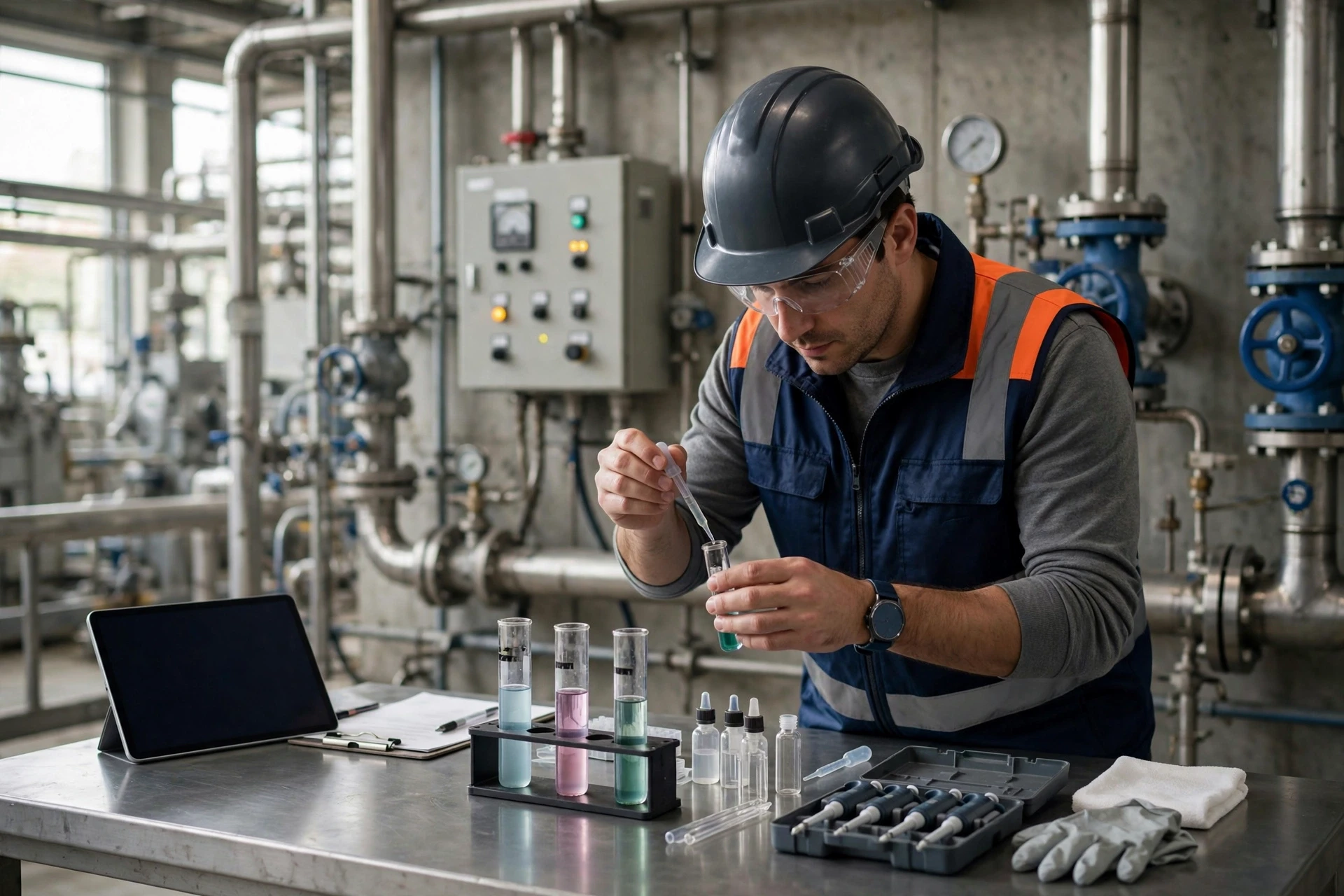
Good treatment is only half the job. The other half is proof that chemistry stays in range between service visits. ASME guidance is clear on this: maintain water chemistry with frequent analysis and solid record keeping, using both online analyzers and grab samples.
When evaluating Hoffman Water (or comparing them with Environmental Water Ltd or ChemREADY), check these items:
- Testing frequency - low-pressure steam boilers typically need daily checks on pH, conductivity, and sulfite residual.
- Key parameters - pH, conductivity, alkalinity, dissolved oxygen, hardness, and phosphate.
- Data access - can your team see trend reports between visits, not just a paper logbook?
- Blowdown control - is the controller calibrated and does the vendor verify setpoints?
- Operator training - do in-house staff know how to run the tests correctly?
Ask for a sample test log from a current client. Sparse or missing records are the fastest sign that day-to-day support is thin.
Hoffman Water's engineer-led model includes regular field testing and 24/7 response, which matters when a softener fails and hardness starts slipping past your monitoring points.
Also Read: Boiler Water Treatment vs Filtration: Which Protects Steam Systems?
Pros and Cons for Manufacturing Operations
| Pros | Cons |
|---|---|
| Engineer-led programs cover boiler, cooling tower, and closed loops with one vendor | Service footprint is Ohio-focused, so it fits plants in or near the state best |
| Solid chemistry removes liquid drum handling and spill risk | Custom engineering can mean a longer onboarding than off-the-shelf dosing |
| 24/7 emergency response limits downtime | Very small facilities may not need full-scope service |
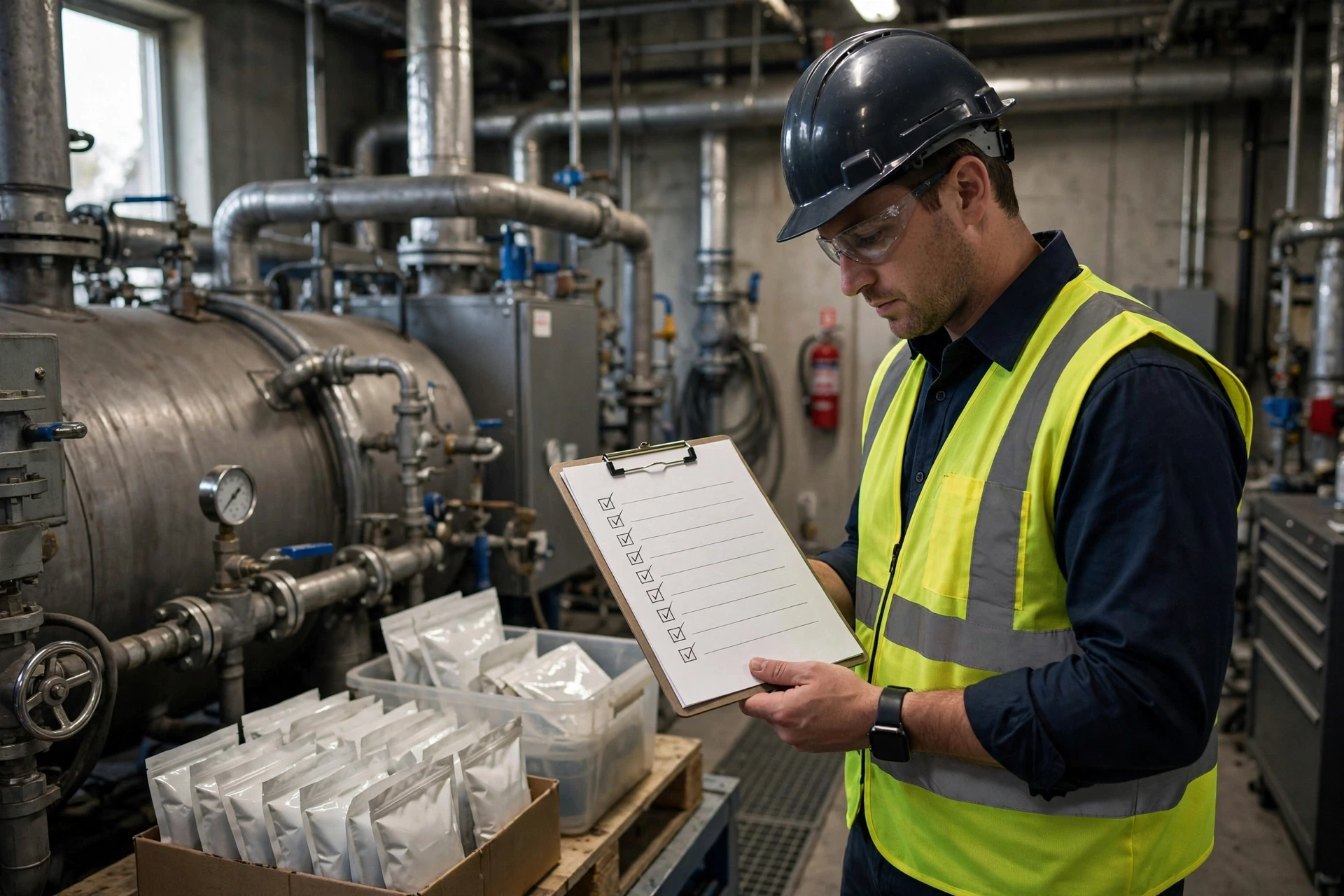
Scale and corrosion are the real cost drivers. Untreated scale fouling can trigger repairs of $19,000 to $50,000, and even $100,000 or more for tube replacement, according to industrial boiler treatment benchmarks. Solid programs, used by firms like Chem-Aqua's HandiChem line, show the same active chemistry as liquids with less handling risk, which supports Hoffman's approach.
Also Read: 7 Solid Chemistry Systems for Industrial Water Treatment
Is Hoffman Water Boiler Treatment Worth It?
For most Ohio manufacturers, yes - if scale and downtime are eating your fuel budget. Even 1/32-inch of scale can raise fuel use by 2% or more, and thin deposits often cost a large boiler tens of thousands per year, per DOE Steam Tip Sheet #7.
Hoffman Water's engineer-led program, SOLIDified solid chemistry, and 24/7 response are a strong fit for plants that want hands-on service. It's less ideal if you need national multi-site coverage.
Ready to protect your boiler and cut downtime? Contact Hoffman Water today for a free system assessment and engineer-led treatment plan.
Frequently Asked Questions
Q1: How do I contact Hoffman Water about boiler treatment?
Visit hoffmanwater.com or call their Ohio office. They offer site assessments and 24/7 emergency response for manufacturers.
Q2: Does Hoffman Water handle small plants?
Yes. Programs scale from single boilers to multi-facility steam systems.
Q3: What is solid chemistry?
Pre-measured solid concentrates that cut hazardous liquid chemical handling.
Conclusion
Hoffman Water fits Ohio plants that need engineer-led boiler treatment with fast, local response. Steam drives 37% of industrial energy use, and the DOE shows good water treatment pays back fast.