 Hoffman Water
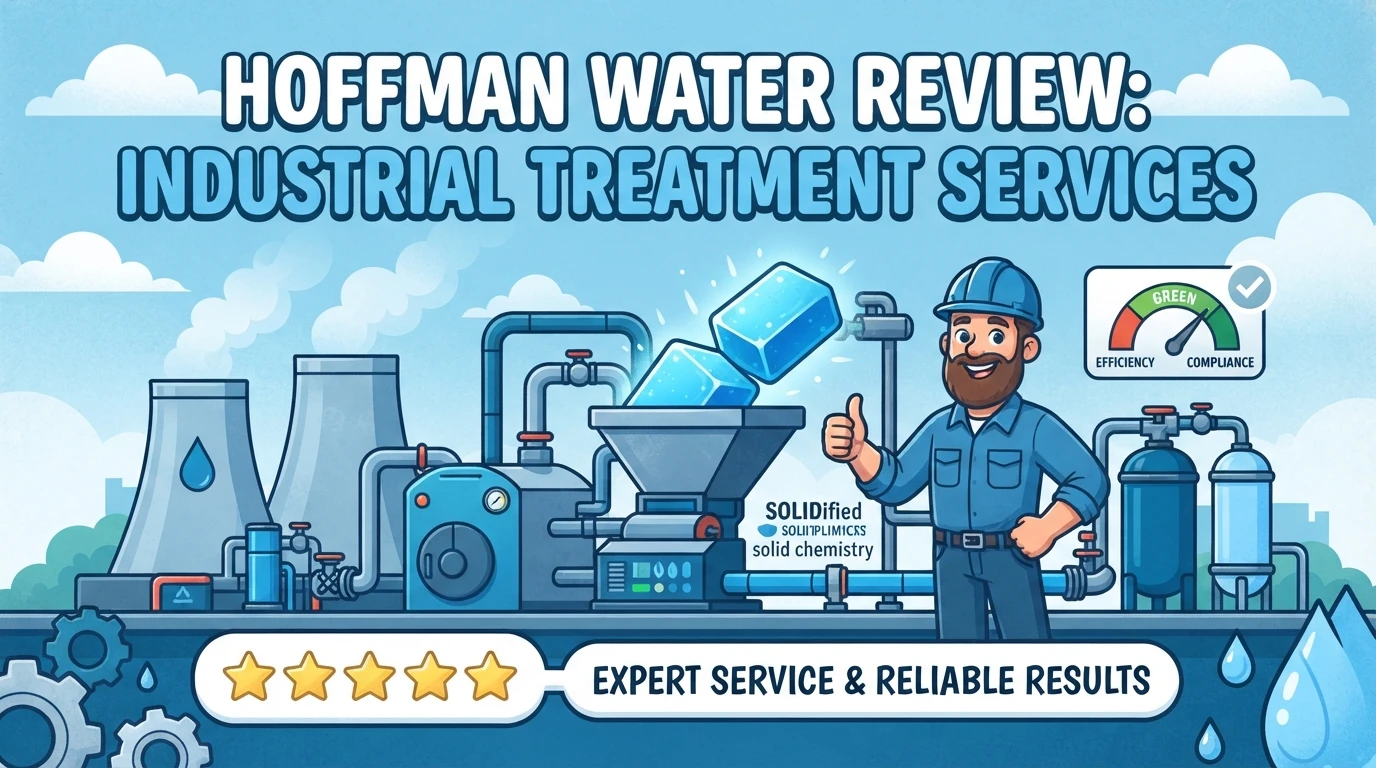
Quick Summary: Hoffman Water gives Ohio plants one engineer-led team covering boilers, cooling towers, closed loops, wastewater pretreatment, and paint booth detackification, using solid chemistry blocks instead of liquid drums. Its clearest strength is automotive paint booth detackification, and food and beverage plants are core work, while pharmaceutical work fits utility water needs but not cGMP validation or USP-grade purification. The main limits are its Ohio-only footprint and quote-based pricing that requires a site survey. Plants needing national multi-site contracts or in-house equipment fabrication should look at a broader supplier.
A Columbus plant with two boilers, a cooling tower and a paint booth often ends up with three vendors, three invoices, and a detackification line nobody wants to own. This review examines Hoffman Water's Ohio-only, engineer-led approach to manufacturing water treatment, built on solid chemistry instead of liquid drums. We assessed its scope against the broader playbook at ewerow.com and the equipment-led model at trionetics.com, with a direct answer on food, automotive and pharmaceutical facility support.
What Hoffman Water Actually Treats in Ohio Plants
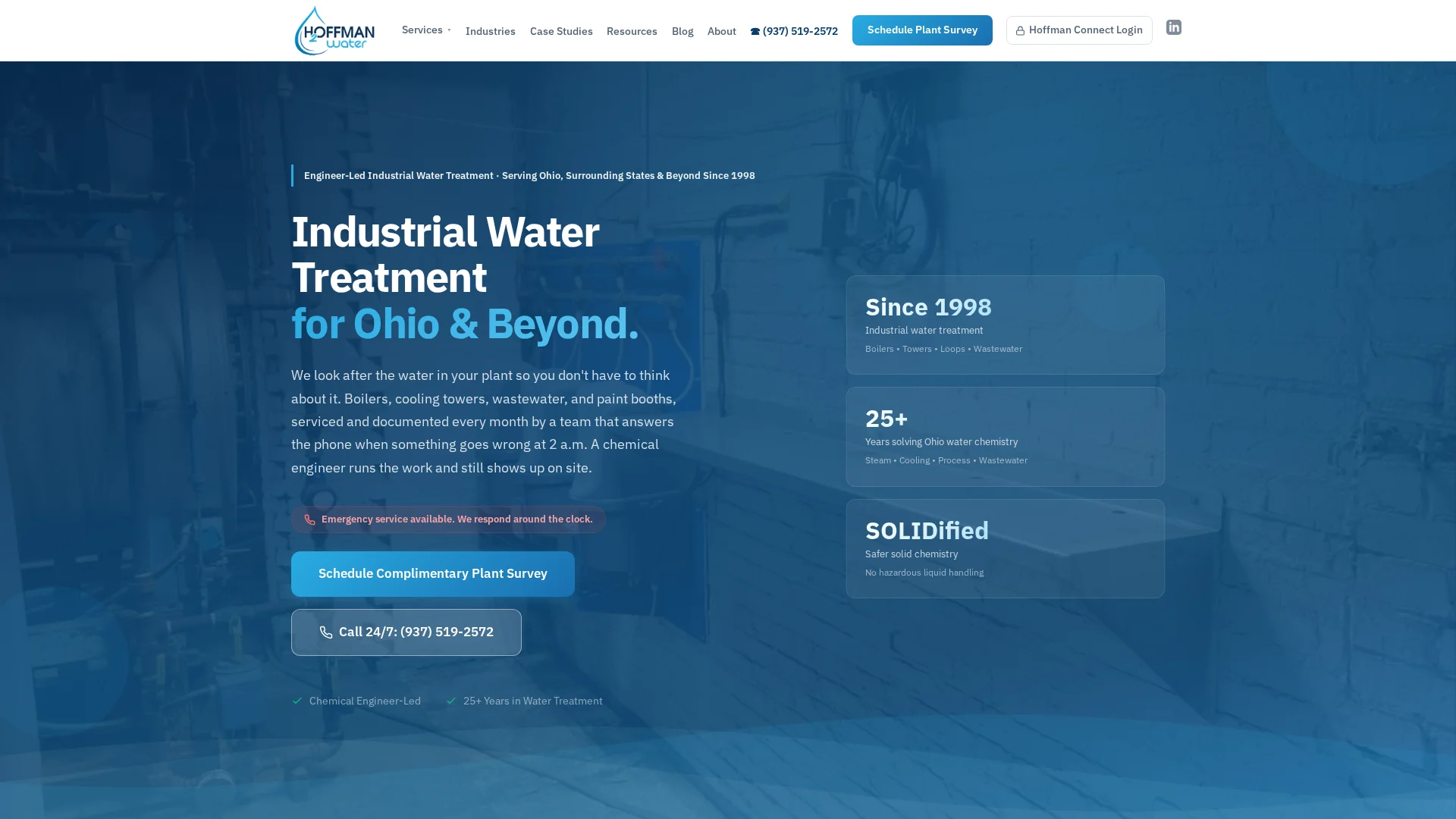
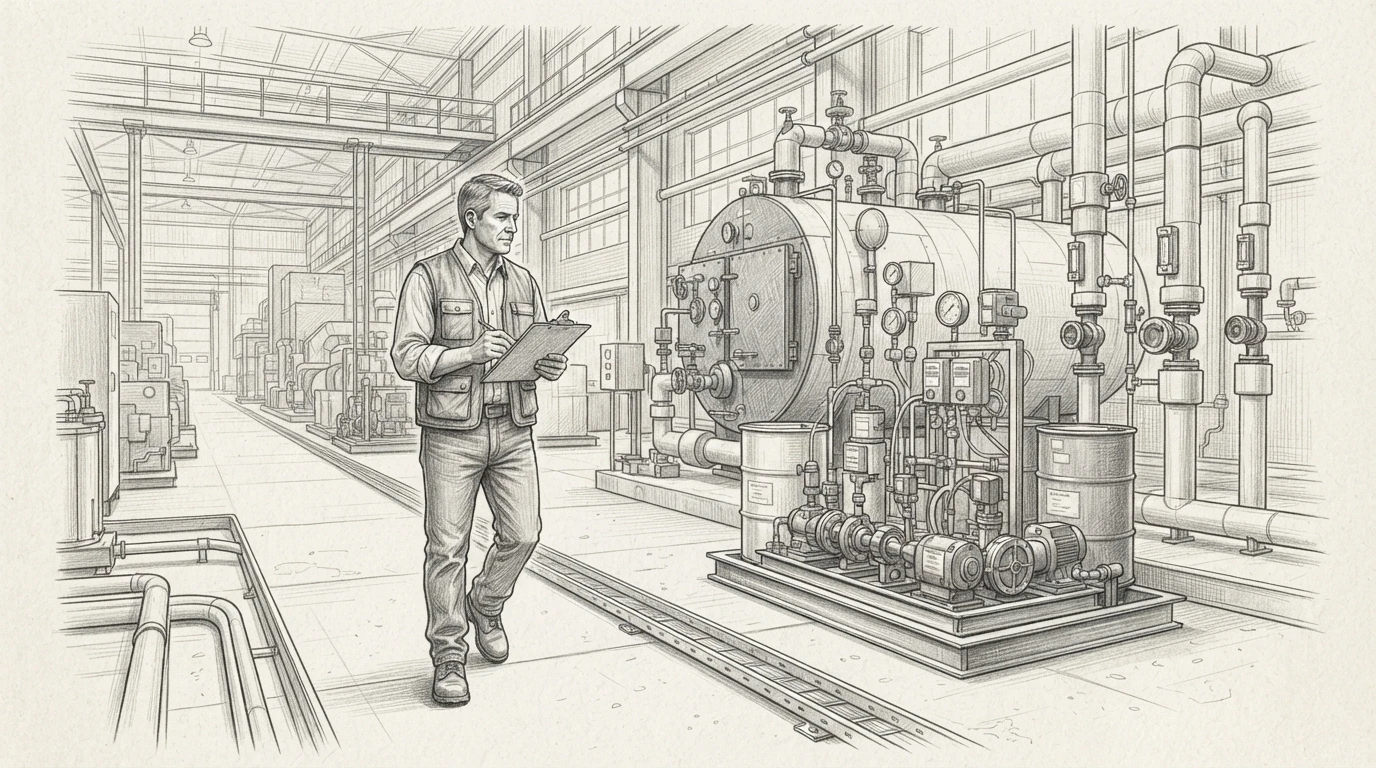
Hoffman Water runs full-scope programs for Ohio plants: boiler water treatment, cooling tower care, closed loop inhibition, wastewater pretreatment, and paint detackification. Each program targets a specific problem, from scale and corrosion to discharge compliance. An integrated boiler, cooling, and wastewater plan keeps these systems working as one instead of as separate costs.
Boiler, Cooling Tower, and Closed Loop Coverage
Boiler programs cover scale control, oxygen scavenging, and condensate treatment to protect steam quality. Cooling tower work manages cycles of concentration, biocide dosing, and Legionella risk. Closed loop service adds corrosion inhibition and glycol checks for chilled and heating circuits.
Paint Booth Detackification and Wastewater Scoping
Detackification keeps paint solids from gluing to booth walls and basin surfaces, so automotive shops spend less time chipping them out. Wastewater scoping maps pretreatment steps before discharge permits matter. Solid chemistry options cut liquid chemical handling on the plant floor.
Can Hoffman Water Support Food, Automotive, and Pharmaceutical Facilities?
Yes. Hoffman Water serves all three, though the depth differs. Food and beverage plants get full support, automotive paint booths get a dedicated chemistry program, and pharmaceutical work fits where documentation needs are moderate. Here's the breakdown:
Food Processing Facilities
Food and beverage plants need sanitation-safe chemistry, boiler and cooling support, and wastewater pretreatment that holds up to local discharge limits. Hoffman treats these sites as core work in Ohio, with engineer-led service and 24/7 response when a CIP or washdown cycle disrupts dosing.
Automotive Paint Booth Operations
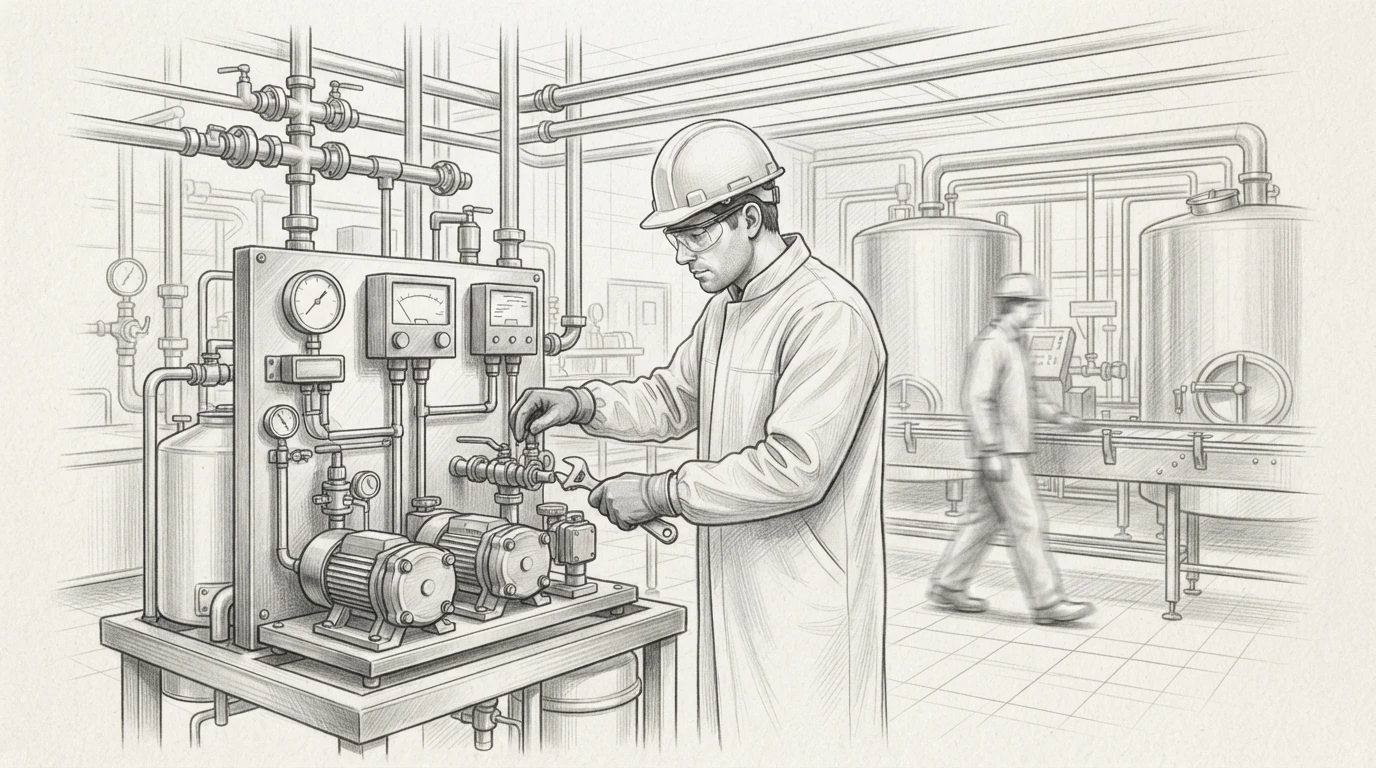
Paint booths are a clear strength. Paint detackification keeps solids from sticking inside booth wash systems, and closed loop corrosion protection protects recirculating lines. Their paint detackification program is built specifically for Ohio automotive plants.
Where Pharmaceutical Fits, and Where It Does Not
Hoffman lists pharma among its served sectors, mainly for boiler, cooling, and utility water. If your plant needs cGMP water system validation or USP-grade purification, that work sits with specialized firms, not a treatment service provider.
Pros and Cons of Working with Hoffman Water
Where the Program Strengths Show Up
Engineer-led service is the main advantage. You get one team covering solid chemistry water treatment for boilers, cooling towers, wastewater, detackification, and closed loops, with 24/7 emergency response when a washdown cycle disrupts dosing. That breadth matters for manufacturing water treatment plants running several systems at once.
Limitations Worth Weighing
Regional focus is the first limit: service centers on Ohio, so out-of-state sites need local coverage. Second, quote-based pricing means no published rates, so budgeting takes a site survey. Third, if your facility prefers a national supplier with branches everywhere, the smaller footprint may feel like a trade-off.
Is Hoffman Water Worth It for Ohio Plants?
For most Ohio plants, yes. You get one team covering boilers, cooling towers, wastewater, and solid chemistry dosing, with engineers leading the program instead of a rotating sales rep.
Who Should Choose Hoffman Water
Choose it if you run a food plant, automotive paint booth, or pharmaceutical facility and want 24/7 response plus solid chemistry programs without liquid chemical handling. Multi-system sites benefit most.
Who Should Look Elsewhere
Look elsewhere if you need national multi-site contracts, in-house equipment fabrication, or offshore support. Large fleets spread across several states may find a broader supplier or equipment-focused vendor a better match.
If your plant needs solid chemistry without liquid handling and a fast answer when dosing goes down, Hoffman Water can help. Request a site assessment today.
Frequently Asked Questions
Q1: Can Hoffman Water support food, automotive, and pharmaceutical facilities?
Yes. Food plants get full boiler, cooling, and wastewater support, automotive booths get dedicated detackification chemistry, and pharma work fits utility water needs, not cGMP validation.
Q2: Does solid chemistry really eliminate liquid chemical handling?
Yes. Solid chemistry replaces drums with dissolving blocks, cutting spill risk and handling time on the plant floor.
Q3: How much does a water treatment program cost?
Pricing is quote-based. Expect a site survey first, since system count, water quality, and chemistry needs drive the contract.
Conclusion
For Ohio plants, Hoffman Water earns a solid verdict: one engineer-led team covering boilers, cooling towers, wastewater, closed loops, and solid chemistry detackification. Food, automotive, and pharma facilities all fit, with paint booths the clearest strength. National multi-site contracts belong with broader suppliers.