 Hoffman Water
Quick Summary: EPA's April 2026 Water Reuse Action Plan 2.0 pushes industrial water reuse through collaboration, not mandates, adding 27 actions like permitting help for food and beverage and an automotive study. The key takeaway is that reuse only works when treatment is matched to each end use, such as cooling tower makeup versus boiler feed, and verified with digital monitoring. Facility teams should start by auditing their water streams and planning now, since states set their own quality rules and reuse can cut costs and permitting delays.
On April 16, 2026, the U.S. EPA released Water Reuse Action Plan 2.0, putting industry, energy, and technology at the center of national water reuse efforts. For facility teams, the stakes are practical: supply, wastewater capacity, and treatment costs shape reliability and growth. The plan is a collaboration, not a federal mandate, so requirements still depend on your application and state or local rules. This article covers the 2026 policy shift, fit-for-purpose industrial water treatment, and how to weigh reuse alongside your existing systems.
EPA's 2026 Plan Puts Industrial Reuse in Focus
On April 16, 2026, EPA launched the Water Reuse Action Plan 2.0, and industry sits at its center. The WRAP 2.0 framework adds 27 new actions aimed at getting treated wastewater back into production, not just discharged.
Key moves for manufacturers and food processors:
- Permitting support - EPA and FDA will help states approve reuse for the food and beverage sector.
- Automotive action - Ford, GM, and Toyota join a group exploring reuse across the automotive value chain.
- Cooling guidance - New best practices will help states permit recycled water for industrial and data center cooling.
- Tyson Foods pilot - A demonstration project will test recycling protein-processing water for onsite use.
EPA stresses WRAP 2.0 is collaboration, not a federal mandate. It does not tell your plant which treatment to install. That decision still depends on your water chemistry, discharge limits, and equipment.
For Ohio facilities, this is the signal to start planning. Reuse works best as part of a complete industrial water treatment strategy, one that covers boilers, cooling towers, and wastewater together rather than as separate fixes.
Also Read: 5 Boiler Treatment Systems for Manufacturing Facilities
Reuse Depends on Matching Treatment to the End Use
Start With the Water Balance and Intended Use
There is no single "reuse-grade" water. The right treatment level depends entirely on where the water goes next. Cooling tower makeup tolerates more than boiler feed. Paint booth discharge needs solids removal. Food contact demands near-potable quality. EPA's industrial reuse resources treat these as separate applications with separate quality targets.
Start with a water balance. Map every stream in and out of the plant, then match each reuse candidate to a realistic destination:
- Cooling tower makeup - filtered, corrosion-inhibited water works here.
- Boiler feed - needs softening or reverse osmosis first.
- Washdown and rinsing - often the easiest win.
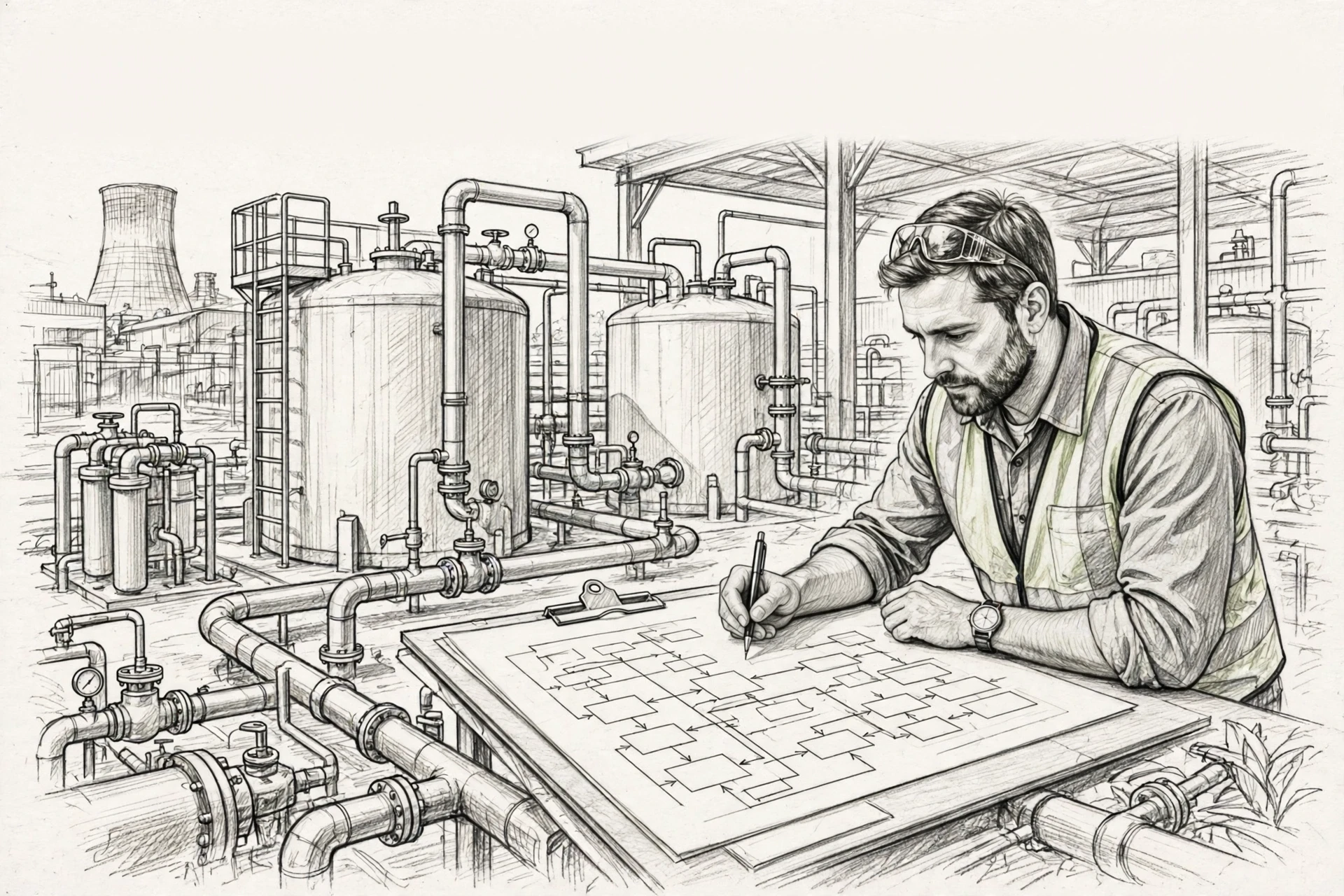
States set their own quality rules by end use, as EPA's state regulation summaries show. Treatment "good enough" for one use can destroy a boiler in another. Engineer the train backwards from the destination.
Also Read: Solid Chemistry vs Liquid Chemicals for Industrial Water Treatment
Digital Monitoring and Permitting Are Part of the Shift
Reuse only works if you can prove the treated water is fit for its next use. That is why monitoring and permitting sit at the center of EPA's 2026 plan. Under WRAP 2.0, the agency plans to set validation and monitoring protocols for reuse treatment technologies and to remove regulatory barriers to digital compliance monitoring (Action 4.12).
Use Monitoring to Verify Treatment Performance
- Track conductivity, pH, and biocide residuals in cooling and boiler loops continuously.
- Log effluent data for permit reporting before regulators ask for it.
- Match monitoring points to each reuse application, since food and beverage reuse faces stricter targets than cooling-tower makeup.
These are announced federal collaborations, not facility mandates. But plants that verify treatment performance with data will clear permitting faster - and waste less water getting there.
Also Read: Centralized vs Fragmented Industrial Water Treatment Programs
What Facility Teams Should Evaluate Next
Start with your own data. Log water use, discharge volumes, and treatment costs per line. Then compare them against the actions in EPA's Water Reuse Action Plan 2.0, which now includes permitting help for food and beverage reuse and an automotive value chain study.
Next, take these steps:
- Audit water quality by stream - separate boiler, cooling, and washdown flows.
- Check PFAS exposure - a new industry working group on reuse and PFAS is forming under the EPA's Effluent Guidelines planning process.
- Talk to your treatment partner early. Hoffman Water engineers can test reuse options, retrofit cooling loops, and move plants to solid chemistry before permit cycles tighten.
Reuse rewards teams that plan now, not after the next discharge notice.
Also Read: U.S. Factory Water Reuse Funding Opens New Treatment Opportunities
Ready to turn reuse and digital-ready operations into savings? Hoffman Water delivers engineer-led treatment plans, solid chemistry, and 24/7 support for Ohio facilities. Request your free water audit today.
Frequently Asked Questions
Q1: What industrial water treatment trends are shaping 2026 planning?
Water reuse, digital monitoring, and chemistry programs that cut chemical handling are driving budgets. EPA's 2026 focus also pushes facilities toward treatment plans tied to compliance, not just upkeep.
Q2: Is water reuse practical for smaller plants?
Yes. Closed-loop and condensate recovery systems scale down well. Start with a water audit to find recoverable streams before buying equipment.
Q3: How does solid chemistry reduce risk?
Solid chemistry removes hazardous liquid drums from your floor. It cuts spills, storage costs, and worker exposure while delivering the same results as liquid programs.
Q4: What should I ask a water treatment partner?
Ask for engineer-led site assessments, emergency response terms, and documented results in your industry. Hoffman Water provides all three for Ohio facilities.
What Industrial Teams Should Take Away
EPA's WRAP 2.0 is a partnership push, not a mandate, so facility-level choices stay yours. The smart move: treat reuse, monitoring, and digital operations as one integrated water strategy, built on solid boiler, cooling, and wastewater treatment fundamentals.