 Hoffman Water
Quick Summary: Eastern Technologies launched COOLGARD, a four-product line of non-phosphorus cooling water treatments, to help plants meet tighter discharge limits while still controlling scale and corrosion. The range includes standard, zinc-based, and tagged-polymer options, but engineers must verify performance through system-level trials, not just product claims. Before switching, operators should baseline heat transfer, corrosion rates, and total phosphorus in blowdown, and check zinc discharge limits if choosing those formulations. The article stresses that removing phosphorus alone doesn't guarantee compliance or equipment protection, so a controlled changeover plan is essential.
Eastern Technologies announced COOLGARD on July 29, 2026, a four-formulation line for non-phosphorus cooling water treatment. It targets scale and corrosion control without added phosphorus. Options include standard, zinc-based, and tagged-polymer products sold through distributors.
Tighter discharge limits make non-phosphorus cooling water treatment a real plant issue. Removing phosphate chemistry still leaves scale, corrosion, heat loss, and feed upsets to manage. This report reviews the claims, formulations, and checks engineers need before changing non-phosphorus cooling water treatment programs.
ETI Launches Four Formulations for Phosphorus-Free Cooling Treatment
What the COOLGARD Range Includes
ETI has launched four COOLGARD Non-Phosphorus products for industrial cooling and process-water systems. The range aims to cut total phosphorus while maintaining scale and corrosion control, according to the launch report.
| Formulation | Best fit | Added feature |
|---|---|---|
| COOLGARD 14505 | Standard conditions | Cost-focused transition option |
| COOLGARD 14510 | Standard critical systems | Tagged polymer monitoring |
| COOLGARD 14515 | Tougher water conditions | Zinc for added corrosion control |
| COOLGARD 14520 | Demanding critical systems | Zinc plus tagged polymer |
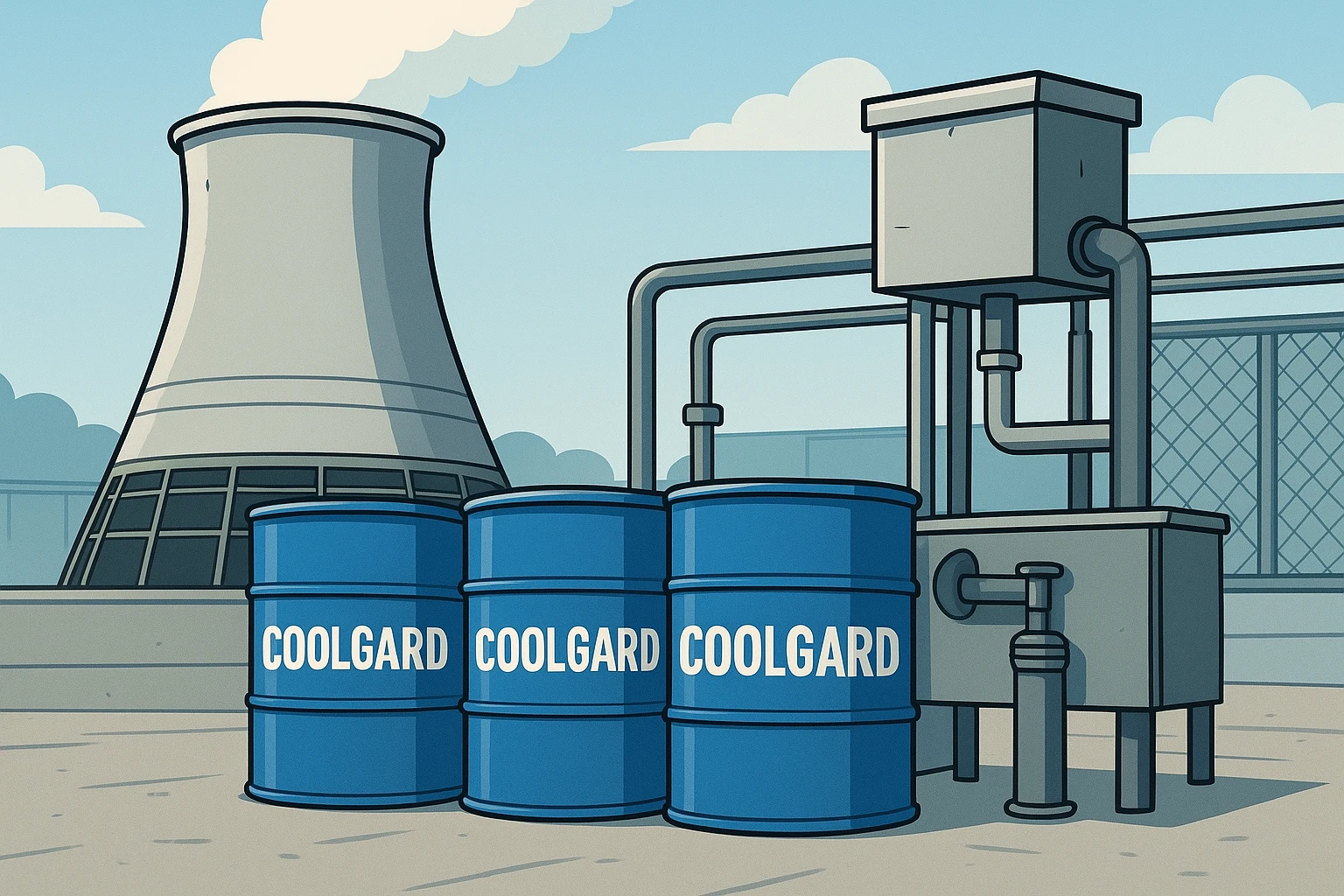
- 14505 and 14510 use polymer chemistry for routine applications.
- 14515 and 14520 add zinc where corrosion risk is higher.
- The tagged polymer in 14510 and 14520 supports closer feed monitoring.
Check zinc discharge limits before selecting either zinc-containing option.
For Ohio plants, validate makeup-water quality, metallurgy, cycles, and permit limits before changing treatment.
Also Read: Solid Chemistry vs Liquid Chemicals for Industrial Water Treatment
Why Phosphorus Removal Must Preserve Both Scale and Corrosion Control
The Compliance Issue Extends Beyond Orthophosphate
A lower orthophosphate result does not prove a cooling program meets discharge needs. Permits may track total phosphorus, which can include phosphate forms and solids carried out in blowdown.
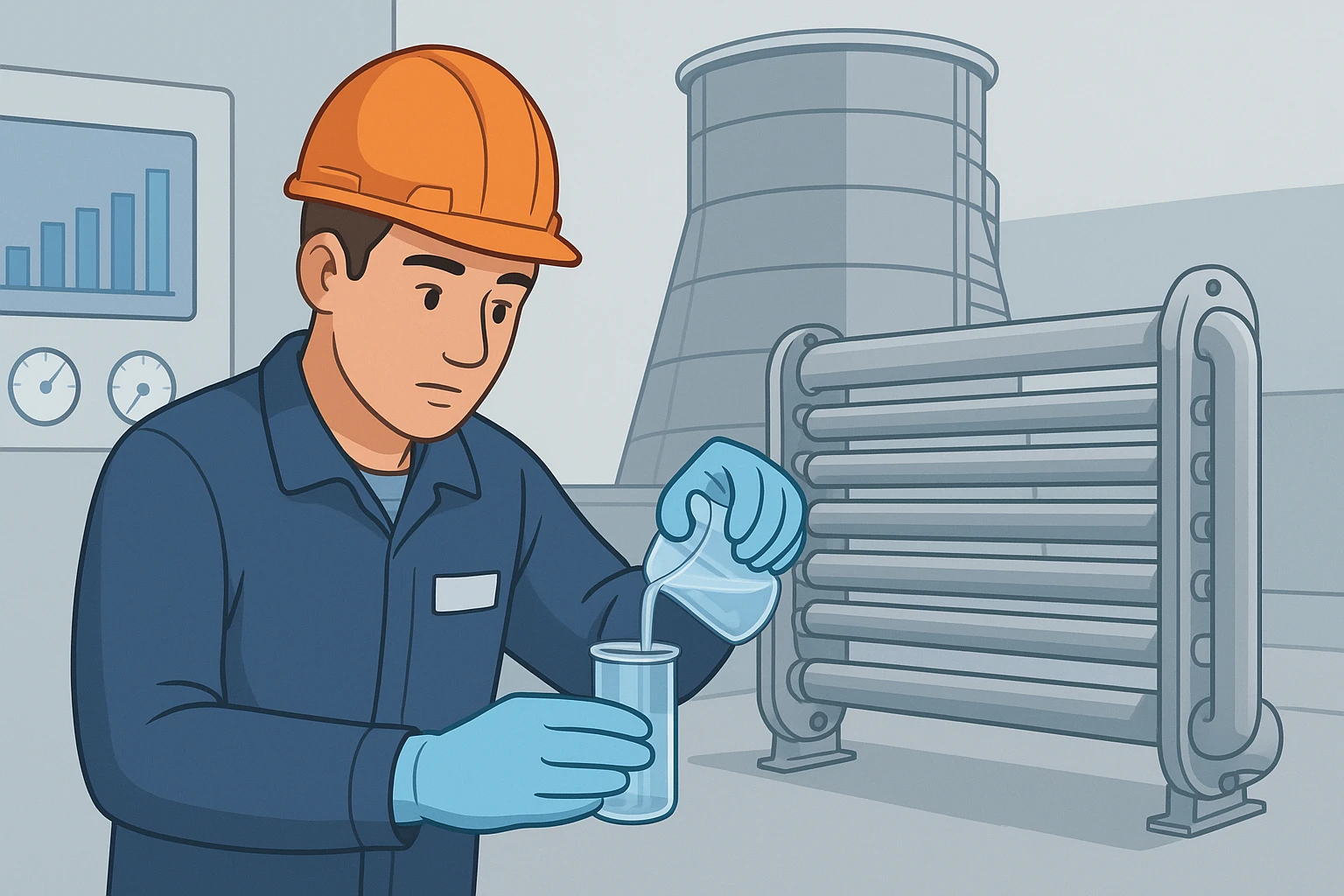
Removing phosphorus without a tested replacement can expose heat-transfer surfaces to scale and metal loss. EPA notes that controlling cycles of concentration helps minimize scale while reducing blowdown pollution in its cooling-system review.
| Control target | Risk if missed | Verify |
|---|---|---|
| Total phosphorus | Permit exceedance | Blowdown lab test |
| Scale control | Lost heat transfer | Conductivity and deposits |
| Corrosion control | Pitting and leaks | Coupons and iron trend |
Use a change-control plan:
- Test makeup water and current blowdown.
- Trial the new chemistry at controlled cycles.
- Track corrosion, scale, and total phosphorus together.
Do not swap chemistry based on phosphorus alone. Water hardness, alkalinity, pH, and metallurgy still set the safe operating window.
Also Read: Hoffman Water SOLIDified Chemistry Review for Industrial Facilities
What Operators Should Verify Before Switching Chemistry
Measure Performance at the System, Not Product, Level
Do not approve a non-phosphorus program from a product sheet alone. Set a baseline across the full cooling system first. EPA notes that dissolved solids rise as water evaporates, and excess concentration can drive both scale and corrosion. Track cycles of concentration and blowdown with the same meter settings before and after the change.
Verify these items during a controlled trial:
- Heat transfer: Record approach temperature and exchanger pressure drop.
- Water control: Trend conductivity, pH, calcium, silica, and chlorides.
- Metal loss: Check corrosion coupons or probes for each key alloy.
- Deposits: Inspect strainers, fill, and condenser tubes.
| Measure | Baseline | Trial result |
|---|---|---|
| Phosphorus in blowdown | Current discharge value | Confirm reduction |
| Corrosion rate | Coupon or probe trend | Stay within site limit |
| Scale risk | Deposit and water data | No upward trend |
Keep makeup-water changes, load swings, and biocide events in the trial log. They can hide the real chemistry result.
Also Read: 7 Solid Chemistry Systems for Industrial Water Treatment
The Industry Is Moving Beyond Traditional Phosphate Programs
Traditional phosphate programs protect metal and limit scale, but their phosphorus leaves with tower blowdown. EPA identifies industrial wastewater as a nutrient source, and excess phosphorus can speed eutrophication and harm water quality. EPA nutrient permitting guidance
Plants are now weighing low- or non-phosphorus chemistry against permit limits, not just chemical cost.
| Priority | What to verify |
|---|---|
| Scale control | Calcium, silica, alkalinity, and tower cycles |
| Corrosion control | Coupons, probes, and metal loss trends |
| Discharge | Total phosphorus limits and reporting basis |
Do not swap chemistry blindly. Trial it under real makeup-water and heat-load conditions.
Reduce phosphorus without giving up scale and corrosion control. Hoffman Water can assess your cooling system and build a solid-chemistry treatment plan for safer, compliant operation.
Frequently Asked Questions
Q1: What recent cooling water chemistry reduces phosphorus discharge concerns?
New non-phosphorus inhibitor blends target scale and corrosion without adding phosphate to blowdown. Confirm performance through water tests, coupon data, and system-specific feed control.
Q2: Can non-phosphorus chemistry control scale?
Yes. Success depends on makeup-water hardness, cycles, pH, and heat load. Adjust the program using regular scale checks.
Q3: Should we change all at once?
No. Run a planned changeover, clean deposits first, and track corrosion rates during startup.
Conclusion
Non-phosphorus programs can cut total phosphorus without giving up equipment protection. The 2026 COOLGARD launch reinforces one rule: verify scale, corrosion, and discharge results at your site.